


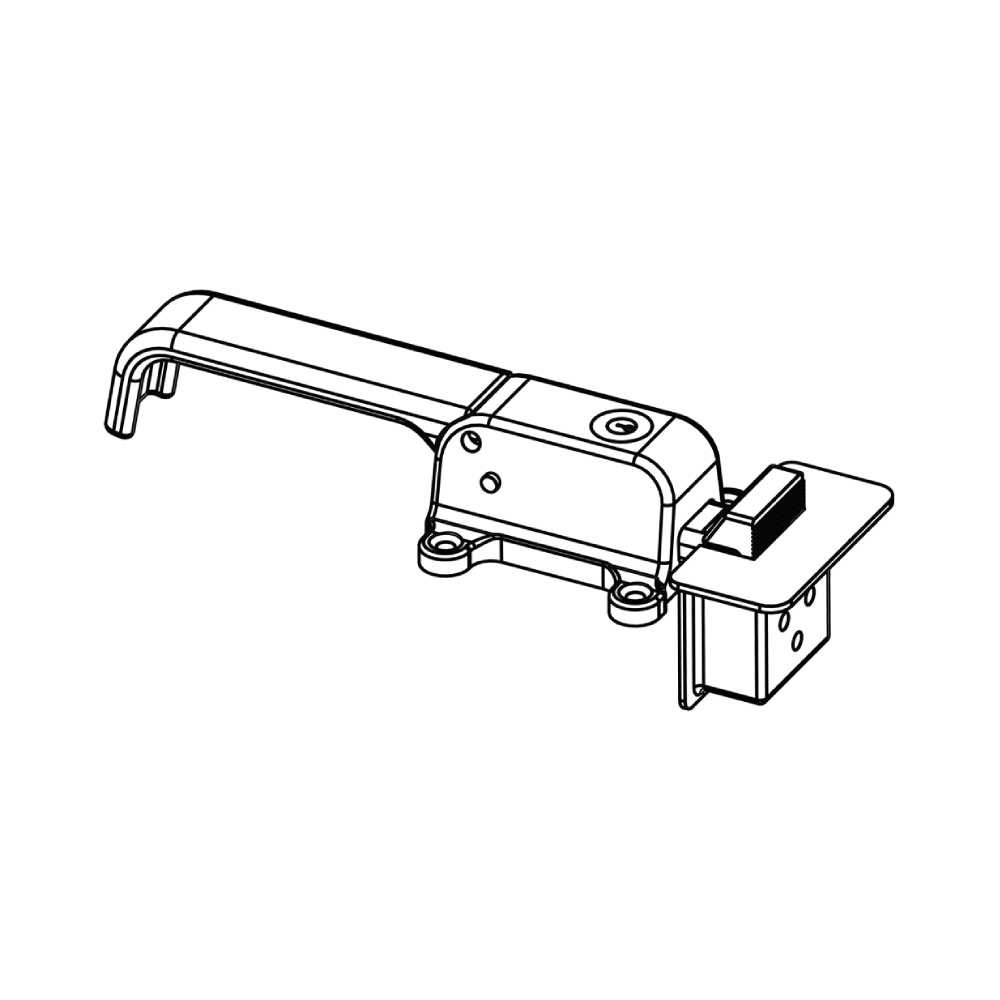







Cold Room Hinges
Table of Contents
- Where Can I Buy Durable Cold Room Hinges in Tunisia?
- What Are the Best Cold Room Hinges for Commercial Kitchens?
- How to Choose the Right Cold Room Hinges in Tunisia?
- Are Stainless Steel Cold Room Hinges Worth the Investment?
- Which Cold Room Hinge Suppliers in Tunisia Offer Bulk Pricing?
- How to Install Cold Room Hinges for Maximum Insulation?
- Do Cold Room Hinges in Tunisia Meet ISO Standards?
- What Is the Average Cost of Cold Room Hinges in Tunisia?
- How to Replace Worn Cold Room Hinges in Industrial Freezers?
- Why Choose Heavy-Duty Cold Room Hinges for Export Projects?
Where Can I Buy Durable Cold Room Hinges in Tunisia?
Industrial operators across Tunisia face a recurring challenge: sourcing cold room hinges that withstand constant thermal cycling without deforming, corroding, or compromising door seals. Downtime from a failed hinge can halt an entire cold storage line, costing facilities thousands in lost inventory and rushed service calls. For decision-makers managing large-scale refrigeration assets, the question is not simply where to find a hinge, but which manufacturer pairs proven material science with export-ready logistics and post-sale support.
The answer lies in suppliers who engineer hinges as part of an integrated refrigeration spare parts ecosystem rather than a generic commodity. İmamoğlu approaches every component, from aluminum profiles to frigorific group products, with the same disciplined R&D methodology. Our cold room hinges are machined from high-grade stainless alloys, tested under simulated humidity and temperature extremes that mirror Tunisian coastal and inland industrial environments. This R&D-supported production process ensures each unit maintains structural integrity across thousands of operational cycles, reducing the replacement frequency that plagues imported low-grade alternatives.
For a commercial kitchen manufacturer assembling walk-in units, or a service provider retrofitting aging cold rooms, the practical value is immediate. A reinforced hinge assembly supports thicker insulated door panels, preserving the airtight seal that energy-efficient equipment demands. When a door closes with precise alignment, compressor runtimes drop, frost accumulation decreases, and the entire long-lasting cooling system performs closer to its engineered specifications. Facility managers report measurable reductions in maintenance visits once they standardize on hinges designed for the realities of continuous commercial use.
Sourcing these components in Tunisia no longer requires navigating fragmented local markets or accepting inconsistent quality. İmamoğlu operates a quality control framework aligned with ISO and CE benchmarks, supported by export-oriented production capacity that reaches both regional and global clients. Every shipment includes traceable documentation, and our logistics team coordinates directly with industrial buyers to align delivery windows with project schedules. For businesses ready to eliminate the guesswork from their reliable spare parts supply chain, the next step is straightforward: request a quote for cold room hinges engineered to perform, backed by a manufacturer that treats every order as a long-term partnership.
What Are the Best Cold Room Hinges for Commercial Kitchens?
Commercial kitchen operators know that a cold room hinge is not a minor fitting; it is the mechanical anchor that determines whether an insulated door seals correctly, opens reliably during peak service, and maintains hygiene compliance. When a hinge fails mid-shift in a high-volume catering facility or a central production kitchen, the consequences escalate quickly: temperature drift, condensation, compressor overwork, and potential food safety violations. Selecting the right hinge from the start is therefore a decision that directly protects revenue, energy budgets, and operational continuity.
The hinges that perform best in commercial kitchen environments share several engineered characteristics. They are constructed from corrosion-resistant stainless steel or reinforced polymer composites capable of handling constant exposure to moisture, cleaning agents, and sub-zero temperatures. Load-bearing capacity matters just as much, because insulated cold room doors are significantly heavier than standard kitchen doors. Precision-machined pivot points, self-lubricating bushings, and adjustable tension mechanisms allow the hinge to maintain alignment even after tens of thousands of cycles. These features align with the same engineering discipline İmamoğlu applies across our full range of refrigerator spare parts and showcase cooler parts.
In a real-world application, a large hotel chain retrofitting its central cold storage facility replaced its legacy hinges with units designed for heavy insulated panels. The result was a noticeable drop in door-closing effort for staff, tighter seals that cut frost buildup, and a measurable reduction in compressor runtime. Across a chain of restaurants, this translated into lower monthly energy consumption and fewer emergency maintenance dispatches, outcomes that any cooling system supplier can trace back to component-level quality.
For industrial kitchen manufacturers and service providers evaluating their next procurement cycle, the choice is clear. İmamoğlu produces cold room hinges within an R&D-supported production environment that prioritizes energy-efficient equipment integration and durable cooling solutions. Our quality control protocols align with ISO and CE benchmarks, and our export-oriented production ensures consistent supply to both local and global markets. We invite procurement teams and project managers to request a quote and specify hinges built to support the realities of demanding commercial kitchen operations.
How to Choose the Right Cold Room Hinges in Tunisia?
Choosing the right cold room hinge in Tunisia is a procurement decision that quietly shapes the performance of every refrigeration system it supports. A hinge that looks adequate on a supplier shelf can fail within months under the combined stress of heavy insulated panels, coastal humidity, and continuous door cycling. Facility managers and industrial buyers who treat this component as an afterthought often find themselves scheduling emergency repairs, replacing warped doors, and absorbing energy losses from compromised seals. The selection process deserves the same rigor applied to compressors, evaporators, and insulation panels.
Material specification is the first filter. Stainless steel alloys with proven corrosion resistance handle the saline air common in Tunisian port cities, while reinforced polymer bushings reduce metal-to-metal wear in high-traffic cold rooms. Load rating must match the actual door mass, including any multi-layer insulation and gasket hardware, because underspecifying creates sagging and misalignment over time. Buyers should also evaluate pivot precision, tension adjustability, and compatibility with the panel thickness used in their facility. These are the same engineering criteria İmamoğlu applies across our broader portfolio of industrial cold room parts and aluminum profiles.
Consider a seafood processing plant in the Mediterranean region that retrofitted its cold storage doors with hinges rated below the actual panel weight. Within eighteen months, two doors developed seal gaps that allowed warm air infiltration, forcing compressors to run longer cycles and elevating frost levels on stored product. After switching to hinges engineered for their specific load class, the facility recorded a sustained drop in energy use and eliminated unscheduled door maintenance. For a large-scale business operating multiple sites, this kind of component-level correction compounds into significant annual savings.
İmamoğlu supports Tunisian buyers with R&D-supported production that targets high-performance equipment standards, backed by ISO-aligned quality control procedures. Our durable cooling solutions are developed with environmentally friendly production practices and reach clients through export-oriented production channels designed for both local and global markets. Industrial kitchen manufacturers and service providers ready to standardize on hinges that protect their long-lasting cooling systems are invited to request a quote and specify components built for the conditions they actually face.
Are Stainless Steel Cold Room Hinges Worth the Investment?
The sticker price of stainless steel cold room hinges sits above basic galvanized or plated alternatives, and that gap often prompts a familiar question from procurement teams: is the premium justified by the actual return? In high-duty refrigeration environments, the answer becomes clear once operators calculate the cost of premature replacement, seal failure, and the cascading energy waste that follows a compromised door. A hinge is not merely a fastener; it is a structural component that determines whether the entire insulated enclosure performs to specification.
Stainless steel delivers measurable advantages in cold room applications. Its corrosion resistance is critical in facilities with frequent washdowns, high ambient humidity, or exposure to saline air, conditions that rapidly degrade standard coatings. The material maintains dimensional stability across temperature swings, meaning pivot points stay aligned and gaskets continue to compress evenly. Over time, this translates into lower compressor cycling, reduced frost load on evaporators, and fewer emergency service interventions. These are the operational outcomes that define energy-efficient equipment performance in the field.
A poultry processing facility in a humid coastal region provides a useful example. After replacing failing plated hinges with stainless units, the maintenance log showed a sharp decline in door-alignment complaints over the following two years. Energy consumption dropped as seal integrity improved, and the cold room consistently held target temperature during peak production hours. For an industrial kitchen manufacturer assembling walk-in units, specifying stainless hinges at the build stage is a smaller cost than the warranty claims and retrofit expenses that follow a cheaper alternative.
İmamoğlu manufactures stainless cold room hinges within an R&D-supported production framework that treats every component as part of a broader refrigeration spare parts system. Our quality control protocols follow ISO and CE standards, and our energy-saving solutions extend across frigorific group products and aluminum profiles. Clients across Tunisia and international markets benefit from export-oriented production backed by reliable logistics. For service providers evaluating their next specification, the case for stainless steel is no longer a debate; it is a documented return on investment. Request a quote and specify hinges built to protect your long-lasting cooling systems.
Which Cold Room Hinge Suppliers in Tunisia Offer Bulk Pricing?
Procurement officers managing multiple sites across Tunisia quickly learn that component pricing in single-unit purchases rarely reflects the true cost of ownership. Cold room hinges, though small in unit value, multiply across walk-in freezer doors, chilled storage rooms, and service fleet inventories. The search for bulk pricing is therefore not simply a budget exercise; it is a supply chain strategy that determines whether large-scale operators can standardize on quality components or are forced to settle for inconsistent alternatives to keep costs down.
Several hinge suppliers operate in the Tunisian market, but the difference between a distributor and a manufacturer becomes significant at volume. Distributors often add margin layers that erode any quantity discount, and their stock may mix SKUs from different origins with no shared quality standard. A manufacturer with direct export capability can offer tiered pricing tied to production runs, consistent specifications across batches, and predictable lead times. This is the structural advantage that defines İmamoğlu's approach to industrial cold room parts and the wider category of refrigerator spare parts.
A practical scenario illustrates the impact. A national catering services company standardizing cold storage rooms across twenty locations placed a consolidated hinge order rather than sourcing locally at each site. The bulk order shortened installation timelines, reduced administrative overhead, and ensured every door used the same corrosion-resistant grade. Over a two-year service period, the company recorded a marked decrease in hinge-related work orders compared to its previous mixed-source approach. For any cooling system supplier building maintenance contracts, this consistency is a competitive asset.
İmamoğlu supports bulk procurement with R&D-supported production capacity and ISO-aligned quality control, ensuring every hinge in a high-volume order meets the same high-performance equipment benchmark. Our export-oriented production model and reliable spare parts logistics reach clients across the local and global market, backed by customer satisfaction priorities. Industrial buyers, service providers, and large-scale businesses seeking transparent bulk pricing on durable cooling solutions are encouraged to request a quote and align their next procurement cycle with a manufacturer built for sustained volume partnerships.

How to Install Cold Room Hinges for Maximum Insulation?
Even the most precisely engineered cold room hinge cannot deliver its intended thermal performance if the installation is rushed, misaligned, or skipped over in the assembly sequence. Insulation loss rarely announces itself at handover; it accumulates quietly as micro-gaps form around a sagging door, as a gasket compresses unevenly, or as a hinge pivot drifts from its original geometry. For facility engineers and service technicians, the installation phase is where the promise of energy-efficient equipment is either preserved or forfeited before the cold room ever enters service.
The process begins before the first fastener is driven. Technicians must verify the door panel mass, confirm the frame substrate, and select hinge models whose load ratings match the actual configuration. Shim placement is critical: hinges mounted on uneven surfaces create stress concentrations that warp the panel over time. Torque values should follow manufacturer specifications, not field intuition, because over-tightening distorts the pivot bushing while under-tightening allows micro-movement. These are the procedural standards İmamoğlu applies internally when validating our industrial cold room parts alongside our broader aluminum profiles and frigorific group products portfolio.
Consider a pharmaceutical cold room where insulation integrity is not just an efficiency metric but a regulatory requirement. During a recent retrofit, the installation team used adjustable stainless hinges to correct a door frame that had settled by several millimeters. The result was uniform gasket compression across the entire perimeter, eliminating the cold bridging that had been driving compressor cycling upward. Over the following quarter, energy logs showed a sustained reduction in runtime hours, validating the upfront attention to hinge geometry. For an industrial kitchen manufacturer delivering turnkey rooms, this level of installation discipline protects both warranty exposure and client trust.
İmamoğlu equips buyers with detailed installation guidance and technical documentation for every hinge shipped, backed by R&D-supported production data and ISO-aligned quality control. Our energy-saving solutions philosophy extends into the installation layer, ensuring that durable cooling solutions perform as engineered from day one. Through export-oriented production and responsive logistics power, we support service providers and large-scale businesses across the local and global market. Request a quote for hinges that arrive ready to install, with the technical backing to ensure every door seals the way it should.
Do Cold Room Hinges in Tunisia Meet ISO Standards?
Compliance is not a marketing line for industrial buyers; it is the baseline that determines whether a component can be specified into a regulated facility, an export-bound project, or a multi-site maintenance contract. In Tunisia, where cold storage infrastructure serves food processing, pharmaceutical logistics, and hospitality supply chains, the question of whether cold room hinges meet recognized standards carries real operational and legal weight. A hinge that fails to align with ISO or CE benchmarks introduces risk at every level, from insurance validation to audit outcomes.
Standards exist for a reason. ISO frameworks governing refrigeration hardware address material traceability, mechanical endurance, corrosion behavior, and dimensional consistency across production batches. A hinge that meets these criteria has been tested under conditions that simulate years of thermal cycling, humidity exposure, and mechanical load. A hinge that does not meet them may function on day one, yet lack the documentation auditors and quality teams require. İmamoğlu builds its quality control discipline around this distinction, treating industrial cold room parts as engineered products rather than commodity fittings.
Consider a cold chain operator preparing a facility for a regulatory inspection. Procurement sourced hinges from a supplier who claimed compliance but provided no test certificates. The audit revealed inconsistencies in alloy composition, and the operator was forced to halt installation while replacements were sourced. After switching to İmamoğlu hinges, the documentation arrived complete, traceability was verifiable, and the project timeline recovered. This is the practical value of R&D-supported production expressed through paperwork as much as through performance.
Our manufacturing process follows ISO and CE standards across our refrigerator spare parts, showcase cooler parts, and frigorific group products lines. Each shipment is backed by traceable records, and our export-oriented production model ensures Tunisian buyers receive the same certified output as our global clients. For industrial kitchen manufacturers and cooling system suppliers who view compliance as a competitive advantage, the path forward is direct. Request a quote, review the certifications, and specify hinges that protect your long-lasting cooling systems from both mechanical and regulatory failure.
What Is the Average Cost of Cold Room Hinges in Tunisia?
Pricing for cold room hinges in Tunisia varies widely, and that variation itself tells a story. A buyer who sees a low unit cost on a quotation may not be looking at the same product as a competing offer that appears higher. Differences in alloy grade, load rating, pivot mechanism, and surface treatment all influence the final number, and each of those variables has a direct effect on how long the hinge will actually perform inside an insulated enclosure. Treating cost as a single figure without context is how procurement teams end up replacing hinges twice as often as their maintenance budgets allow.
Several factors drive the final price. Material selection is the primary lever: stainless steel commands a premium over plated or standard carbon alternatives, yet it returns that investment through extended service life in humid or washdown environments. Production origin matters as well, because hinges manufactured under ISO-aligned quality control carry testing and documentation costs that uncertified imports avoid. Order volume, hinge specification, and logistics from manufacturer to site all contribute to the landed cost that a facility actually pays.
A regional dairy distributor learned this calculation the hard way. The initial procurement selected the lowest-priced hinges for a new cold storage facility, and within fourteen months, corrosion had compromised pivot points on multiple doors. Replacement labor, gasket damage, and elevated compressor runtime pushed the true cost far above what a higher-grade specification would have required. For any large-scale business evaluating industrial cold room parts, this scenario underscores why initial price and total cost rarely align.
İmamoğlu provides transparent, volume-based pricing on cold room hinges produced within our R&D-supported production environment. Our export-oriented production model and logistics power keep landed costs competitive for Tunisian buyers, while our energy-saving solutions approach ensures every hinge supports durable cooling solutions over the long term. Industrial kitchen manufacturers and service providers ready to align cost with performance are invited to request a quote. Our team will provide specifications, certifications, and pricing tiers designed to match your project scale, because the right hinge at the right price is ultimately the one that protects your long-lasting cooling systems for years, not months.
How to Replace Worn Cold Room Hinges in Industrial Freezers?
Worn hinges in industrial freezers rarely fail all at once. The signs accumulate: a door that drifts slightly open after closing, frost forming along the upper gasket edge, a faint uneven sound as the panel swings. By the time a hinge visibly cracks or seizes, the surrounding components have usually absorbed the stress, and the freezer has been running inefficiently for weeks. Planned replacement, executed before catastrophic failure, is the difference between a scheduled maintenance window and an emergency call that halts production.
The replacement process begins with a full assessment, not just of the hinge itself, but of the door panel, frame substrate, and gasket condition. A new hinge installed on a warped frame will replicate the original failure pattern within months. Technicians should document the existing hinge model, load rating, and mounting configuration to confirm the replacement matches both the door mass and the operational cycle frequency. This is the same engineering discipline İmamoğlu applies across our refrigerator spare parts and showcase cooler parts lines, where reliable spare parts selection is treated as a system decision rather than a single-component swap.
In a frozen goods distribution center, the maintenance team noticed increased door-closing effort and minor seal gaps during routine checks. Rather than waiting for a full hinge failure, they scheduled a planned replacement during a low-demand weekend. The new stainless steel hinges restored proper alignment, the gasket reseated evenly, and compressor cycling returned to baseline within days. Energy logs over the following month confirmed the operational recovery, demonstrating how preventive component replacement supports energy-efficient equipment performance across the entire long-lasting cooling system.
İmamoğlu supports service teams and large-scale businesses with replacement hinges produced under R&D-supported production and ISO-aligned quality control. Our industrial cold room parts are designed for direct swap-in compatibility, and our export-oriented production ensures fast delivery through proven logistics power across the local and global market. For cooling system suppliers building maintenance contracts or industrial kitchen manufacturers planning retrofit cycles, the next step is straightforward. Request a quote, specify your current hinge configuration, and secure durable cooling solutions that restore freezer performance without unnecessary downtime.
Why Choose Heavy-Duty Cold Room Hinges for Export Projects?
Export projects demand components that perform reliably far beyond the controlled conditions of a single facility. A cold room hinge shipped into a port-side logistics hub, a tropical processing plant, or a remote agricultural storage site must withstand environmental conditions that range from coastal salinity to extreme temperature variation. Specifying a standard-duty hinge for these applications introduces risk that compounds across borders, because once a component fails abroad, the cost of replacement parts, technician dispatch, and project delays dwarfs any savings made at the procurement stage. Heavy-duty hinges exist precisely to eliminate that exposure.
The engineering case rests on three measurable advantages. First, reinforced load capacity handles the heaviest insulated panels used in export-spec cold rooms, including multi-layer constructions with integrated heating elements for arctic climates. Second, advanced material selection, typically marine-grade stainless steel or engineered composites, resists corrosion under conditions that would degrade lesser alloys within a single season. Third, precision-machined pivot assemblies maintain alignment across tens of thousands of cycles, preserving the airtight seal that energy-efficient equipment requires. İmamoğlu integrates these characteristics across our industrial cold room parts and our broader frigorific group products portfolio.
Consider an exporter of pre-assembled cold storage units serving markets across North and West Africa. Early shipments used mid-grade hinges to manage unit cost, but field reports showed premature wear in humid coastal installations. After transitioning to heavy-duty specifications, warranty claims dropped sharply, and client satisfaction scores improved across multiple regions. The marginal increase in component cost was recovered many times over in reduced after-sales expense and stronger brand reputation in competitive export markets.
İmamoğlu supports export-focused builders and cooling system suppliers with R&D-supported production capacity tailored to international project requirements. Our export-oriented production is reinforced by logistics power that moves reliable spare parts efficiently across the local and global market, while ISO-aligned quality control ensures every hinge meets documented high-performance equipment standards. For industrial kitchen manufacturers and large-scale businesses engineering projects for international clients, the specification decision shapes outcomes long after the container is sealed. Request a quote, share your project parameters, and let İmamoğlu deliver durable cooling solutions built for the distances your equipment will travel.