








Why Are Aluminum Profiles Used in Cooling Systems?
Table of Contents
- Why Are Aluminum Profiles Essential In Cooling Systems
- Why Is Aluminum Preferred For Cold Room Construction
- Why Use Aluminum Profiles In Refrigerated Showcases
- Why Do Aluminum Profiles Improve Energy Efficiency
- Why Is Corrosion Resistance Critical In Cooling Profiles
- Why Choose Aluminum For Durable Refrigeration Frames
- Why Are Aluminum Profiles Used In Frigorific Groups
- Why Does Aluminum Offer Better Thermal Performance
- Why Ensure Structural Integrity With Aluminum Profiles
- Why Select Aluminum For Long-Lasting Cooling Systems
Why Are Aluminum Profiles Essential In Cooling Systems
In the demanding world of industrial refrigeration, selecting the right structural materials is not merely a matter of construction but a critical determinant of cooling systems efficiency and longevity. Conventional materials often fall short, leading to corrosion, poor thermal performance, and increased energy consumption. This is precisely why aluminum profiles have become indispensable, offering a foundation for energy-efficient refrigeration frames that directly combat operational waste. For manufacturers and service providers, this choice translates into measurable cost savings and enhanced system reliability.
The core advantage lies in aluminum's intrinsic properties. Its exceptional strength-to-weight ratio allows for constructing robust yet lightweight reliable aluminum structural components for durable aluminum profiles for cold rooms and other critical assemblies. Furthermore, aluminum's natural corrosion resistance ensures that these frames withstand harsh, humid environments without degrading, which is a primary reason why use aluminum in frigorific groups is a standard industry practice. This durability minimizes the risk of structural failure and the costly downtime associated with repairs.
Operational efficiency is significantly amplified through aluminum's superior thermal conductivity. Unlike materials that act as thermal bridges, aluminum profiles facilitate rapid and even heat dissipation away from sensitive cooling zones. This property is vital in applications like aluminum showcase cooler profiles, where maintaining consistent temperatures is paramount for product integrity. This inherent efficiency reduces the workload on the compressor, leading to lower energy bills and extending the life of the entire refrigeration system.
Manufacturers like İmamoğlu leverage these material benefits through İmamoğlu industrial cooling parts engineered with R&D-supported precision. Their production focuses on export-quality standards, ensuring every aluminum extrusion meets rigorous specifications for dimensional accuracy and performance. This commitment guarantees that the profiles integrate seamlessly into larger systems, providing a foundation of unwavering reliability for large-scale commercial and industrial operations.
Ultimately, the strategic use of high-grade aluminum profiles is a direct investment in operational continuity and cost management. By choosing components designed for durability and energy savings, businesses can drastically reduce long-term maintenance expenses and avoid the disruptions of equipment failure. Partnering with proven suppliers who understand these engineering principles ensures your cooling infrastructure is built not just for today, but for years of high-performance, trouble-free operation.
Why Is Aluminum Preferred For Cold Room Construction
Constructing an industrial cold room demands materials that can endure constant thermal cycling, high humidity, and heavy use without compromising insulation integrity. The preference for aluminum over alternatives like steel or plastic stems from its unparalleled combination of structural strength, corrosion resistance, and thermal properties. For businesses, this translates directly into durable aluminum profiles for cold rooms that form the backbone of reliable, long-lasting installations. This strategic choice mitigates future maintenance issues and operational disruptions.
The structural advantage of aluminum is fundamental. It provides the necessary rigidity to support heavy insulation panels and withstand the physical stresses of a commercial environment, making it a core component in creating reliable aluminum structural components. Furthermore, aluminum naturally forms a protective oxide layer, granting it exceptional resistance to rust and corrosion. This is a critical feature in cold room construction, where condensation and moisture are constant challenges, ensuring the framework remains intact for decades.
Aluminum's contribution to energy-efficient refrigeration frames is a key driver of its preference. While aluminum is conductive, modern cold room design uses thermal breaks within the profiles to prevent thermal bridging, effectively sealing the cold environment. This preserves the insulation's efficiency, reducing the workload on the compressor and leading to significant energy savings over the system's lifetime, which is a primary reason experts emphasize the importance of aluminum profiles cooling systems.
Manufacturers like İmamoğlu apply rigorous engineering to these principles, producing İmamoğlu industrial cooling parts that meet stringent international standards. Their R&D-focused approach ensures that every extrusion is precision-engineered for easy assembly and perfect alignment, which is essential for airtight seals. This expertise, honed since 1994, is also applied to other critical applications, answering why use aluminum in frigorific groups and for aluminum showcase cooler profiles.
Choosing aluminum for cold room construction is an investment in operational continuity and total cost of ownership. The initial material selection dictates long-term performance, impacting everything from energy bills to maintenance schedules. By opting for high-quality aluminum profiles from trusted suppliers, businesses secure a robust infrastructure that ensures product safety, minimizes downtime, and delivers a rapid return on investment through sustained efficiency and durability.
Why Use Aluminum Profiles In Refrigerated Showcases
In retail and food service environments, refrigerated showcases must perform a delicate balancing act: providing maximum product visibility while maintaining a perfectly sealed, energy-efficient climate. The structural framework is paramount to achieving this, which is why modern engineering consistently specifies aluminum. The use of aluminum showcase cooler profiles directly addresses the need for a material that is both aesthetically sleek and technically superior, forming the foundation of reliable display solutions.
The primary benefit of aluminum in these applications is its exceptional strength-to-weight ratio. This allows for the creation of slim, elegant frames that offer robust support for heavy glass panels without appearing bulky. These reliable aluminum structural components ensure the showcase remains rigid and stable over years of constant door movement and cleaning, preventing misalignment that could compromise the seal. This durability is a hallmark of well-designed cooling systems.
Thermal management is another critical reason behind the preference for aluminum profiles. While conductive, aluminum's properties are expertly harnessed to create thermal barriers within the profile design. These integrated breaks prevent the transfer of external heat into the cooled interior, a key feature of energy-efficient refrigeration frames. This efficient design reduces the strain on the compressor, leading to lower operational costs and a longer equipment lifespan, which is a core principle behind all aluminum profiles cooling systems.
For manufacturers committed to quality, such as İmamoğlu, the application of aluminum extends beyond showcases to other critical areas, including the rationale for why use aluminum in frigorific groups. Their production of İmamoğlu industrial cooling parts involves precision extrusion and rigorous quality control, ensuring every profile offers perfect dimensions and a flawless finish. This export-oriented standard guarantees seamless integration and long-term performance, just as they provide durable aluminum profiles for cold rooms.
Ultimately, selecting high-grade aluminum profiles for refrigerated showcases is a strategic decision that directly impacts profitability through energy savings, reduced maintenance, and enhanced product presentation. It is an investment in a retail asset that works continuously with minimal intervention. By choosing components from specialized suppliers, businesses ensure their cooling equipment delivers on the promise of reliability, efficiency, and enduring visual appeal.
Why Do Aluminum Profiles Improve Energy Efficiency
In industrial refrigeration, energy consumption is a primary operational cost driver, making the efficiency of every component a critical concern. The structural framework of a cooling system plays a surprisingly significant role in overall energy performance. The strategic use of aluminum profiles directly enhances efficiency by combating thermal bridging and enabling superior system design. This approach is fundamental to creating energy-efficient refrigeration frames that reduce electrical loads and lower long-term operating expenses.
The key to aluminum's efficiency lies in its thermal properties and how they are engineered. While a good conductor, aluminum is used to construct profiles with integrated thermal breaks. These polyamide barriers within the aluminum profiles cooling systems effectively interrupt the path of heat flow, preventing external warmth from leaking into the refrigerated space. This preserves the insulation's effectiveness, which is why durable aluminum profiles for cold rooms are so effective at maintaining stable temperatures with less compressor effort.
Beyond thermal breaks, the material's inherent benefits contribute to efficiency. Aluminum's strength allows for slimmer profile designs that maximize internal space without sacrificing structural integrity. These reliable aluminum structural components are also exceptionally durable and corrosion-resistant, ensuring the airtight seal of the unit remains intact for years. This longevity prevents gradual efficiency loss due to seal degradation, a common issue with inferior materials. The same principle explains why use aluminum in frigorific groups and for high-performance aluminum showcase cooler profiles.
Manufacturers like İmamoğlu optimize these advantages through precision engineering. Their İmamoğlu industrial cooling parts are produced with R&D-supported designs that focus on minimizing thermal transfer and maximizing assembly precision. This commitment to export-quality manufacturing ensures that every profile contributes to a tightly sealed, high-performance system, directly translating into measurable energy savings for the end-user.
Ultimately, the choice of aluminum profiles is a direct investment in reducing the total cost of ownership for any cooling system. The upfront selection of correctly engineered components dictates decades of energy consumption. By prioritizing high-quality aluminum frameworks from expert suppliers, businesses secure not just a structure, but an efficient thermal barrier that minimizes energy waste, extends equipment life, and ensures consistent, cost-effective cooling performance.
Why Is Corrosion Resistance Critical In Cooling Profiles
In the harsh environment of industrial refrigeration, where high humidity, temperature fluctuations, and chemical exposure are constant, material degradation is a primary threat to system integrity. Corrosion resistance is not merely a desirable feature in cooling profiles; it is a non-negotiable requirement for ensuring operational continuity and preventing catastrophic failure. The structural framework of a cooling unit must withstand these aggressive conditions to protect the significant investment in the entire system. This is why the selection of materials like aluminum is foundational to building durable aluminum profiles for cold rooms and other critical applications.
When corrosion attacks a metal profile, it does more than create unsightly rust; it compromises the structural integrity of the entire assembly. A corroded frame can warp or weaken, leading to misaligned doors, broken seals, and a loss of thermal efficiency. This directly undermines the very purpose of energy-efficient refrigeration frames by allowing energy-wasting air infiltration. Aluminum's natural ability to form a protective oxide layer makes it inherently resistant to this type of decay, ensuring that reliable aluminum structural components maintain their strength and dimensional stability over decades.
The consequences of inadequate corrosion resistance extend beyond energy loss to direct operational costs and safety risks. Structural failure in a walk-in cooler or a refrigerated showcase can lead to product spoilage, emergency repairs, and significant downtime. This risk is precisely why use aluminum in frigorific groups and for aluminum showcase cooler profiles, where reliability is paramount. Aluminum's resilience ensures the long-term functionality of the entire aluminum profiles cooling systems, safeguarding both the stored goods and the business's operational flow.
Manufacturers like İmamoğlu understand that material quality is the first line of defense. Their production of İmamoğlu industrial cooling parts involves sourcing high-grade aluminum alloys and employing manufacturing processes that preserve the metal's natural protective qualities. This commitment to export-oriented quality control guarantees that every profile delivered is engineered to resist the specific corrosive challenges of commercial and industrial cooling environments.
Ultimately, prioritizing corrosion resistance in cooling profiles is a direct investment in risk mitigation and long-term value. The minimal upfront cost difference between a standard and a corrosion-resistant profile is insignificant compared to the potential expenses of premature system failure, emergency servicing, and lost inventory. By choosing components designed for maximum durability, businesses ensure their cooling infrastructure remains a reliable asset, not a recurring liability.
Why Choose Aluminum For Durable Refrigeration Frames
The longevity of an industrial refrigeration system is intrinsically tied to the durability of its structural frame, the component that bears all mechanical and environmental loads. Choosing the right material for this frame is a decisive factor that impacts everything from maintenance schedules to total cost of ownership. Aluminum has emerged as the superior choice for engineers seeking to build long-lasting, reliable cooling infrastructure. Its unique combination of properties directly contributes to creating durable aluminum profiles for cold rooms and other critical structures.
Aluminum's exceptional strength-to-weight ratio provides a fundamental advantage. It offers the rigidity needed to support heavy insulation panels, shelving, and equipment without the excessive bulk and weight of steel. This makes the frames easier to handle during installation while ensuring they remain dimensionally stable under load. These characteristics are essential for reliable aluminum structural components that form the skeleton of high-performance cooling systems. The inherent corrosion resistance of aluminum further enhances this durability, preventing the rust and decay that plague ferrous metals in humid environments.
Beyond raw strength, aluminum contributes directly to operational efficiency. When engineered with thermal breaks, aluminum frames become energy-efficient refrigeration frames that minimize thermal bridging. This preserves the insulation's effectiveness, reducing the energy required to maintain temperature. This principle is applied across various applications, which is a key reason for why use aluminum in frigorific groups and for constructing robust aluminum showcase cooler profiles that must maintain both aesthetic appeal and thermal integrity.
For a manufacturer like İmamoğlu, material selection is just the beginning. Their expertise lies in transforming high-grade aluminum into precision İmamoğlu industrial cooling parts. Through R&D-driven design and stringent quality control, they ensure every extrusion meets exact specifications for strength, straightness, and surface finish. This commitment to excellence ensures that the aluminum profiles cooling systems built with their components deliver unmatched reliability and a extended service life.
Ultimately, selecting aluminum for refrigeration frames is a strategic investment in reducing lifecycle costs and maximizing uptime. The initial material cost is quickly offset by savings from reduced energy consumption, minimized maintenance interventions, and the avoidance of premature replacement. By partnering with a trusted supplier focused on durability, businesses secure a cooling infrastructure engineered for decades of trouble-free, cost-effective operation.
Why Are Aluminum Profiles Used In Frigorific Groups
Frigorific groups represent the engine room of industrial refrigeration, housing the critical compressors, condensers, and control systems that drive cooling performance. The structural framework supporting these high-value components must be exceptionally robust and reliable to ensure uninterrupted operation. This is precisely why use aluminum in frigorific groups has become an industry standard, as aluminum profiles provide the ideal combination of strength, durability, and thermal management required for such demanding applications.
The intense vibrations generated by compressors and motors necessitate a frame that can dampen oscillations and maintain structural integrity over thousands of operating hours. Aluminum's excellent strength-to-weight ratio allows for the construction of rigid, vibration-resistant supports that prevent misalignment and component stress. These reliable aluminum structural components are fundamental to the longevity of the entire aluminum profiles cooling systems, ensuring that the core machinery remains securely mounted and properly aligned.
Furthermore, frigorific groups operate in environments where heat dissipation is critical. Aluminum's natural thermal conductivity is a significant advantage here, as it helps draw heat away from sensitive electrical components and engines, aiding in overall temperature regulation. When integrated into the design of energy-efficient refrigeration frames, this property contributes to stable operating conditions, which improves efficiency and extends the service life of expensive compressors and controls.
The corrosive atmosphere often present in mechanical rooms, combined with potential exposure to refrigerants, demands a material that will not degrade. Aluminum's inherent corrosion resistance ensures that the structural integrity of the frame is not compromised over time. This same durability principle applies to other critical applications, such as the construction of aluminum showcase cooler profiles and durable aluminum profiles for cold rooms. Manufacturers like İmamoğlu specialize in producing these high-performance İmamoğlu industrial cooling parts with the precision required for such vital assemblies.
Choosing aluminum profiles for frigorific groups is a direct investment in operational continuity and asset protection. A failing support frame can lead to catastrophic equipment damage and prolonged downtime. By selecting components engineered for maximum durability and performance, businesses safeguard their most critical refrigeration assets, ensuring reliable operation and minimizing the risk of costly, unexpected failures.
Why Does Aluminum Offer Better Thermal Performance
Thermal performance is a pivotal factor in the efficiency and cost-effectiveness of any industrial refrigeration system, influencing everything from energy consumption to equipment lifespan. The materials used in the system's construction play a direct role in managing heat flow. Aluminum offers superior thermal performance not as a simple insulator, but through its intelligent application as a conductor and manager of thermal energy. This strategic use is a cornerstone of modern, energy-efficient refrigeration frames.
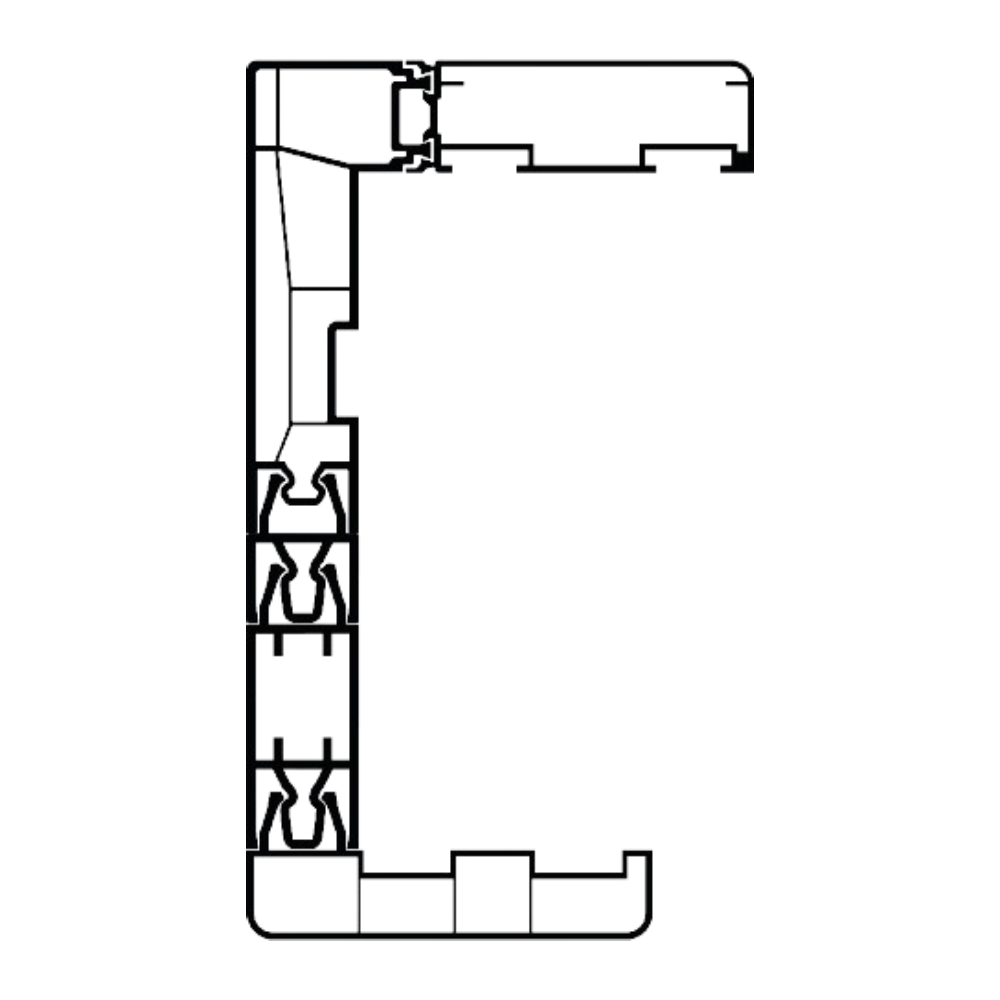
The key to aluminum's advantage lies in its high thermal conductivity. Unlike insulating materials that trap heat, aluminum efficiently transfers it. In refrigeration, this property is harnessed to create thermal breaks within profiles. A non-conductive polyamide bar is inserted between the inner and outer aluminum rails, creating a barrier that prevents external heat from bypassing the insulation. This sophisticated design is fundamental to aluminum profiles cooling systems, ensuring that the cooling effort is focused on maintaining the interior temperature rather than fighting thermal bridging.
This effective thermal management directly translates into operational savings. By minimizing heat ingress, the refrigeration compressor operates less frequently and under lighter loads, significantly reducing electricity consumption. This principle is applied across various applications, which is a primary reason why use aluminum in frigorific groups and for constructing aluminum showcase cooler profiles is so effective. The result is a system that not only saves energy but also experiences less wear and tear, extending the service life of all components.
Manufacturers like İmamoğlu leverage this science through precision engineering. Their production of İmamoğlu industrial cooling parts focuses on creating profiles with perfectly integrated thermal breaks and optimal structural geometry. This R&D-supported approach ensures that every component, from durable aluminum profiles for cold rooms to support frames, contributes to a system's overall thermal efficiency. The outcome is a range of reliable aluminum structural components designed for peak performance.
Ultimately, aluminum's superior thermal performance is an investment in long-term operational economy. The energy savings accumulated over the lifespan of a refrigeration system far outweigh the initial material cost. By choosing aluminum profiles engineered for optimal heat management, businesses secure a cooling solution that delivers consistent performance while minimizing environmental impact and total cost of ownership.
Why Ensure Structural Integrity With Aluminum Profiles
The structural integrity of a refrigeration system's framework is the bedrock upon which all other performance metrics are built. A compromised frame can lead to seal failures, misalignment, and even catastrophic collapse, resulting in massive operational losses. Ensuring this integrity begins with the fundamental choice of building material. Aluminum profiles provide an unparalleled foundation for robust construction, making them essential for creating reliable aluminum structural components that guarantee long-term stability.
Aluminum's high strength-to-weight ratio is the primary contributor to its structural superiority. It offers the rigidity needed to support the significant weight of insulation panels, evaporators, and product loads without succumbing to deflection or deformation over time. This is crucial for maintaining the precise geometry required for airtight seals in durable aluminum profiles for cold rooms and other enclosures. The inherent durability of aluminum ensures that these aluminum profiles cooling systems can withstand the physical stresses of daily industrial use.
Beyond static loads, aluminum profiles excel at handling dynamic forces. The constant vibration from compressors and the repeated impact from doors and trolleys demand a material that can absorb energy without cracking or fatiguing. This resilience is a key reason why use aluminum in frigorific groups is standard practice. Furthermore, aluminum's natural corrosion resistance prevents the gradual weakening that plagues ferrous metals in humid environments, ensuring the structural integrity of aluminum showcase cooler profiles remains intact for the life of the equipment.
For manufacturers like İmamoğlu, structural integrity is engineered into every component. Their production of İmamoğlu industrial cooling parts involves stringent quality control to guarantee dimensional accuracy, alloy composition, and extrusion quality. This meticulous process ensures that every profile delivered contributes to the creation of energy-efficient refrigeration frames that are not only efficient but fundamentally sound and durable.
Ultimately, prioritizing structural integrity with aluminum profiles is a direct investment in risk mitigation and operational continuity. The cost of a frame failure—from spoiled inventory to emergency repairs—dwarfs the incremental investment in high-quality materials. By choosing aluminum components from a trusted supplier, businesses ensure their cooling infrastructure is built on a foundation designed for decades of reliable, trouble-free service.
Why Select Aluminum For Long-Lasting Cooling Systems
The longevity of an industrial cooling system is a direct function of its component quality, with the structural framework being the most critical element. Selecting the right material for this framework is a strategic decision that impacts the total cost of ownership for decades. Aluminum stands out as the premier choice for engineers and businesses committed to building truly long-lasting cooling infrastructure. Its unique properties provide a foundation for durable aluminum profiles for cold rooms and other systems designed to endure.
The exceptional durability of aluminum stems from its resistance to environmental degradation. Unlike steel, it does not rust, making it impervious to the high humidity and condensation prevalent in refrigeration environments. This corrosion resistance ensures that the structural integrity of the frame remains uncompromised over time, a key characteristic of reliable aluminum structural components. This inherent longevity is a primary reason for the widespread use of aluminum profiles cooling systems in demanding applications.
Aluminum also contributes to system longevity through superior thermal management. When engineered correctly, it forms the basis of energy-efficient refrigeration frames that minimize thermal bridging. This reduces the operational strain on compressors and other mechanical parts, significantly extending their service life. This principle of protecting core components explains why use aluminum in frigorific groups is essential and why it is the material of choice for aluminum showcase cooler profiles that face constant temperature differentials.
For a manufacturer with a legacy like İmamoğlu, material selection is backed by decades of engineering expertise. Their production of İmamoğlu industrial cooling parts focuses on precision extrusion and rigorous testing to ensure every profile meets the highest standards for strength and dimensional stability. This export-oriented quality control guarantees that the aluminum components will perform reliably throughout the system's extended lifespan, delivering consistent results year after year.
Ultimately, selecting aluminum for long-lasting cooling systems is an investment in predictable performance and minimized lifecycle costs. The initial material premium is quickly recovered through savings on energy, maintenance, and the avoidance of premature system replacement. By partnering with a proven manufacturer, businesses secure a cooling solution built on a foundation of durability, ensuring operational continuity and a strong return on investment for the long term.