



Ways to Reduce Energy Loss
Table of Contents
- Sources of Energy Loss in Cold Rooms
- Door-Related Losses and How to Control Them
- Managing Door Opening Frequency and Duration
- Air Curtains and Strip Curtain Applications
- Insulation and Panel Connections
- Compressor and Evaporator Settings
- Fan Motors and Lighting Efficiency
- Thermostats, Scheduling and Control Systems
- Measurement, Records and Continuous Monitoring
- Conclusion
Sources of Energy Loss in Cold Rooms
Energy loss in a cold room is rarely caused by a single major fault. More often it builds up from many smaller losses. Heat passing through walls, ceiling and floor, warm air entering each time a door is opened, leaks at the joints of the panels and frame, and refrigeration equipment that runs inefficiently are the main sources. Each of these may seem minor on its own, but because they act at the same time they create a significant difference in total consumption.
The first step in reducing energy loss is to understand where losses come from and how large they are. This means reviewing the insulation condition of the room, the way doors are used, the operating hours of the refrigeration system and the maintenance history of the equipment together. Rather than relying on assumptions, measuring and recording the current situation shows which measures will genuinely make a difference.
Some losses come from design and others from operating habits. Even when a room is well insulated, a door that is kept open often or for long periods can waste a great deal of energy. Energy efficiency therefore requires operational discipline as well as investment in equipment. Planning who passes through which door and when reduces unnecessary openings.
Finally, reducing energy loss is a continuing process rather than a one-off project. Seasonal changes, a rise in production volume or the commissioning of new equipment can all change the energy profile of a room. Regular monitoring and review of losses is therefore the most effective approach over the long term.
Door-Related Losses and How to Control Them
In most cold rooms the most visible loss point is the door. Each time it opens, cold air inside escapes and warm, humid air takes its place. This exchange forces the refrigeration system to use more energy and causes the temperature inside to rise quickly. The number of doors, how often they open and how well they seal together determine the size of this loss.
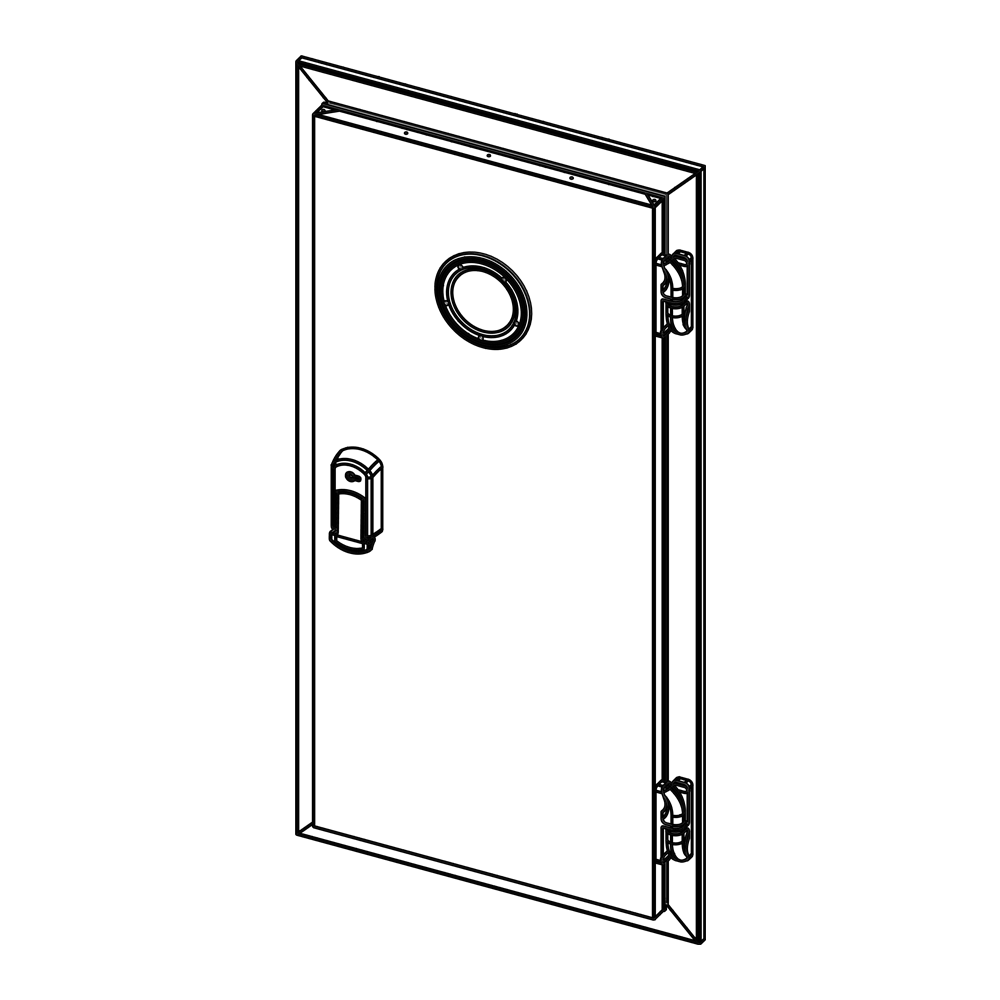
The most basic way to control door-related losses is to maintain the seal. The gasket should be inspected regularly and worn or cracked parts replaced in time. It is also important to check that the door leaf sits evenly in the frame, that the hinges are not loose and that the closing force is distributed evenly. Even a small misalignment can create a continuous air leak around the door.
The way a door closes also affects energy use. A slow, controlled closing motion not only reduces noise but also helps the sealing elements last longer. In facilities that use automatic closers, a warning or sensor system can be considered to make sure the door does not stay open without being fully closed.
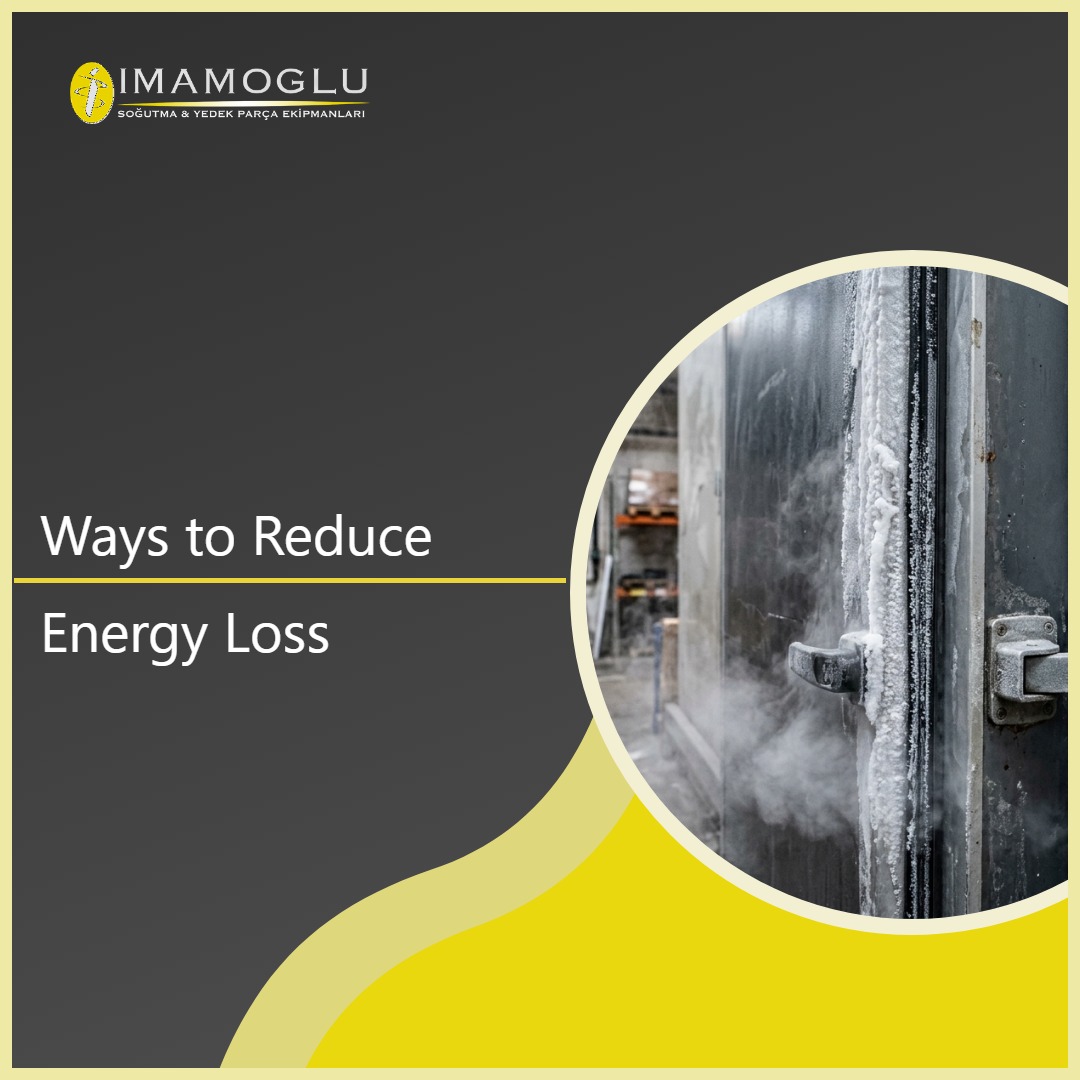
Frost and condensation around the door are signs of energy loss. They show that the seal has weakened and that warm air is constantly getting in. The area around the door should therefore be checked regularly, and the cause investigated whenever ice appears. Early action prevents both energy loss and the need for more serious repairs.
Managing Door Opening Frequency and Duration
Every opening of the door lets part of the cold air inside escape. For this reason, how many times a day a door is opened and for how long are among the most important factors in energy consumption. Unnecessary openings can be reduced considerably by making the same movements in fewer trips. Planning in advance what needs to be collected and when is an effective way to do this.
The length of time a door stays open is just as important. Leaving the door open for long periods causes far more cold air loss than short openings. Workflows should be organised so that loading and unloading are fast, and waiting points in front of the door should be reduced. It is also worth deciding in advance which tasks can be carried out while the door is open.
In facilities where openings are concentrated at certain times of day, those peak periods should be analysed. Additional measures can be taken during peak hours, or loading can be spread over different times. In this way warm air enters in a controlled way rather than throughout the whole day, and the refrigeration system is not overloaded.
Operating discipline matters as much as technical solutions. Simple habits such as closing the door fully, checking that it has sealed and teaching new staff the correct way to use it make a real difference over time. When these habits are turned into written procedures, consistency also improves.
Air Curtains and Strip Curtain Applications
Air curtains and strip curtains can be used to reduce the exchange of air that occurs while a door is open. An air curtain blows a strong stream of air from the top of the opening, making it harder for warm air to enter. A strip curtain consists of flexible strips that partly cover the opening and limit air movement without blocking passage. Both solutions are useful where a door stays open for long periods or where traffic is very frequent.
When choosing an air curtain, the width of the opening, its height, the frequency of passage and the temperature difference between inside and outside should be considered. A strong but unbalanced air stream can waste some of the energy saved elsewhere. The capacity and position of the unit should therefore be chosen to suit the application.
Cleaning and maintenance of strip curtains are also important. Strips that become dirty or damp can lose their flexibility or tear. In areas with hygiene requirements, the strip material must withstand cleaning chemicals. Regular inspection and replacement when necessary keep these solutions working well.
It should also be remembered that these solutions cannot replace everything else. A curtain does not substitute for door sealing or for good door management. An air curtain or strip curtain gives the best results when it is considered together with door management and sealing measures.
Insulation and Panel Connections
The walls, ceiling and floor of a cold room consist of insulation layers that resist heat flow. When the continuity of this layer is broken, thermal bridges form and energy loss increases. Panel joints, corners, pipe and cable penetrations, and the points where the door frame meets the wall are the areas where the risk of thermal bridging is highest.
To improve the insulation of an existing room, these joints should be examined first. Gaps and cracks should be sealed with suitable materials, and damaged panels repaired or replaced. When insulation improvements are made, moisture control should also be considered, designed to prevent vapour from passing through. Otherwise the insulation material may lose performance over time.
When a new facility is planned, insulation details must be decided at an early stage. The joint between frame and panel, the details around the door and the pipe penetrations are points that are difficult to correct later. Coordination between construction and installation teams is therefore essential, and special attention should be given to these points at design stage.
The effect of insulation can also be treated as a measurable process. Methods such as temperature measurement and thermal imaging can help to find weak points. Such analysis makes clear which area should be the priority for investment.
Compressor and Evaporator Settings
The efficiency of a refrigeration system is directly linked to the settings of the compressor and the evaporator. Operating pressures, the amount of refrigerant and the heat transfer surface of the evaporator determine how much energy the system will use. If these settings are not matched to the real needs of the room, the system works harder than necessary or provides too little cooling.
Keeping the evaporator clean and controlling ice build-up is critical for efficiency. Dust and ice on the evaporator reduce heat transfer and make the compressor run for longer. Regular cleaning and correctly set defrost cycles significantly reduce this loss.
Correct operation of the compressor at partial load is also important for saving energy. Variable-speed drives allow the system to run according to demand and can reduce unnecessary energy use. However, the technical compatibility of such investments with the existing system should be assessed first.
Regular checking and recording of the settings makes it possible to detect deviations early. Pressure and temperature values can change over time, so the system should be reviewed regularly. In this way energy efficiency can be maintained continuously.
Fan Motors and Lighting Efficiency
Evaporator fans and condenser fans account for a significant share of the energy used by a cold room. These fans do not always need to run at full speed all the time. Speed-controlled motors, or operating settings linked to time and temperature, can save energy by running only when needed and stopping when they are not.
Mechanical condition matters alongside motor efficiency. Fans with worn bearings, dirty blades or imbalance waste energy and can damage other parts through vibration. Regular maintenance, lubrication and cleaning keep the fans both efficient and safe.
Lighting also contributes to the heat load inside the room. Older lamps give off heat, which adds to the cooling load. Low-heat and energy-efficient lighting reduces both electricity use and the heat load inside. Motion sensors or timers can be used so that lights are on only when needed.
When these small details are combined they make a meaningful difference to the overall energy profile. Fans and lighting should therefore be treated as an integral part of the energy management plan.
Thermostats, Scheduling and Control Systems
The control system determines when and how much the refrigeration equipment runs. A correctly set thermostat keeps the room temperature within the required range without cooling it unnecessarily. If the control band is set too narrow the system runs continuously, and if it is set too wide product quality may be put at risk. Getting this balance right is critical for both energy and product safety.
Scheduling features are an effective way to manage energy use. Defrost cycles, fan operating hours and switching off certain equipment can all be adjusted to the facility's working programme. Running at lower load at night and in low-demand periods reduces total consumption.
Central control systems allow several rooms to be monitored and managed from one place. This makes it easier to understand which room is using more energy, when and why. Alarm functions help to spot temperature deviations or doors left open quickly.
The greatest value of control systems is that they collect data consistently. This data reveals energy saving opportunities and indicates future maintenance needs. A control system should therefore be seen as a management tool, not just an automation device.
Measurement, Records and Continuous Monitoring
Sustaining energy savings requires measurement. Electricity consumption, temperature readings, the number of door openings and maintenance records should be collected regularly. This data shows how effective each measure is and forms the basis for investment decisions.
Recording measurements makes it possible to see changes over time. Seasonal differences, production intensity and equipment ageing can all be seen in the consumption curve. When an unexpected increase is noticed, its cause can then be investigated more quickly.
Continuous monitoring allows deviations to be noticed early. A rise in temperature or a sudden increase in consumption is often the first sign of a sealing or equipment problem. Responding quickly to such signals reduces both energy loss and product risk.
Responsibility for measurement and monitoring should be given to a clearly defined team. It should be decided who reviews the data, how often, and what action plan follows from the findings. This process turns energy efficiency from a one-off exercise into a lasting habit.
Conclusion
Reducing energy loss in cold rooms is a holistic task that covers many areas, from door sealing and insulation to compressor settings and control systems. When small improvements in each area are combined, a noticeable reduction in total consumption can be achieved. The most effective approach is therefore to consider the whole system together rather than rely on a single solution.
Energy efficiency is also linked to product safety and equipment life. A more stable temperature means fewer faults and a longer equipment life. These gains support the return on investment and strengthen the competitiveness of the facility.
İmamoğlu Soğutma and Yedek Parça Ekipmanları provides technical information and support on cold room energy efficiency, including components for doors, gaskets, fans and controls. To assess the energy profile of your facility and receive improvement suggestions, you can contact us.
The most reliable way to reduce energy loss is to measure, keep records and improve continuously. A small step taken today can be the start of much larger savings in the future.