



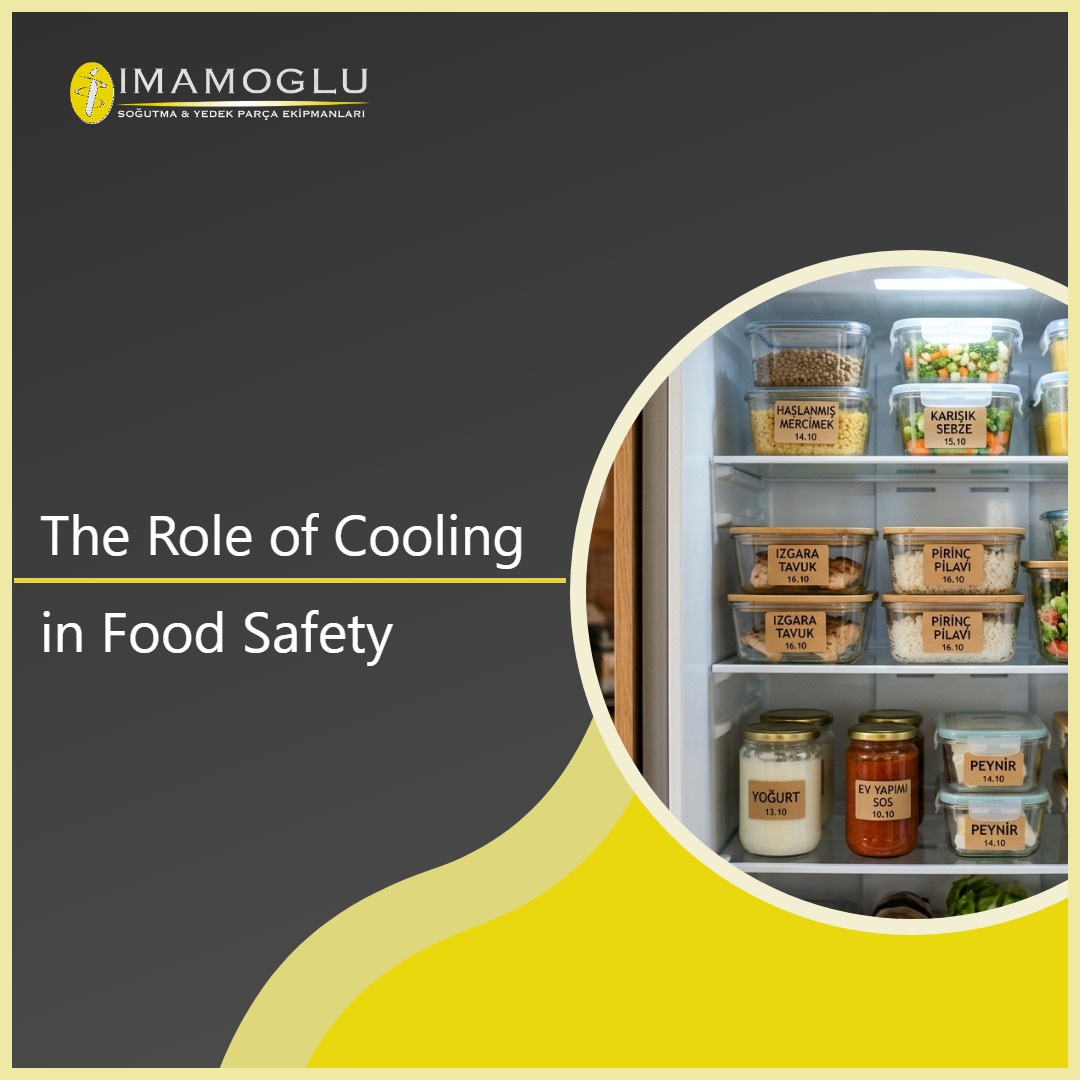
The Role of Cooling in Food Safety
Table of Contents
- What Is the Cold Chain?
- Microorganisms and Temperature
- The Danger Zone and Temperature Limits
- Correct Storage in a Cold Room
- Temperature Monitoring and Records
- Cross-Contamination and Airflow
- Inspection and Regulatory Expectations
- Common Mistakes
- Conclusion
What Is the Cold Chain?
The cold chain means keeping food at controlled temperatures without interruption from the point of production until it reaches the consumer. The chain covers raw material receipt, processing, storage, dispatch, distribution and points of sale. A break in temperature at any link can put the safety and quality of the product at risk.
Cold rooms are among the most critical links in this chain, because products stay in them for long periods and temperature is most likely to fluctuate there. Even a small deviation in one cold room can affect many batches of product. For this reason, a cold room should be seen not merely as a storage area but as part of the food safety system.
The success of the cold chain depends on the operation of the whole rather than of individual links. The cooling of transport vehicles, the waiting time at the warehouse entrance and the shelf layout all influence one another. This whole-system view is the foundation of food safety management.
The cold chain also has significant economic value. A chain that protects quality extends shelf life, reduces waste and builds customer trust. Refrigeration should therefore be seen as a means of protecting value, not just as a cost item.
The cold chain covers all processes that keep a product within the appropriate temperature range from the moment it is produced until it reaches the consumer. Even a brief break in any link of this chain can negatively affect product quality and safety. The cold room is therefore one of the most critical links in the cold chain.
Maintaining the cold chain depends not only on equipment but also directly on staff awareness and habits. Behaviors such as not leaving the door open unnecessarily, checking temperature at product receipt and reporting deviations immediately should be made permanent through regular training.
Microorganisms and Temperature
The speed at which microorganisms that cause spoilage and illness multiply is directly linked to temperature. As temperature falls, bacterial growth slows, and below a certain temperature it largely stops. Refrigeration is therefore one of the most effective protections of food safety.
It is important to know, however, that refrigeration does not kill every microorganism. Low temperatures stop most pathogens but do not destroy them. When temperature rises, these microorganisms can start to multiply again. This makes the continuity of the cold chain more important than a single act of cooling.
Different foods have different temperature requirements. Meat, dairy products, seafood, fruit and vegetables each have their own safe storage range. If several product groups are held in one cold room, the requirement of the most sensitive product should set the standard.
The difference between chilling and freezing should also be understood. Freezing slows microbial activity even further, but it also requires its own temperature to preserve product quality. Thawing and refreezing frozen products harms both safety and quality.
Refrigeration slows the growth of microorganisms but does not kill most of them. When the temperature rises, these microorganisms start multiplying rapidly again. Since some pathogens are known to grow, albeit slowly, even at low temperatures, it should be remembered that refrigeration alone is not a sufficient safety measure.
Besides microorganisms, the humidity level in the cold room also affects food safety. High humidity encourages mold and yeast growth, while very low humidity causes drying and quality loss in some products. Maintaining a humidity range suitable for the stored product is therefore also important.
The Danger Zone and Temperature Limits
In food safety literature, the temperature range in which microorganisms multiply fastest is called the "danger zone". This range starts from an upper limit that food must stay below and extends to high temperatures. The time a product spends in this range directly increases the safety risk.
In cold room design, the target temperature should be set so that it remains completely outside this danger zone. However, the target value alone is not enough; in events such as door openings, product loading and power cuts, how long the temperature rises for also matters.
Keeping temperature limits during product loading is especially important. Placing a warm product in a cold room all at once raises the general temperature of the room and puts other products at risk. The acceptance temperature of products should therefore be checked, and pre-cooling carried out where necessary.
Written temperature limits make clear what staff should do. What steps to take when a deviation occurs, who must be informed and what should happen to the product should all be defined in advance.
Bacteria multiply fastest in the temperature range known as the danger zone. The time food spends in this range must be kept as short as possible. Waiting times during product receiving and dispatch in particular can cause products to enter this zone unintentionally.
Measuring and recording the temperature of incoming products during receipt shows whether the cold chain was maintained during supply. Rejecting products arriving outside set limits, or assessing them in a separate area, prevents risks from being carried into the store.
Correct Storage in a Cold Room
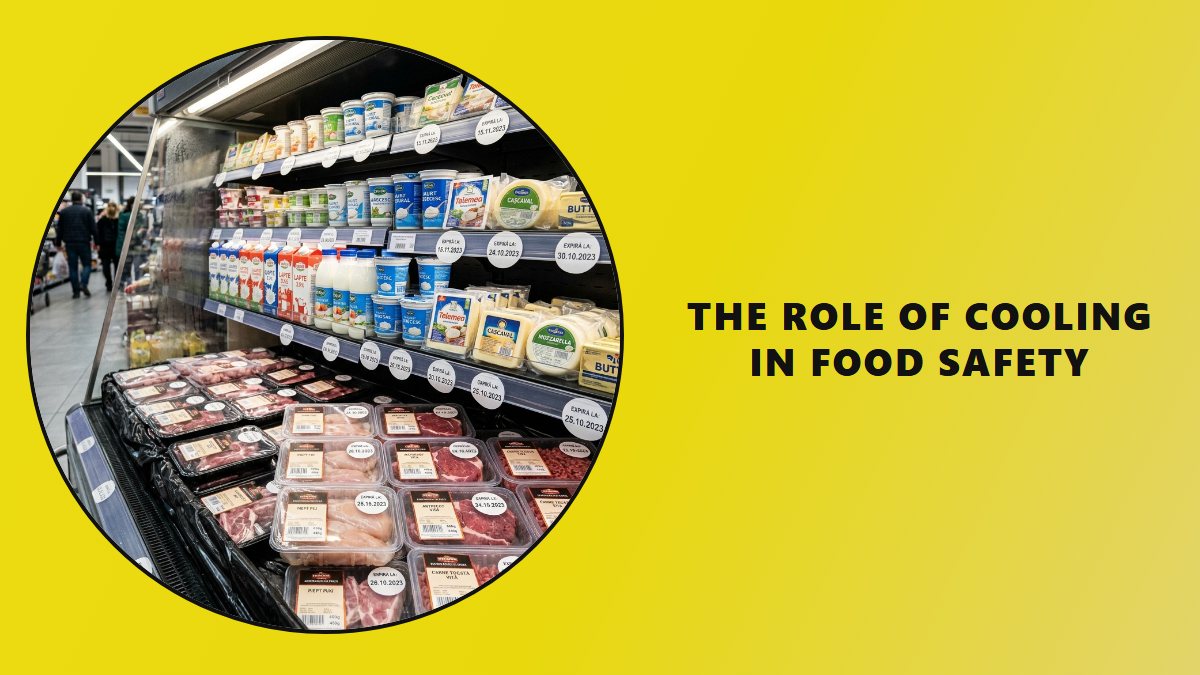
Correct storage begins with how products are placed in the cold room. Products should be arranged so that airflow is not blocked, leaving adequate clearance from walls and floor. Tight stacking disrupts air circulation and creates temperature differences.
Separating products also improves safety. Raw materials and ready-to-eat products, raw and cooked items, and foods containing different allergens should be kept apart. This separation reduces the risk of cross-contamination.
Stock rotation is an important part of storage. The first-in, first-out principle ensures products are used before their date expires. Labelling and date tracking make this process easier.
Products placed directly on the floor may be exposed to moisture and temperature differences from the floor. Using pallets and racks to keep products off the ground is important for hygiene.
Correct storage requires applying the first-in, first-out principle and arranging products by expiry date. Placing shelves at a certain distance from walls and ceiling ensures that air circulation is not blocked. Not placing products directly on the floor is also important for hygiene.
Having an emergency plan for situations such as breakdowns or power outages reduces product losses and food safety risks. The plan should clearly define who does what when an alarm is received, where products will be moved and how products will be assessed during the outage.
Temperature Monitoring and Records
Temperature monitoring makes the cold chain visible. Sensors that record continuously show how the temperature has changed hour by hour. These records are used to identify what happened and when, if a problem occurs.
Manual temperature records also matter. Readings taken by hand at regular intervals can be used to check the accuracy of sensors. A discrepancy between two measurement methods indicates that there may be a problem with a sensor.
Regular review of records allows a problem to be noticed before it grows. If records are only archived, they provide no protective value. A responsible person should review the records at set intervals and report anomalies.
The integrity of temperature records must also be protected. Records that cannot be altered and that are backed up give reliability during inspections. Deleting or changing records is seen as a serious non-compliance.
Temperature records are the most important documents proving that the cold chain has been maintained. Records should be taken at regular intervals and deviations noted together with their causes. Automatic recording systems reduce human error and make it possible to monitor changes during the night as well.
Calibrating thermometers and sensors at regular intervals is very important for reliable measurements. An uncalibrated sensor can make the room appear colder than it really is and cause risks to go unnoticed. Recording calibration dates and results is also among the documents requested during inspections.
Cross-Contamination and Airflow
In a cold room, airflow affects not only temperature but also microbiological risk. Microorganisms and particles carried in the air can pass from one product to another. Airflow must therefore be controlled between products.
Evaporator cleaning plays a critical role in preventing cross-contamination. A dirty evaporator can spread microorganisms through the air. Regular cleaning and disinfection reduce this risk.
Door openings also increase the risk of contamination. The exchange between outside and inside air can bring in dust and microorganisms. Air curtains and quick-closing doors limit this entry.
Staff movement and clothing must not be overlooked either. Wearing suitable protective clothing and gloves when entering a cold room protects both the product and the staff.
To prevent cross-contamination, it is recommended to store raw and cooked products in separate areas or rooms. If they must be stored in the same room, cooked and ready-to-eat products should be placed on upper shelves and raw products on lower shelves. All products should also be covered and labeled.
Inspection and Regulatory Expectations
Food businesses must comply with the food safety regulations of their country and sector. Cooling and storage conditions form an important part of these regulations. In inspections, temperature records, maintenance records and cleaning documents are among the first items checked.
International food safety management systems require hazard analysis and the identification of critical control points. Cold storage is usually defined as a critical control point in these systems. Temperature limits, monitoring methods and corrective actions should therefore be documented in writing.
Inspection readiness should be part of daily practice. Keeping records up to date, maintaining equipment and training staff allow an inspection to run smoothly. Last-minute preparation often reveals gaps.
Training is the foundation of regulatory compliance. When staff understand why these temperature limits matter, the rules are applied more consistently.
During inspections, the cold room cleaning plan, temperature records, calibration documents and staff training records may be examined. Keeping these documents orderly and accessible ensures inspections go smoothly and shows the importance the business places on food safety.
Common Mistakes
The most frequent mistake is leaving the door open. Short openings may go unnoticed, but if the door stays open for long, the room temperature rises quickly and products are put at risk.
Placing a warm product directly into a cold room is another common error. This raises the general temperature of the room and affects the other products. Acceptance and pre-cooling procedures for products prevent this mistake.
Failing to keep or review temperature records leads to problems being noticed late. Without records, it is impossible to tell when a problem started and how long it lasted.
Finally, not separating products and not rotating stock causes significant losses in both safety and waste.
A common mistake is storing more product than the cold room's capacity. An overfilled room blocks air circulation and creates warm spots inside. Placing hot products directly into the cold room also raises the room's overall temperature and puts other products at risk.
Conclusion
Refrigeration in food safety is a fundamental element that protects consumer health and maintains product quality. When an uninterrupted cold chain, correct storage, continuous temperature monitoring and the prevention of cross-contamination are considered together, a safe system is created.
Regulatory compliance and inspection readiness become sustainable when they are part of daily practice. Trained staff, regular records and well-maintained equipment are the three pillars of food safety management.
İmamoğlu Soğutma and Yedek Parça Ekipmanları provides technical support to food businesses on cold room and refrigeration equipment needs. You can share your current system and requirements to receive a suitable solution and a quotation.