



Smart Temperature Management with a Digital Thermostat
Table of Contents
- What Is a Digital Thermostat?
- Fundamentals of Temperature Control in a Cold Room
- Core Features of Smart Thermostats
- Data Logging and Trend Analysis
- Remote Management and Access Control
- Impact on Energy Efficiency
- Installation and Setup Considerations
- Common Setup Mistakes
- Conclusion
What Is a Digital Thermostat?
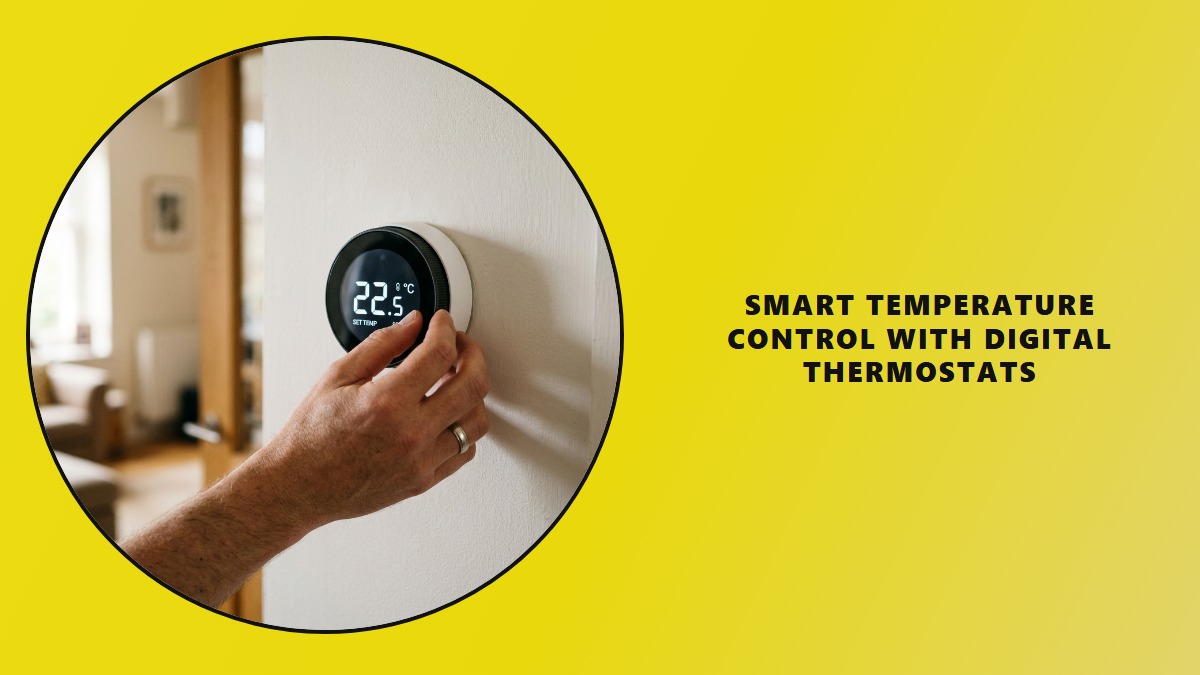
A digital thermostat is an electronic controller that measures the temperature of a cold room, compares that reading with a preset target and manages the cooling system accordingly. On older mechanical thermostats, the temperature was set with a dial and drift could grow unnoticed. Digital devices show the value numerically, allow more precise adjustment and can keep records.
The real value of a digital thermostat lies not only in holding a temperature, but in showing how that temperature behaves. Door openings, product loading and day-night differences appear clearly on the temperature curve. This information allows settings to be based on actual need.
A thermostat may be a standalone device or part of a control panel. Working with the compressor, fans and valves it is connected to, it keeps the room at the target temperature. For this reason, selection should take into account the type of cooling system and compatibility with the outputs to be controlled.
The accuracy of a digital thermostat also depends on the quality and placement of its sensor. However advanced the device, a sensor in the wrong place produces wrong results. Sensor placement is therefore as important as the thermostat setting.
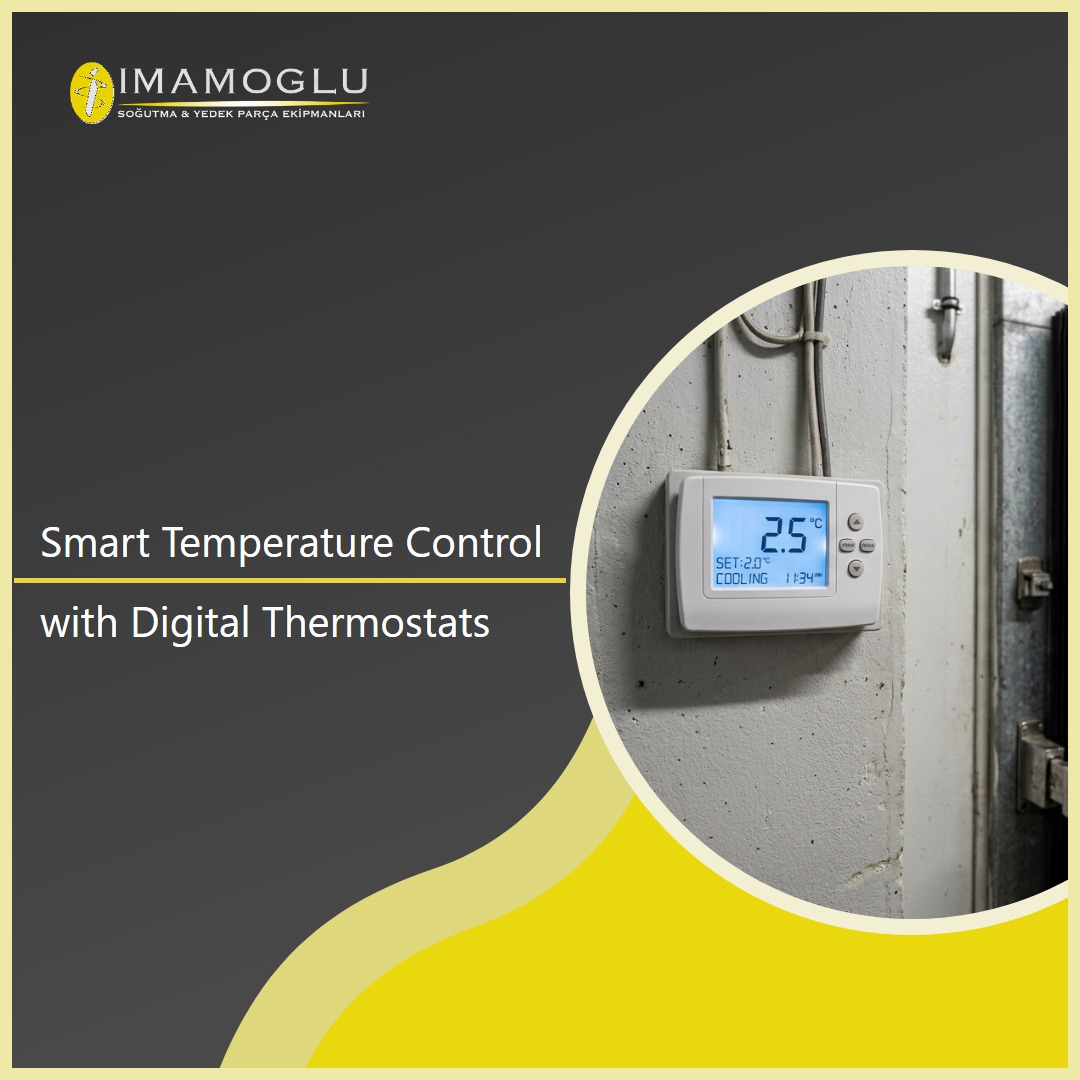
Digital thermostats are control devices that measure the temperature in the cold room and switch the refrigeration system on and off according to set values. They measure far more precisely than mechanical thermostats and show temperature values on a clear display. This precision plays a decisive role in preserving the quality of temperature-sensitive products.
Thanks to their user-friendly interfaces, digital thermostats allow staff with limited technical knowledge to easily follow the room's status. Error codes and warning symbols on the display give quick information about the type of problem and help technical service respond better prepared.
Fundamentals of Temperature Control in a Cold Room
Temperature control is defined by a target value and a tolerance band around it. When the room temperature rises above the upper limit of the band, cooling switches on; when it falls to the lower limit, cooling stops. This cycle should be tuned so that the compressor does not start and stop more often than necessary.
If the tolerance band is set too narrow, the system switches on and off constantly. This shortens compressor life and increases energy use. If the band is too wide, the product temperature may move outside acceptable limits. A balanced value should be chosen according to the product type and how often the room is used.
The target value is not the same for every product. Some products must be stored at lower temperatures and others at higher ones. If one room holds several product groups, separate zones and separate control points may be worth considering.
Lag must also be taken into account in temperature control. In a large cold room the temperature changes slowly after a door opening or a product load. Thermostat settings should therefore avoid overreacting to short fluctuations.
Temperature control in a cold room is based on continuously monitoring the difference between the set value and the actual room temperature. The thermostat starts the compressor when this difference exceeds a certain range and stops it when the target temperature is reached. Setting this range correctly is important for both product safety and compressor life.
Target temperature and humidity values differ according to the type of product stored. Creating separate setting profiles for fresh fruit and vegetables, meat, dairy or frozen food makes it easier to manage cold rooms used for different purposes in the same facility.
Core Features of Smart Thermostats
Smart thermostats offer more functions than classic digital devices. They can monitor several sensors, control compressor and fan operation separately and run scheduled programmes. For example, the target value can be changed at night on the assumption that the load is lower.
Many smart devices also allow alarm thresholds and delay times to be adjusted. This makes it possible to distinguish a brief temperature rise caused by a normal event, such as a door opening or a product load, from a real fault. That distinction reduces false alarms.
On the software side, the user interface, system updates and settings backups matter. Losing a device's settings can leave the room uncontrolled for hours. Settings should therefore be backed up regularly and be restorable.
Every feature also brings cost and maintenance load. Rather than investing in functions that will never be used, it is more sensible to choose the core features that meet the facility's needs.
Smart thermostats combine many functions in a single device, such as defrost management, fan control, door-open warnings and high or low temperature alarms. Some models receive data from several sensors and can monitor the temperature at different points in the room, giving a better understanding of temperature distribution.
Data Logging and Trend Analysis
Data logging is one of the most valuable features of a thermostat. Values such as temperature, humidity and running time are recorded at set intervals. These records show how the room behaves through the day and over the year.
Trend analysis examines how these records change over time. A temperature value that rises slowly may indicate a deteriorating gasket, a dirty condenser or the start of frost build-up on the evaporator. Early signs like these allow action before a failure occurs.
Someone must be assigned to review the records regularly. If data is stored but never examined, the records only occupy storage. Weekly reports and automatic summaries at certain thresholds make this process easier.
The retention period for data should also be defined. Long-term records are valuable for seasonal comparisons and annual maintenance planning. It is also important that records are not open to unauthorised access.
Data logging makes it possible to review how temperature values change over time in the form of graphs. These graphs reveal performance drops in the refrigeration system, intensity of door use or the effect of defrost cycles. Trend analysis allows small problems to be noticed before they turn into major breakdowns.
Remote Management and Access Control
Remote management means that thermostat settings can be changed over a network. This allows a fault occurring at night or at the weekend to be dealt with without waiting for someone on site. However, this convenience also brings a security risk.
Access control defines what each user can see and what they can change. A shift worker may be able to view the temperature, while changing the target value may be restricted to responsible technical staff. This separation prevents accidental or malicious changes.
Default usernames and passwords must always be changed. Secure connection methods should be used for remote access, and the network should not be left open to outside access. Records should also show who changed a setting and when.
Remote management does not replace the team on site. The system can report a problem, but physical inspection and repair may still be needed. Remote management should therefore be planned as a tool that supports on-site responsibilities, not one that reduces them.
Remote management allows authorized people to check and, when necessary, change thermostat settings without going to the facility. However, this authority must be distributed in a controlled way. Giving each user only the permissions appropriate to their role prevents incorrect setting changes.
Impact on Energy Efficiency
A correctly set digital thermostat reduces energy consumption by cutting unnecessary cooling. Setting the target value according to real need, keeping the tolerance band at a suitable width and avoiding needless cycling are the foundations of energy saving.
Scheduled programmes also contribute to efficiency. Raising the target value slightly during hours with little product movement can reduce compressor run time. However, the change must keep the product within acceptable temperature limits.
When estimating energy savings, the effect of the whole room should be considered, not just the thermostat. Factors such as door gaskets, insulation and evaporator cleaning are as important as the setting. The thermostat cannot replace them.
Energy consumption records can be used to measure the effect of setting changes. Comparing consumption before and after a change shows whether the change really delivers a benefit.
A correctly set digital thermostat reduces energy consumption by preventing the compressor from running unnecessarily. Defrosting only when needed and controlling fans efficiently also contribute to energy savings. These gains are reflected directly in operating costs, especially in large cold rooms that run continuously.
Installation and Setup Considerations
The first step in installing a thermostat is placing the sensors correctly. The temperature sensor should be positioned where it reflects the room's average temperature. A sensor placed directly in front of a cooling outlet or beside a door gives misleading values.
Electrical connections must match the compressor, fan and valve outputs. The relay each output is connected to, and the condition under which it operates, should be documented. This documentation saves time when a fault has to be traced later.
Settings should be made step by step after installation. First define the target value and tolerance band, then set alarm thresholds and delay times. After each change, the system's behaviour should be observed for several days.
After installation, it is useful to test returning to factory settings and restoring from a backup. That way, if a problem arises, the procedure for restoring settings is already known.
The position of the temperature sensor is critical during installation. Placing the sensor too close to the evaporator air outlet, the door entrance or direct heat sources can lead to incorrect measurement of room temperature. The sensor should be at a point that represents the area where products are stored.
Common Setup Mistakes
The most frequent mistake is setting the tolerance band too narrow. This causes the system to cycle constantly and the compressor to wear out early. A balanced band is needed for both product safety and energy efficiency.
Another mistake is making settings without considering sensor placement. Settings based on a sensor in the wrong place do not match the actual state of the room and can lead to product loss.
Never changing the alarm thresholds is also a common error. Default thresholds may not suit the facility's real operating conditions. In that case either false alarms come too often or a real problem is noticed too late.
Finally, failing to record setting changes is frequent. In a system where nobody knows who changed what and when, finding the cause of a problem becomes very difficult.
A common setting mistake is keeping the temperature differential range too narrow. In this case, the compressor switches on and off too frequently, increasing energy consumption and shortening equipment life. Settings should be made considering the refrigeration manufacturer's recommendations and the requirements of the stored product.
Conclusion
A digital thermostat and smart temperature management are effective ways to keep a cold room's temperature precisely controlled and to improve energy efficiency. Data logging, trend analysis and remote management allow problems to be spotted early and maintenance to be planned.
To achieve these benefits in full, correct sensor placement, a balanced tolerance band, meaningful alarm thresholds and regular data review must be considered together. A device creates value only when it is correctly installed and monitored by a team that uses it.
İmamoğlu Soğutma and Yedek Parça Ekipmanları provides technical support on thermostats and control systems for cold room projects. You can share your current system and requirements to receive a suitable solution and a quotation.