


Smart Cold Room Doors and Remote Monitoring
Table of Contents
- What Is a Smart Cold Room Door?
- Core Components of a Smart Door
- Benefits of Remote Monitoring
- Tracking Door Status
- Alarm and Notification Management
- Integration with the Building Management System
- Installation and Infrastructure Considerations
- Common Mistakes
- Conclusion
What Is a Smart Cold Room Door?
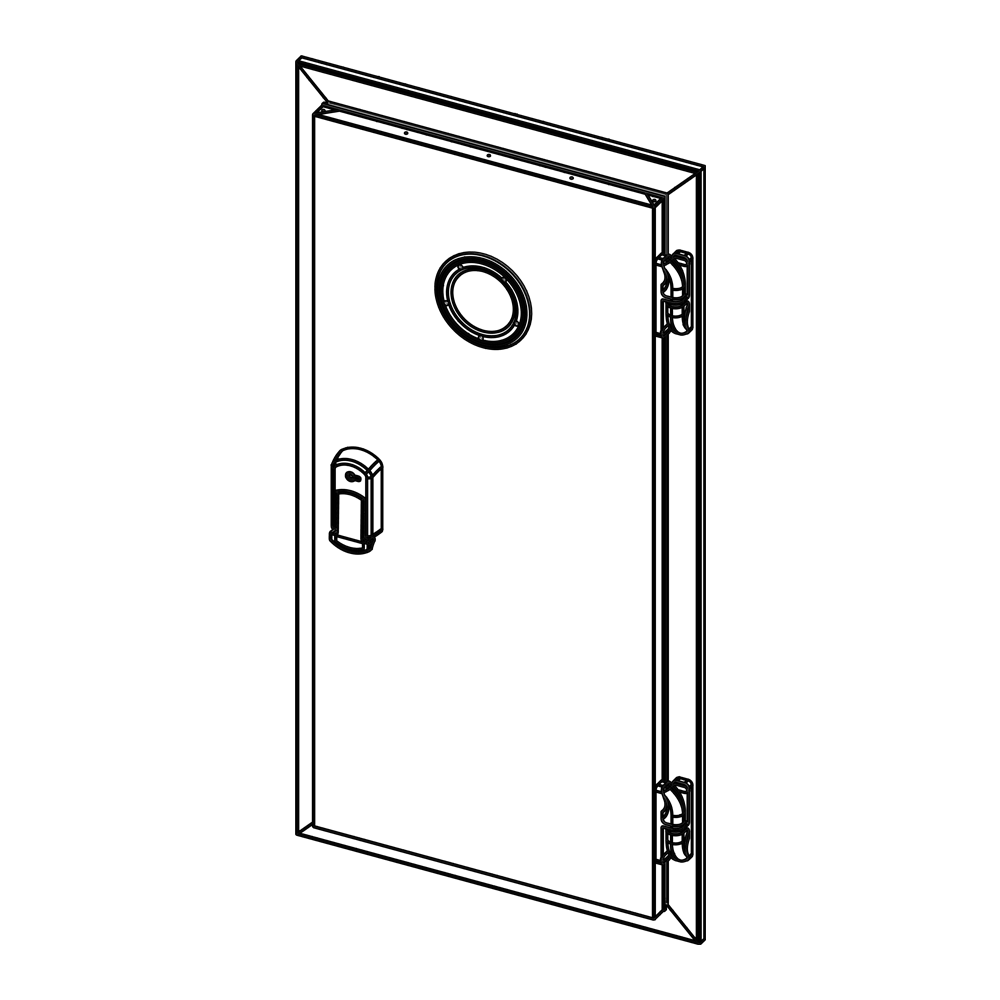
A smart cold room door is a door fitted with sensors that, in addition to the mechanical functions of a conventional door, can detect whether the door is open or closed, measure internal and external temperature and humidity, and in some cases record how long the door takes to close. This data is sent to a control unit and can be monitored over a local network or the internet.
On conventional doors, the state of the door is usually known only when a worker checks it on site. This delays the discovery of problems such as a door left open for a while, a worn gasket or a rising temperature. Smart systems close that gap by making problems visible as they happen.
A smart door does not always have to replace the existing door. In many cases it can be installed by adding sensors and a control module to the current door. This gives facility owners cost and flexibility options.
The value of a smart system is measured by the quality of its data and how consistently that data is reviewed. A system that produces data nobody reads only adds cost. The system should therefore be planned from the start, including who receives notifications and how often.
Smart cold room doors retain the insulation and sealing properties of conventional doors while adding data collection and communication capabilities. As a result, the door is no longer just a passage point but becomes a monitoring point that directly affects cold chain safety. This difference is especially noticeable in facilities storing temperature-sensitive products such as food, pharmaceuticals and flowers.
Another advantage of smart door systems is that they create orderly and reliable records that can be used in audits. Documenting that the cold chain has been maintained without interruption makes it easier to meet legal requirements, especially in the food and pharmaceutical sectors, and increases credibility with customers.
Core Components of a Smart Door
A smart door system usually consists of a door position sensor, internal and external temperature sensors, a control unit and a communication module. The door position sensor reports whether the door is open or closed. Temperature sensors help detect deviations from the target value early.
The control unit collects data from the sensors, checks it against defined thresholds and generates alerts when needed. The communication module sends this data, by wired or wireless means, to a panel, a cloud service or the facility's building management system. The chosen communication method must suit the facility's network infrastructure.
Some systems also include relays linked to the door lock or an air curtain. These components can perform automatic actions, such as switching on an air curtain when the door stays open or lighting a warning lamp. Each additional component, however, also adds to the maintenance load.
Cold resistance matters when choosing components. Sensors and communication modules should be designed to work reliably at low temperatures and in humid conditions. Otherwise, incorrect readings and frequent faults can occur.
The harsh conditions of a cold environment must be taken into account when selecting components. Low temperatures, high humidity and icing can shorten the life of standard electronic parts. It is therefore important for long-term reliability that sensors, cable connections and control boxes have a protection rating suitable for cold room conditions.
Motorized opening and closing systems integrated into the door mechanism and heater elements placed along the door edges are also important parts of a smart door. Heaters prevent icing on the door gaskets, ensuring the door opens and closes smoothly and maintains its seal. Monitoring the condition of these parts also helps detect faults in advance.
Benefits of Remote Monitoring
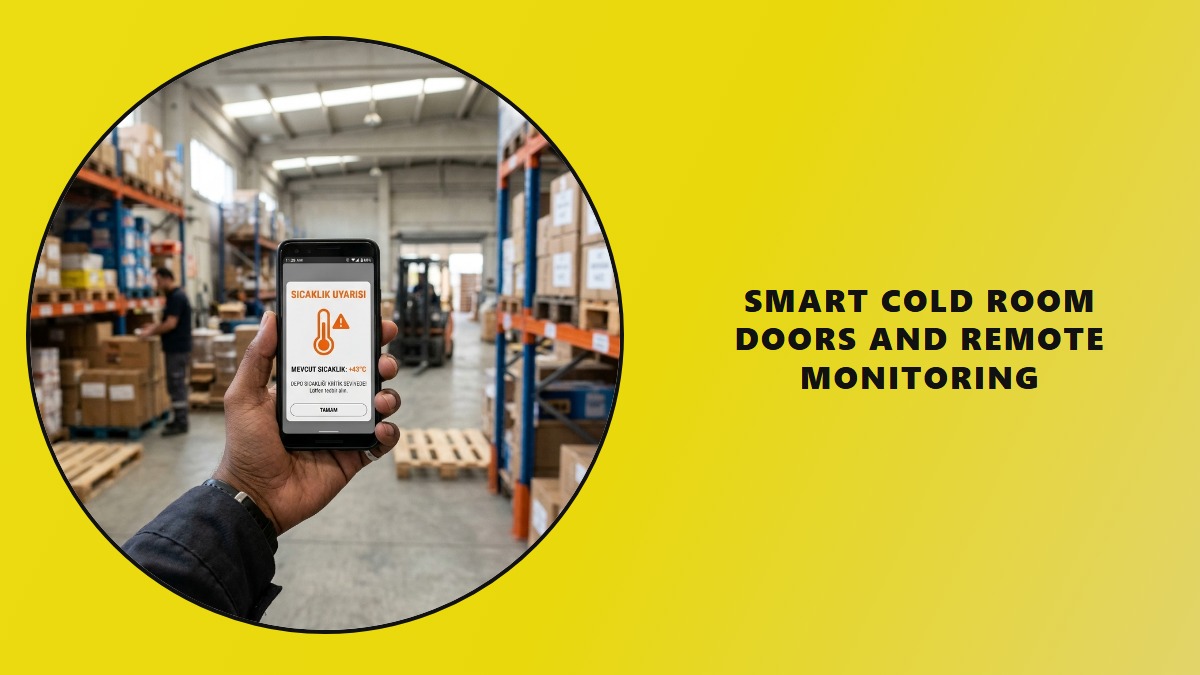
The most obvious benefit of remote monitoring is that problems are noticed early. Situations such as a door staying open for a long time or a rise in room temperature are reported immediately. This can reduce product loss and energy waste.
A second benefit is that maintenance planning rests on data. Records of how often the door opens, how open-time changes and how temperature curves develop over time show when gaskets or door mechanisms need checking.
A third benefit is clearer accountability. When it is recorded which shift and which door was left open, and for how long, operating procedures can be improved. It also becomes easier to see who is responsible at any given time.
Finally, remote monitoring makes it easier to manage several cold rooms. Doors at different sites can be tracked from one screen, and authorised people can act when needed.
Remote monitoring allows business owners and technical teams to see the status of cold rooms in real time without being physically on site. A problem occurring at night or on a weekend is noticed and addressed without waiting until morning. This prevents product losses and energy waste.
Tracking Door Status
Tracking door status is the most basic function of the system. The moment the door opens, the time it stays closed and the time it stays open are recorded. These records help show at what times of day openings are concentrated.
Open-time is one of the most critical indicators for energy loss. Short openings are usually acceptable, but long openings both raise the room temperature quickly and make the compressor run unnecessarily. Threshold values should therefore be set.
Door status data can also be used to build a baseline over time. Deviations from the average can point to the start of a problem. For example, if the closing time of a particular door is gradually getting longer, the door closer may need adjusting.
A simple monitoring screen also matters. A screen that shows too much data can cause important warnings to be missed. Only the indicators needed for decisions should be highlighted.
Tracking door status is not limited to open or closed information. Data such as how many times the door is opened per day, how long it stays open on average and at what times it is used most provide valuable insight for operational planning. Based on this data, loading times can be organized to reduce unnecessary open time.
Alarm and Notification Management
An alarm system should reach the right person at the right time. A system that produces too many alarms is soon ignored. This is known as alarm fatigue, and it can cause a real problem to be missed.
Alarm thresholds should be set according to the room's normal operating conditions. A brief opening can trigger a warning, while a long open period can trigger a higher-priority notification. Several temperature thresholds can also be defined.
Notification channels must be planned too. Options such as SMS, email, mobile app notifications or a visual warning on a control screen can be used together. Sending important alarms through more than one channel also provides protection if one person is not on duty.
Every alarm should have an owner and a response time. What to do when an alarm arrives should be set out in a written procedure. This procedure keeps the process consistent when staff change.
What matters in alarm management is that each alert reaches the right person with the right level of urgency. A notification may go only to the shift supervisor for a brief opening, while technical teams and managers can also be informed in cases of prolonged or repeated openings. Too many unnecessary alarms, however, can make teams desensitized to warnings.
Integration with the Building Management System
Smart door data becomes more valuable when it is combined with the facility's building management system. Room temperature, compressor operating status and door data can be seen on one screen. This overall view makes it easier to find the cause of a fault.
The communication protocol used for integration matters. Compatibility between systems should be checked in advance. When devices from different manufacturers are used together, their data formats must match.
Data security should also be considered during integration. Measures such as authorising remote access, changing passwords regularly and isolating the network from outside access should be in place. A vulnerable system can also put the security of the whole facility at risk.
The scope of integration should be defined by the facility's needs. Choosing the data that supports decisions gives better results than collecting every possible data point.
Integration with the building management system allows data from the cold room door to be evaluated together with other systems such as refrigeration, lighting and security. For example, scenarios can be set up in which cooling capacity is adjusted automatically when the door stays open for a long time, or the related camera recording is flagged.
Installation and Infrastructure Considerations
The first step in installing a smart door is assessing the door's current condition. The hinges, gasket and closing mechanism must be sound. If these components have problems, the system's readings may not be reliable even if the sensors work correctly.
Sensor placement also needs care. The door position sensor must be aligned correctly when the door closes. The temperature sensor should be placed where it measures the actual air temperature of the room. A sensor placed directly in front of a cooling outlet can give misleading values.
Cabling and power supply must suit cold and humid conditions. The insulation and protection rating of cable connections should match the demands of the environment. Poor cabling leads to faults and incorrect readings over time.
The system should be tested after installation. Opening and closing the door, triggering alarms and confirming that notifications reach the right people should all be checked. Keeping test records is valuable for troubleshooting later.
Before installation, the facility's internet connection, electrical infrastructure and cabling routes should be examined in detail. For uninterrupted monitoring, a backup power source and devices that can store data locally in case of connection loss should be preferred. These preparations ensure the system works reliably from day one.
Common Mistakes
The most frequent mistake is installing the system and then forgetting about it. Data is collected but not reviewed regularly. In that case, the value the system delivers stays very limited. Weekly or monthly review meetings greatly reduce this problem.
Another mistake is never setting the alarm thresholds. A system running on default settings may not suit the facility's real needs. This leads either to many false alarms or to no alarms at all.
Neglecting sensor maintenance is also common. Ice or moisture building up on a sensor can distort readings. Sensors should therefore be checked periodically and recalibrated when needed.
Finally, skipping security measures is a frequent error. Leaving default passwords unchanged or failing to block unauthorised access turns the system into a weak point.
A common mistake is not reviewing the system regularly after installation. Sensor calibration, the relevance of alarm thresholds and the list of people receiving notifications can change over time. Without periodic checks, the system may no longer deliver the expected benefits.
Conclusion
Smart cold room doors and remote monitoring are practical tools for improving cold chain safety and energy efficiency. Continuous monitoring of door status and temperature allows problems to be spotted early and makes maintenance data-driven.
A successful implementation depends on correct component selection, careful installation, meaningful alarm thresholds and regular review. The processes that use the technology matter as much as the technology itself.
İmamoğlu Soğutma and Yedek Parça Ekipmanları provides technical support on doors and monitoring systems for cold room projects. You can share the current condition of your door and your requirements to receive a suitable solution and a quotation.