



Sliding Door Track System Guide
Table of Contents
- What Is a Sliding Cold Room Door System?
- Advantages and Limits of a Sliding Door
- Track Types and Construction
- Load Capacity and Track Selection
- Installation Requirements and Alignment
- Managing Ice, Dirt and Moisture
- Regular Maintenance and Cleaning
- Common Problems and Their Solutions
- Conclusion
What Is a Sliding Cold Room Door System?
A sliding cold room door is a door system in which the leaf opens by moving sideways along a track rather than swinging on a hinged axis. In this arrangement the leaf takes its movement from a track fixed at the top, or from a structure supported both at the top and the bottom. Because the leaf slides aside, it does not need a free swing area in front of the opening. For this reason sliding doors are often chosen for warehouses with limited space and for passages with heavy traffic.
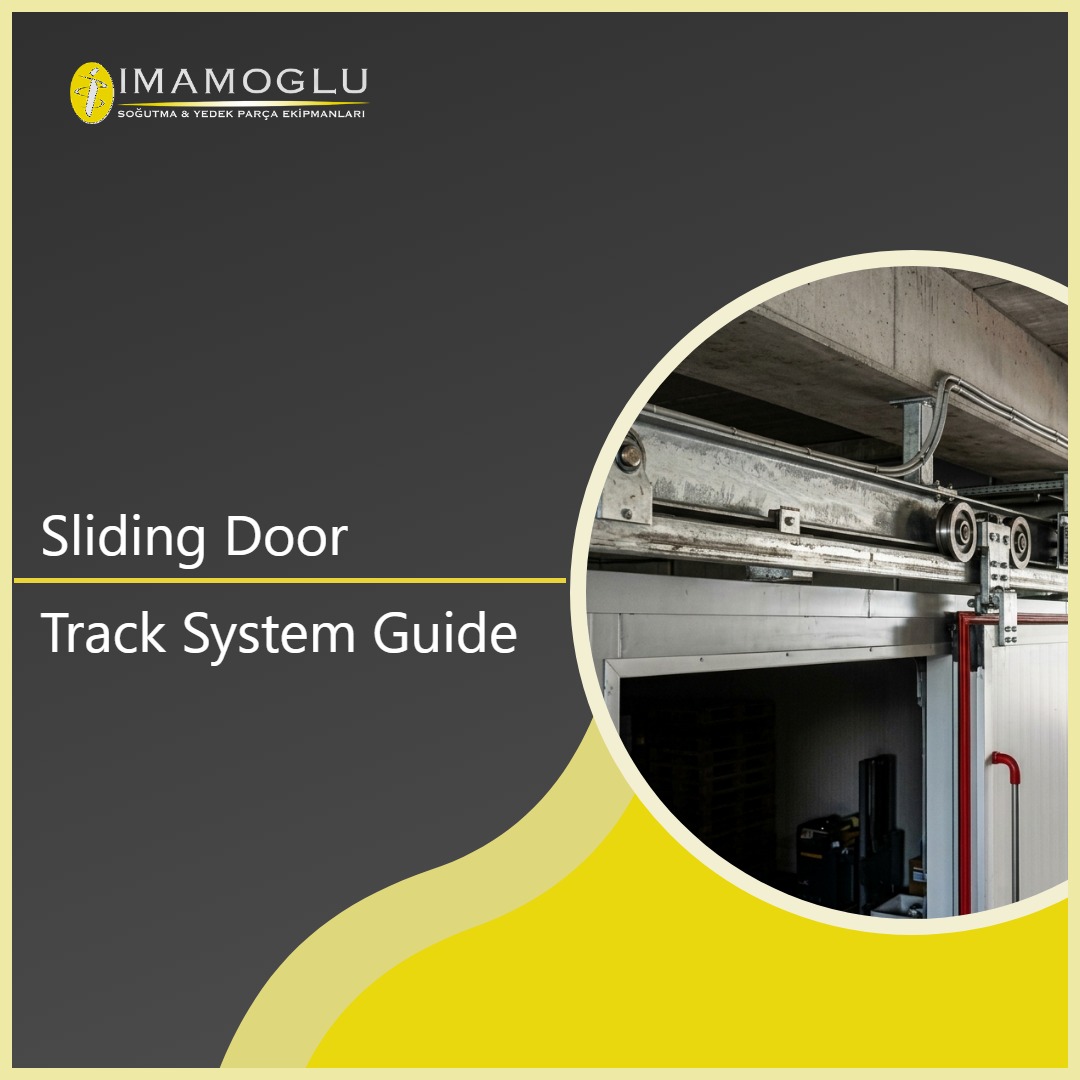
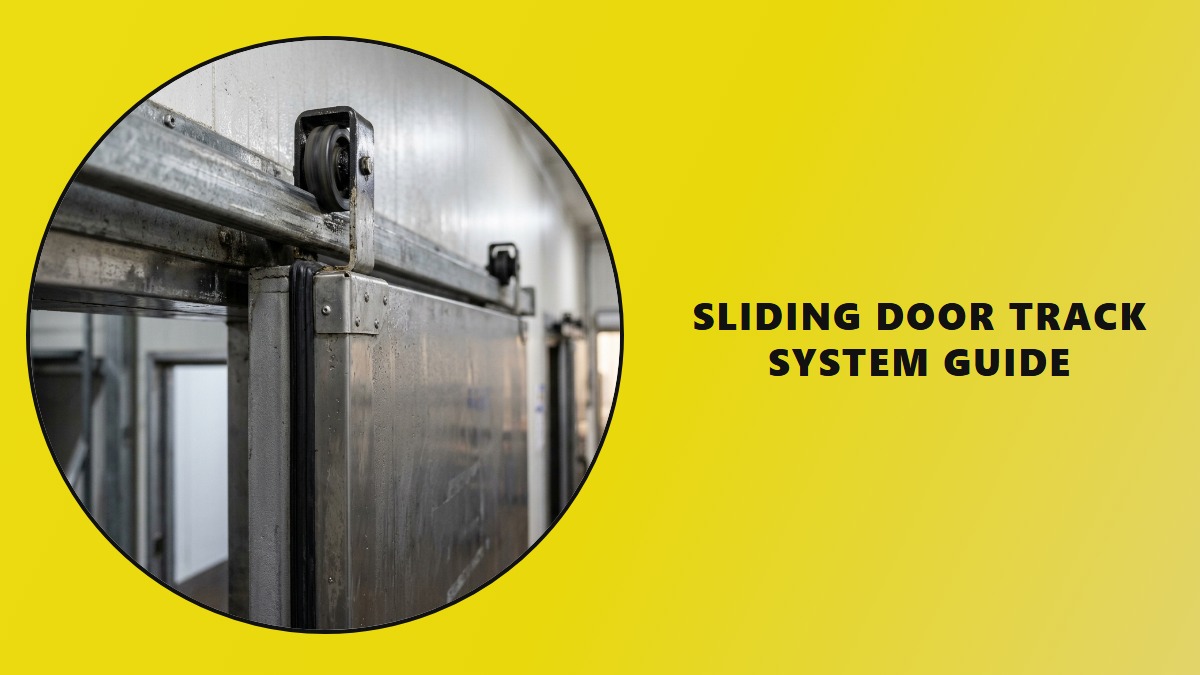
The main components of the system include the track, the carriers or running wheels, the guide parts, the door leaf and the gasket that provides the seal when the door closes. Each component must be selected for operation in a cold environment. The coating of the wheels, the construction of their bearings and the material of the guides are the main factors that determine the life of the system.
Although the working principle of a sliding system looks simple, it can only run smoothly if the track line is perfectly aligned. A small curvature or a difference in level in the track makes the door harder to move and, over time, causes wear on the wheels and guides. A sliding system is therefore not only a question of choosing a door, but also of designing and installing the track structure correctly.
Another reason sliding doors are chosen is that they do not block part of the room when open. Equipment working in front of and behind the door can therefore move without clashing with the swing of the door. However, the selection of the system must take into account floor conditions, door size and intensity of use together.
Advantages and Limits of a Sliding Door
The most obvious advantage of a sliding door is that it does not require additional space to open. In narrow corridors, in production lines with limited floor space and at points where continuous work takes place in front of the door, this feature offers a real convenience. Equipment that would clash with the swing arc of a hinged door does not face that problem with a sliding door.
Another advantage is that the door can open wide. When the leaf is pulled fully to one side, the passage can open to the full width of the leaf. This makes it easier for large pallets, long equipment and heavy traffic to pass. A correctly designed system uses the opening to its maximum effectiveness.
The limits of a sliding door must also be understood. The track, because it lies in front of or below the door, can create a raised edge on the floor or leave a gap where dirt and ice can collect. This makes cleaning harder and can obstruct movement. In addition, the track needs more careful maintenance than a hinged door.
Sliding doors also need extra care where sealing is concerned. In a system where the leaf moves sideways, contact between the gasket and the frame must be complete and even at the moment of closing. If the closing alignment is disturbed, air leakage can occur. The closing point of a sliding door should therefore be checked regularly.
Track Types and Construction
Tracks used for sliding doors are generally divided into two main types: overhead and floor-track. In the overhead system the leaf hangs from a track above and there is no track on the floor. This design makes floor cleaning easier and leaves no raised edge on the floor. In the floor-track system the leaf moves along a track set into or on the floor. This type gives better guidance to the door but creates a gap in the floor that needs maintenance.
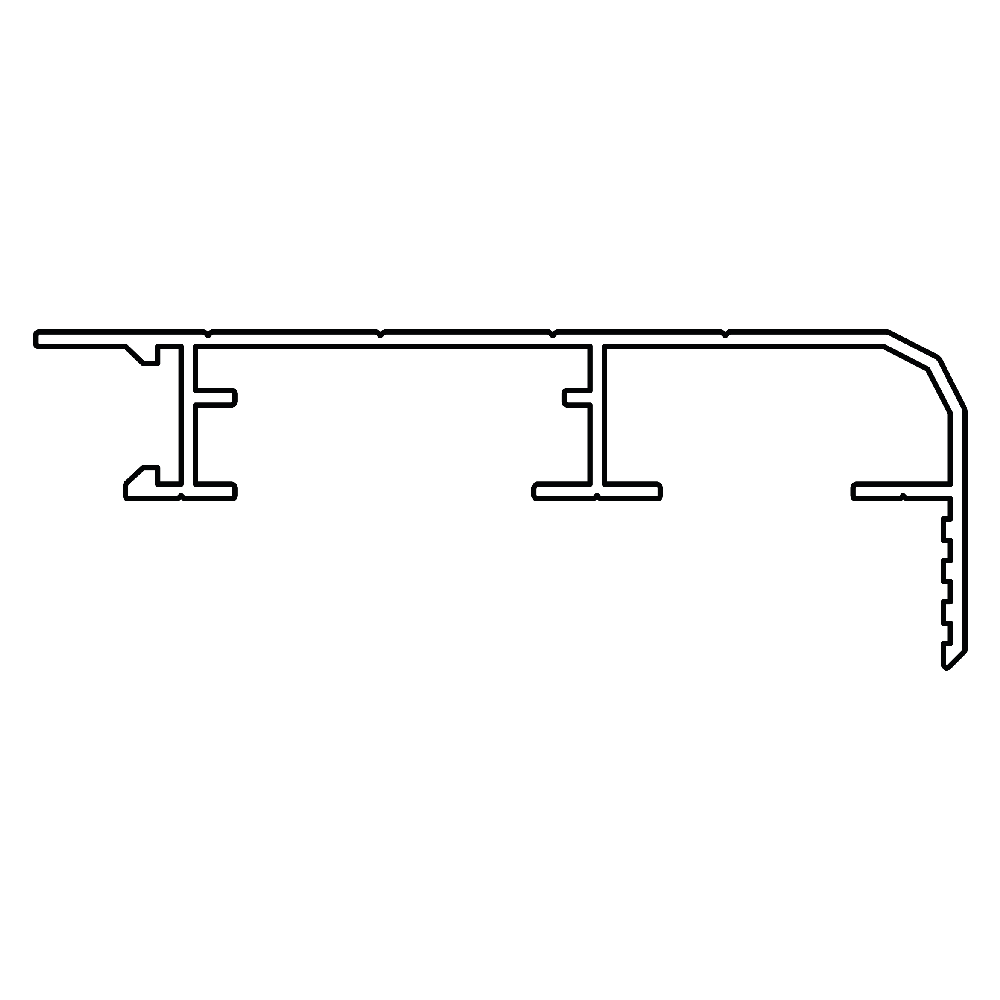
Tracks can be made of steel, stainless steel or aluminium profile. For tracks that will work in a cold and humid environment, corrosion resistance, surface smoothness and dimensional stability are important. Dirt and ice that collect on the track surface prevent the wheels from moving and increase wear.
Running wheels or carriers are the parts that carry the load on the track and enable the leaf to move. The bearings, coating and seals of these wheels must suit cold operating conditions. Moisture and dirt that enter the bearing can make the wheel harder to turn. The maintenance and replacement of the wheels are therefore critical for the overall life of the system.
Guide parts stop the door from moving sideways off the track. Wear on the guides leads to misalignment of the door and to increased friction. Guide parts should therefore also be checked periodically and replaced when necessary.
Load Capacity and Track Selection
The choice of track system must be based on the weight of the door leaf and the type of load it will carry. The weight of the door is directly related to the thickness and material of the insulated panel. A thicker, more densely insulated leaf is heavier, so the track and wheel system must be chosen with matching durability. A system with insufficient capacity can show signs of deformation and failure within a short time.
The intensity of use also affects the choice. A door that is opened and closed many times a day needs more durable wheels and bearings. In addition, the speed of movement and the way the leaf closes change the force applied to the track and guide system. These parameters should be considered together.
The track system should also suit the width of the opening. Over long openings the track may sag slightly under its own weight and the load of the leaf. This sag affects the movement of the door and can disturb the alignment. For long openings, supported or reinforced track designs are therefore preferable.
Confirming load and span calculations against the manufacturer's data strengthens the reliability of the selection. Obtaining written information from the supplier on carrying capacity, wheel life and track material helps to clarify expectations in the field.
Installation Requirements and Alignment
The correct operation of a sliding door depends on a perfect alignment of the track during installation. Differences in level, curvature or deviation from parallel make the door harder to move and wear down the wheels over time. Before installation the condition of the building floor and ceiling should be measured and the route of the track line clearly defined.
When fixing the tracks, the movement of the building and the expansion differences caused by temperature changes must be allowed for. Fixing points must be strong enough and must not put stress on the track. An overly tight installation can cause problems in the cold when the material contracts.
Fitting and adjusting the door leaf must also be done carefully. The leaf must sit properly on the track, its lateral and vertical alignment must be correct, and it must make even contact with the gasket when it closes. The adjustment should aim for an equal gap between the leaf and the frame all the way round.
After installation the door should be opened and closed several times, and the smoothness of movement, the closing action and the gasket contact should be checked. These tests allow problems to be found before they develop.
Managing Ice, Dirt and Moisture
In a cold environment, one of the greatest enemies of a sliding door is ice. If moisture collects on the track and freezes, the wheels may stop moving altogether or become seriously hampered. This problem is most noticeable where the door is opened and closed frequently and where it meets the outside air. Moisture build-up on the track must be kept under control to prevent icing.
Dirt and dust also cause problems for the track system. Residues on the track surface get under the wheels, increase friction and speed up wear on the bearings. Regular cleaning is the simplest way to prevent this build-up. The materials used for cleaning must be suitable for the track and wheel materials.
Drainage of the track line matters too. A track where water collects prepares the ground for both rust and ice. Arranging the floor slope so that it falls away from the track line and ensuring that water is drained away is necessary for a long system life.
Heating solutions can also be considered in some applications. Controlled heating in the area of the track can prevent ice from forming. However, the energy consumption and safety requirements of this approach must be assessed carefully.
Regular Maintenance and Cleaning
Regular maintenance is essential for a long life of a sliding door system. The maintenance plan should cover cleaning the track line, checking the condition of the wheels and bearings, the wear of the guide parts and the alignment of the door leaf. These checks should be made at set intervals and recorded.
Wheels and bearings should be lubricated regularly with a suitable oil. However, oils that are not resistant to cold can harden at low temperatures and make movement harder. The choice of oil must suit the operating conditions of the system. Over-lubrication can increase the build-up of dirt and dust, so application must be careful.
Cleaning of the track line should be carried out at regular intervals with suitable materials. Dirt, ice and foreign matter should be carefully removed from the track. Hard tools that could damage the track or wheels should not be used during cleaning.
The alignment of the door leaf should also be checked periodically. A leaf that tends to leave the track as it slides may indicate worn guides or a disturbed alignment. When these signs appear, action should be taken without delay.
Common Problems and Their Solutions
One of the most common problems with sliding doors is that the leaf becomes hard to move or runs stiffly and noisily. This is usually caused by dirt or ice on the track or by wear in the wheel bearings. The solution starts with cleaning any foreign matter from the track and lubricating the wheels. If the problem continues, the wheels or bearings may need replacing.
A door leaving its track is a serious problem. It can be caused by worn guide parts, damage to the track line or overloading. Derailment can harm both the door and the people working nearby. Regular inspection of the guides and the track line is therefore important in preventing such incidents.
Failure to achieve even contact with the gasket when closing is another common problem. In this case the alignment of the leaf and the closing point should be checked and adjusted if necessary. Preventing air leakage is important for energy efficiency.
Sag, bending or deformation of the track also needs attention. These signs may show that the track is under strain from the load or that its installation is not strong enough. In such cases the support points of the track should be reviewed and reinforced where necessary.
Conclusion
A sliding cold room door is a system offering important advantages in limited spaces and at high-traffic passages. Realising those advantages in full, however, depends on the right choice of track, precise installation, control of ice and dirt, and regular maintenance. When every component is selected for the cold environment and the alignment is perfect, the door works trouble-free for years.
When choosing a sliding door, the load capacity, the width of the opening, the floor conditions and the intensity of use should be considered together. This assessment ensures that the system works both safely and efficiently.
İmamoğlu Soğutma and Yedek Parça Ekipmanları provides technical information and support on sliding cold room doors, track systems and related spare parts. You can contact us to request a quotation for a sliding door system suited to your facility.
A correctly designed and regularly maintained track system keeps your door working both long-lived and safe. A little care prevents major repairs and downtime.