


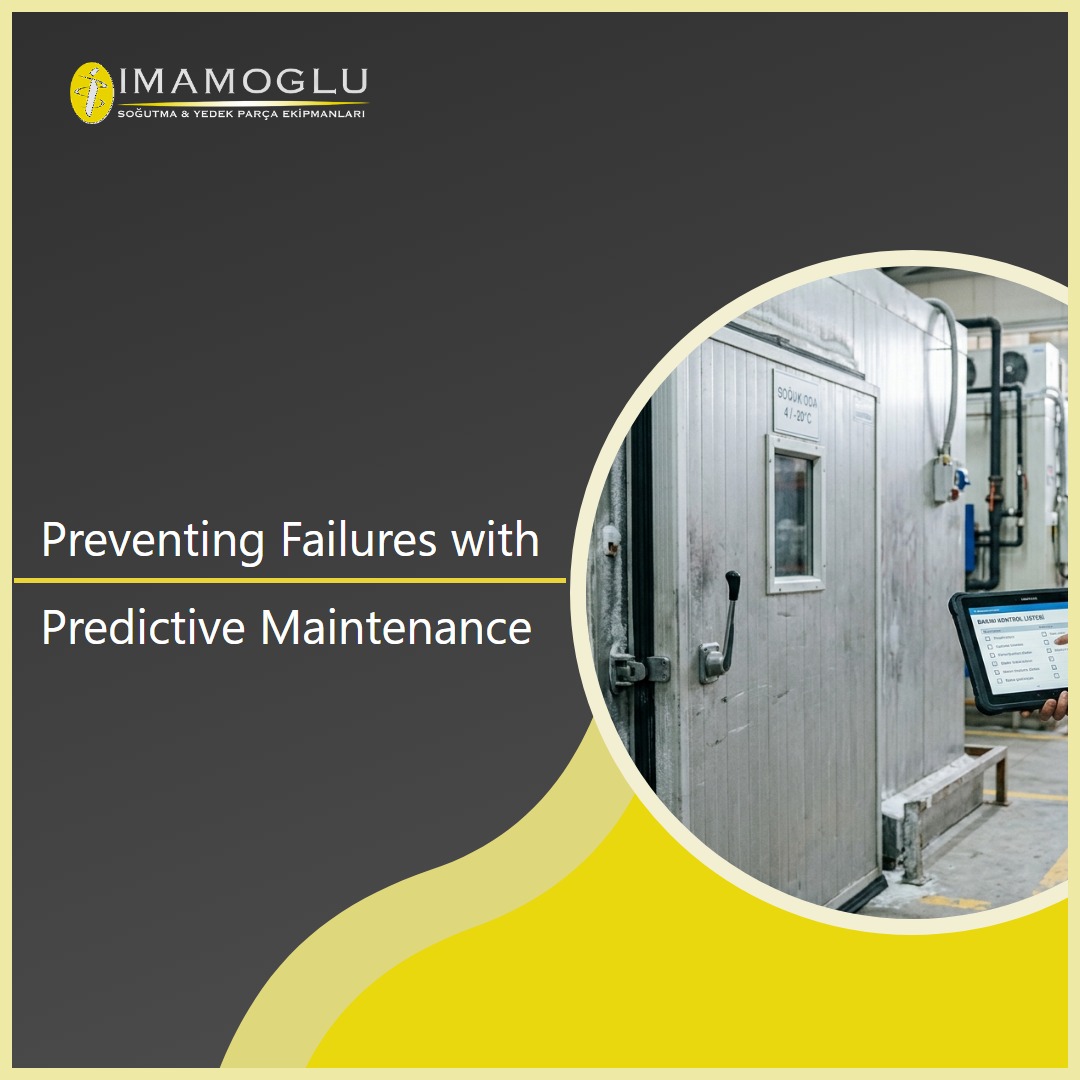
Preventing Failures with Predictive Maintenance
Table of Contents
- What Is Predictive Maintenance?
- Reactive and Preventive Maintenance Approaches
- Data Sources in a Refrigeration System
- Anomaly Detection and Threshold Values
- Early Warning Through Trend Analysis
- Critical Components to Monitor
- Implementation Plan and Team Structure
- Common Mistakes
- Conclusion
What Is Predictive Maintenance?
Predictive maintenance is an approach that uses data from continuous monitoring of equipment condition to estimate when a failure is likely to occur. Instead of carrying out maintenance on a fixed calendar or only after a failure, the aim is to act when the equipment actually needs it. This reduces unnecessary interventions and prevents unexpected shutdowns.
In cold room systems, components such as the compressor, evaporator, condenser, fans and doors are closely linked. A small deviation in one component can, over time, cause problems in the others. Predictive maintenance aims to catch this chain reaction at an early stage.
The approach is less about the technology itself than about making sense of the data. Raw data collected by sensors creates value only when it is interpreted correctly. Predictive maintenance therefore requires both a measurement infrastructure and the skill to interpret it.
Not every facility needs to make a full transition to predictive maintenance at once. For many businesses the best starting point is monitoring a few critical components and building a habit of regular review.
Reactive and Preventive Maintenance Approaches
Reactive maintenance means repairing equipment after it has broken down. This may look attractive in cost terms at first, but unexpected shutdowns, product loss and urgent repair expenses can make it expensive over time.
Preventive maintenance involves planned work at set intervals, such as filter replacement, condenser cleaning and lubrication. It reduces failures, but it can sometimes lead to unnecessary work and parts being replaced earlier than needed.
Predictive maintenance strikes a balance between these two. Because the real condition of a component is measured, intervention is neither unnecessary nor late. This balance means the maintenance budget is used more efficiently.
During the transition, existing maintenance records are a valuable starting point. Knowing which component failed and how often helps to identify the priority areas to monitor.
Data Sources in a Refrigeration System
The foundation of predictive maintenance is reliable data sources. Common sources include temperature sensors, pressure transmitters, current measurements, vibration sensors and door status signals. Together these data show the behaviour of the system in numerical form.
Pressure and temperature measurements are especially valuable for understanding the health of the refrigeration circuit. Changes in suction and discharge pressure can signal refrigerant leakage or condenser fouling. Reviewing these readings together gives more reliable results than looking at a single value.
Compressor current and running time also provide important data. A current that runs consistently above normal may point to a mechanical problem in the compressor or an electrical imbalance. Monitoring running time and cycle count helps to understand the load on the system.
When choosing data sources, the balance between cost and benefit should be considered. Rather than measuring every variable, it is more efficient to focus on those that have the strongest relationship with failure.
Anomaly Detection and Threshold Values
Anomaly detection aims to find the parts of the data that deviate from normal behaviour. These deviations can point to periods when a fault has not yet appeared but may already have started. To identify an anomaly correctly, the normal operating range of the system must be well understood.
Threshold values set the limits of the normal range. Simple thresholds check whether a value crosses a fixed boundary. More advanced methods assess deviation against a behaviour pattern learned from historical data. Both approaches have their place.
If thresholds are set too tight, they generate constant false alarms and reduce the team's trust in alerts. If they are set too wide, early warning is delayed. Thresholds should therefore be tuned using several weeks of real facility data.
Seasonal changes must also be taken into account. When outdoor temperatures rise in summer, normal operating values change too. A threshold that ignores this change may produce unnecessary alarms in summer.
Early Warning Through Trend Analysis
Trend analysis examines the direction and speed of a value over time. Even if a single reading looks normal, a slow upward or downward trend can show that a problem has started. For this reason, trend analysis is a more powerful early warning tool than individual measurements.
For example, if the compressor running current under the same load conditions rises slightly each month, this may indicate lubrication deterioration or increasing mechanical friction. A trend like this provides input for maintenance planning before the problem grows.
Context such as load and outside conditions is also important in trend analysis. Whether a rise in temperature comes from heavier door use or from a fault can be distinguished using context. A trend without context can give misleading conclusions.
Regular review of trend reports determines the value of this analysis. Written reports and weekly review meetings prevent trends from being overlooked.
Critical Components to Monitor
The compressor is the heart of a cold room system and one of its most expensive components. Monitoring values such as current, pressure, temperature and running time gives important information about the compressor's health. Oil level and vibration can also form part of compressor monitoring.
The evaporator and fans are responsible for maintaining airflow and heat transfer. Fan current, fan speed and frost build-up on the evaporator can all be monitored. Frequent recurrence of frost may indicate a problem with defrost settings or airflow.
The condenser rejects heat to the outside environment. Changes in condenser outlet temperature and discharge pressure can show fouling or airflow problems early. The cleanliness of the condenser should also be part of the monitoring plan.
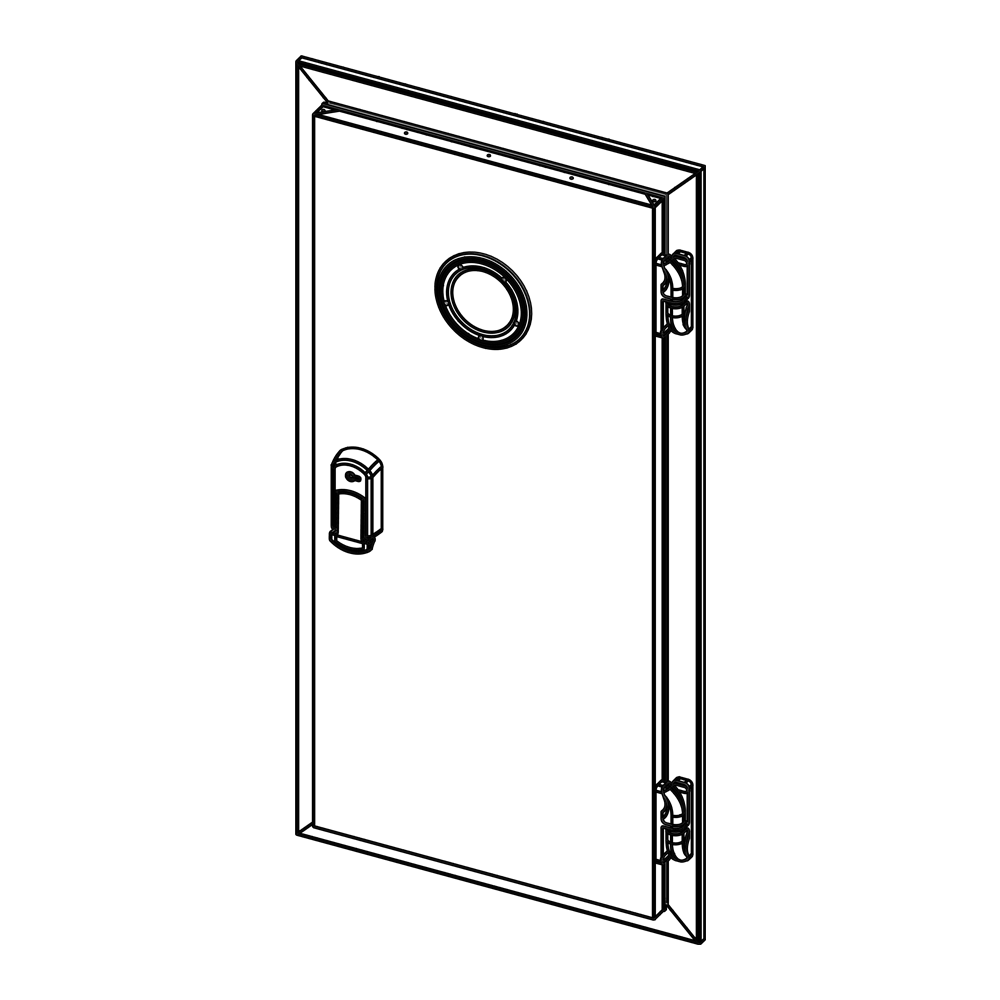
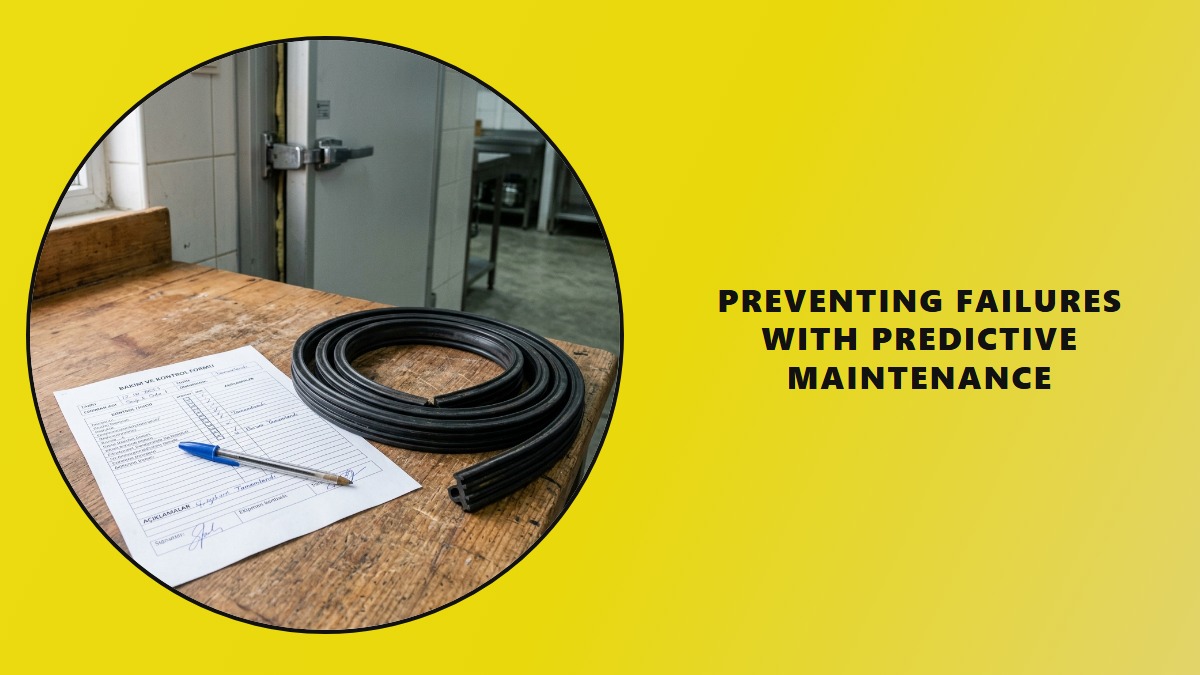
Door systems and sealing are a major source of energy loss. When door opening frequency, open-time and gasket condition are monitored, door-related problems are noticed much earlier.
Implementation Plan and Team Structure
Predictive maintenance should be implemented step by step. In the first step, the components to be monitored and the data sources are identified. In the second step, the measurement infrastructure is set up and data collection begins. In the third step, threshold values and alert rules are defined.
Team structure matters too. There should be clear responsibilities between those who collect data, those who analyse it and those who carry out maintenance work. It should be decided in advance who reads the data and who responds to alerts.
Training plays a critical role in the success of the programme. Technical staff must be able to interpret data, understand what alerts mean and carry out the necessary intervention. A system installed without training can quickly fall out of use.
Measuring the results of the programme is part of the plan. Failure counts, unexpected downtime and changes in maintenance cost should be tracked regularly and reported to management.
Common Mistakes
The most frequent mistake is collecting a great deal of data and doing little analysis. Storage fills up, but no useful decisions are made. What matters is how much of the collected data actually helps in making decisions.
Another mistake is never reviewing the threshold values. As the facility's conditions change, normal values also change. Old thresholds that no longer fit the new conditions produce misleading alerts.
Neglecting sensor calibration is also a common problem. Analyses based on a sensor that measures inaccurately produce wrong results and erode trust.
Finally, leaving alerts unanswered defeats the purpose of the system. Without a responsible person and a response time for each alert, collecting data is just a cost.
Conclusion
Predictive maintenance is an effective way to spot faults in cold room systems early and to plan maintenance according to actual need. When reliable data sources, meaningful thresholds, trend analysis and a clear implementation plan are considered together, reducing downtime and maintenance costs becomes achievable.
The approach does not have to be introduced all at once. Starting small and moving forward with the critical components keeps learning and return on investment more controlled.
İmamoğlu Soğutma and Yedek Parça Ekipmanları provides technical support on monitoring, maintenance planning and spare parts for cold room systems. You can share your current system to receive a monitoring approach suited to you and a quotation.