









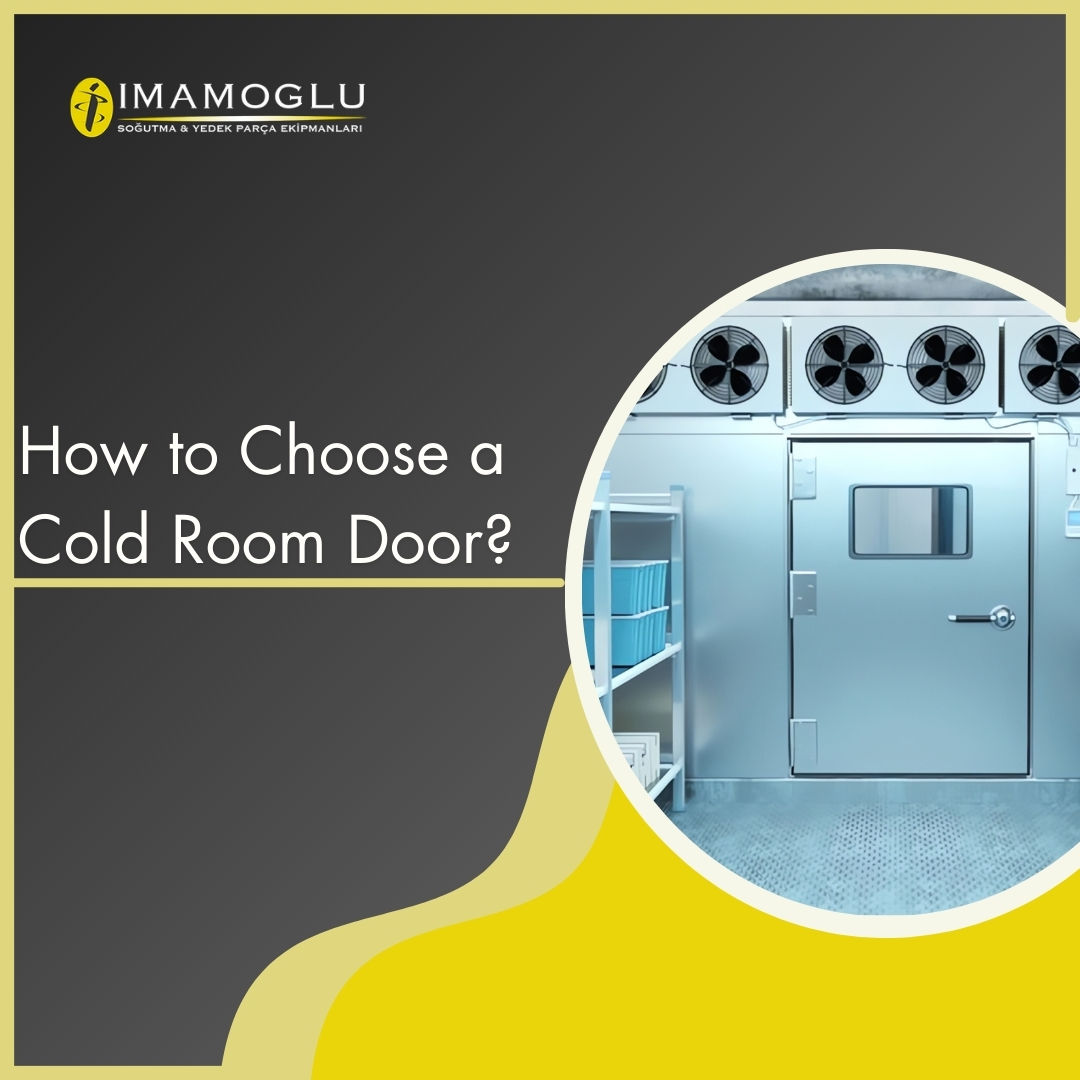
How to Choose a Cold Room Door?
Table of Contents
- How To Choose The Right Industrial Cold Room Door
- What Is The Best Cold Room Door Material For Durability
- How To Select An Energy Efficient Cold Room Door
- What To Consider When Choosing A Cold Room Door Size
- How To Pick A Cold Room Door For High Traffic Areas
- What Are The Key Cold Room Door Safety Features
- How To Choose A Door For Low Temperature Cold Rooms
- What Is The Ideal Cold Room Door Insulation Value
- How To Select A Cold Room Door For Easy Maintenance
- What Makes A Cold Room Door Export Quality
How To Choose The Right Industrial Cold Room Door
Selecting the right industrial cold room door is a critical decision impacting energy consumption and operational integrity for commercial cooling systems. An improperly specified door becomes a primary source of thermal loss, forcing compressor systems to overwork and escalating operational costs. The correct industrial cold room door selection balances robust construction with advanced insulation to ensure temperature stability and significant energy savings.
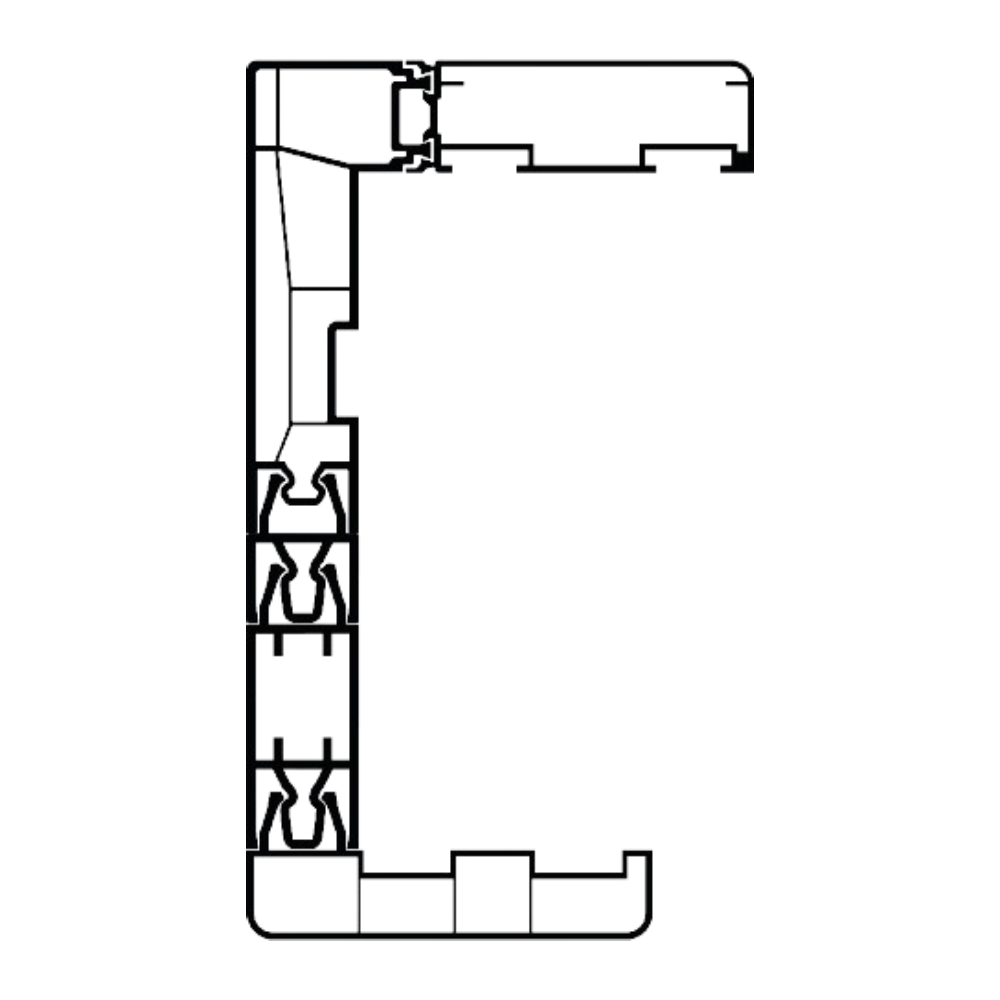
The foundation of a superior door lies in its materials and structural design. Durable cold room aluminum profiles form the essential framework, providing a lightweight yet incredibly strong structure resistant to corrosion in harsh, low-temperature environments. These profiles, engineered by manufacturers like İmamoğlu, integrate seamlessly with high-density polyurethane foam insulation to create a thermal barrier that minimizes cold bridging. This focus on material science is central to producing reliable cold room doors that withstand constant use.
For industrial kitchen manufacturers and large-scale food distribution centers, the performance of cold room parts for industrial kitchens is non-negotiable. Doors must be specified based on traffic frequency, temperature range, and hygiene protocols. High-traffic applications demand robust hardware and heavy-duty gaskets to maintain an airtight seal through thousands of cycles. This is where partnering with an experienced manufacturer with R&D supported cold room components ensures the door is not just a commodity but a precision-engineered system.
İmamoğlu Cooling leverages decades of manufacturing expertise to produce energy efficient doors that meet stringent international standards. Our export-oriented production and rigorous quality control guarantee that every component, from the panel core to the locking mechanism, delivers uncompromising performance. This commitment results in durable cooling solutions that extend equipment life and reduce maintenance needs.
Ultimately, understanding how to choose reliable cold room doors translates directly into long-term operational savings and system reliability. Investing in industrial cooling spare parts from a trusted source like İmamoğlu mitigates the risk of costly downtime and ensures your refrigeration assets perform optimally for years, protecting your inventory and your bottom line through superior thermal efficiency and construction.
What Is The Best Cold Room Door Material For Durability
Determining the best material for industrial cold room door durability requires an analysis of structural integrity and long-term performance under demanding conditions. The material choice is not merely about initial strength but about resisting corrosion, impact, and thermal stress over thousands of cycles. This decision is fundamental to the industrial cold room door selection process, directly influencing operational continuity and total cost of ownership by preventing premature failure and the associated downtime.
For the structural framework, extruded aluminum alloys represent the superior choice, forming the core of durable cold room aluminum profiles. Unlike steel, high-grade aluminum offers an exceptional strength-to-weight ratio while being inherently rust-proof, a critical advantage in humid refrigeration environments prone to condensation. Manufacturers like İmamoğlu utilize these profiles as the backbone for their doors, ensuring the frame can withstand physical impacts without warping or compromising the door's seal.
The durability of the complete assembly, however, extends beyond the frame to the panel core and insulation. The integration of high-density polyurethane foam within the aluminum profile creates a rigid, monolithic structure that provides both thermal efficiency and structural reinforcement. This R&D supported cold room components approach ensures that cold room parts for industrial kitchens are built to endure the constant traffic and temperature fluctuations typical in food service and logistics. The result is a door that maintains its integrity and insulating properties for its entire service life.
For businesses that depend on industrial cooling spare parts, selecting a door constructed from premium materials is an investment in asset longevity. İmamoğlu's commitment to export-oriented production means their energy efficient doors are subject to rigorous testing, guaranteeing they meet the highest international standards for durability. This focus on quality control ensures every component, from the hinges to the gaskets, is designed for maximum endurance.
Ultimately, understanding how to choose reliable cold room doors centers on selecting materials proven for long-term performance. By opting for doors built with robust aluminum profiles and advanced insulation systems from a trusted manufacturer like İmamoğlu, businesses secure durable cooling solutions that minimize maintenance, reduce lifecycle costs, and protect valuable temperature-sensitive inventory through unparalleled resilience.
How To Select An Energy Efficient Cold Room Door
Selecting an energy efficient cold room door is a critical measure for industrial facilities looking to significantly reduce operational expenses and environmental impact. The door is often the weakest thermal link in a cold room's envelope, and an inefficient model forces refrigeration systems to work overtime, leading to escalated energy consumption and unnecessary wear on critical components. A strategic industrial cold room door selection focused on energy performance directly translates to lower utility bills and a reduced carbon footprint.
The core of energy efficiency lies in superior insulation and the elimination of thermal bridging. Doors constructed with durable cold room aluminum profiles are engineered to minimize metal contact between the interior and exterior, a primary cause of energy loss. The aluminum frame acts as a robust skeleton for high-density polyurethane foam insulation, which provides a consistent thermal barrier with a low U-factor. This advanced construction, a hallmark of R&D supported cold room components, is essential for maintaining stable internal temperatures with minimal energy input.
Beyond insulation, the sealing system is paramount for efficiency. High-quality magnetic gaskets and automatic door bottoms must create a perfect seal upon closure, preventing the infiltration of warm, moist air. This is especially crucial for high-traffic areas where cold room parts for industrial kitchens are subjected to frequent use. For industrial kitchen manufacturers and large-scale operations, specifying doors with multi-point locking mechanisms ensures even pressure distribution across the entire gasket perimeter, guaranteeing an airtight closure every time.
When sourcing industrial cooling spare parts, it is vital to choose a manufacturer whose products are benchmarked against international energy standards. İmamoğlu designs its energy efficient doors with a focus on long-term performance, ensuring that the insulation value and sealing integrity remain effective for the lifespan of the door. This commitment to quality results in reliable cold room doors that protect your energy investment.
Understanding how to choose reliable cold room doors for optimal energy savings is a key operational strategy. By prioritizing advanced insulation, flawless sealing, and components from a proven manufacturer like İmamoğlu, businesses can achieve significant cost reductions, enhance the longevity of their refrigeration systems, and contribute to more sustainable operations through durable, high-performance durable cooling solutions.
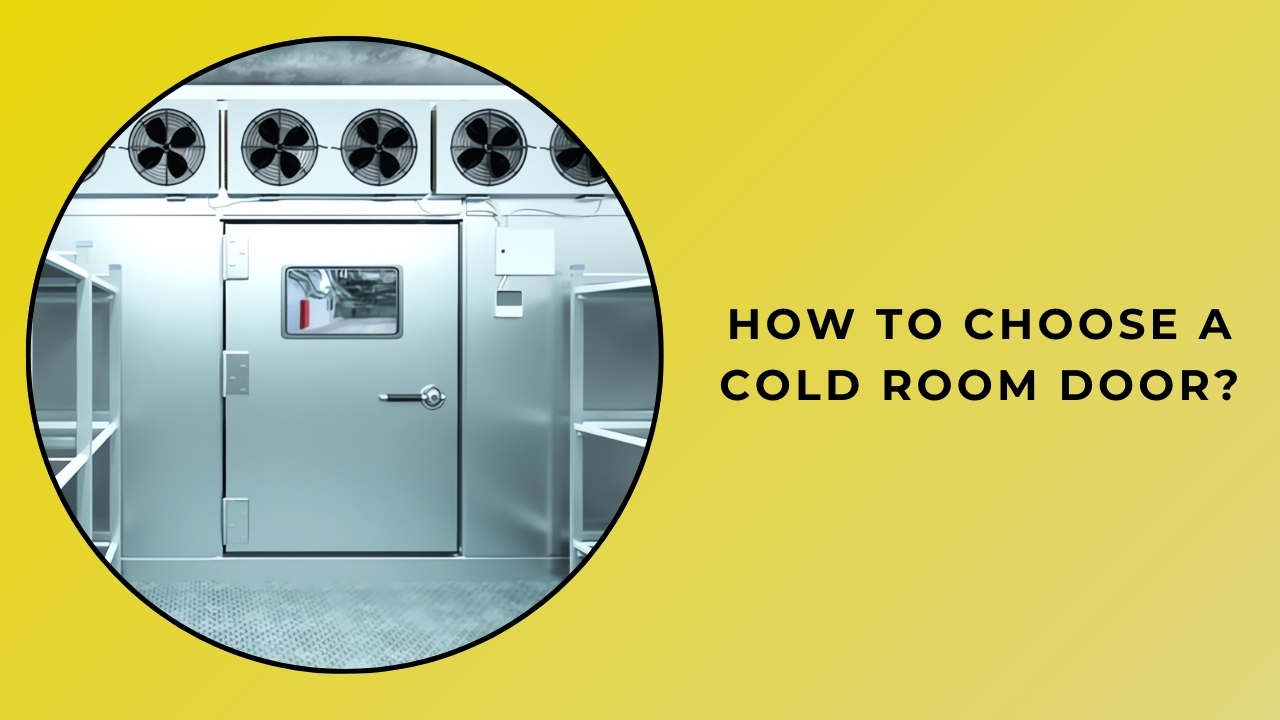
What To Consider When Choosing A Cold Room Door Size
Selecting the correct cold room door size is a foundational decision impacting everything from workflow efficiency to long-term energy consumption. An improperly sized door creates operational bottlenecks, increases thermal load on the refrigeration system, and heightens the risk of seal failure. A meticulous industrial cold room door selection process must prioritize dimensional accuracy to ensure seamless integration and optimal performance within the cold storage environment.
The primary consideration is the intended use-case and the size of the equipment or goods moving through the doorway. For cold room parts for industrial kitchens, doorways must accommodate large racks, pallet jacks, or bulk ingredients, requiring wider and taller openings than standard access doors. The structural integrity of the door itself is paramount, relying on robust durable cold room aluminum profiles to support the larger panels without sagging or compromising the insulation core. This ensures that even larger energy efficient doors maintain their thermal performance over years of heavy use.
Beyond the clear opening, the overall door assembly dimensions must precisely match the prepared rough-in opening in the cold room structure. Even a minor discrepancy can lead to difficult installation, persistent air leaks, and thermal bridging, which severely undermines efficiency. This precision is a hallmark of R&D supported cold room components, where engineering focuses on creating a perfect fit. Manufacturers like İmamoğlu provide detailed specifications to ensure that their industrial cooling spare parts integrate flawlessly with existing systems.
For high-traffic applications, selecting a door size also involves considering the frequency of opening cycles. A larger door might seem advantageous but can lead to greater energy loss if opened frequently for small items. A well-planned facility might use a combination of large doors for major access and smaller personnel doors for regular traffic. This strategic approach to sizing, supported by high-quality reliable cold room doors, maximizes operational flow while minimizing energy expenditure.
Understanding how to choose reliable cold room doors involves a comprehensive evaluation of functional requirements and spatial constraints. By partnering with a manufacturer like İmamoğlu, which offers a range of precisely engineered sizes, businesses can achieve an optimal balance between access needs and thermal efficiency. This results in a system that supports smooth operations, reduces energy costs, and ensures the long-term reliability of your valuable cold storage assets through durable, high-performance components.
How To Pick A Cold Room Door For High Traffic Areas
Selecting a cold room door for high traffic areas demands a focus on durability and energy retention under constant mechanical stress. In environments like distribution centers or busy industrial kitchens, a standard door will quickly succumb to wear, leading to seal failure, increased energy costs, and frequent maintenance interruptions. A strategic industrial cold room door selection for these applications is essential for maintaining operational continuity and protecting the refrigeration system's integrity.
The cornerstone of a high-traffic door is its structural framework, which must be engineered to withstand impact and repeated cycling. Durable cold room aluminum profiles provide the necessary strength without excessive weight, resisting dents and deformation from carts and equipment. These profiles form a robust chassis for heavy-duty hinges and hardware designed for millions of open-close cycles. This robust construction is a key feature of R&D supported cold room components, ensuring long-term reliability.
Equally critical is the sealing system, which must maintain a perfect thermal barrier despite frequent openings. High-traffic doors require advanced gasket materials and multi-point locking mechanisms that ensure consistent pressure distribution and a rapid, airtight seal upon every closure. For facilities relying on precise temperature control, this prevents the constant influx of warm air that can destabilize the environment and force the cooling system to overcompensate. Specifying such energy efficient doors is a direct investment in reduced operational expenditure.
When sourcing industrial cooling spare parts for demanding applications, choosing a manufacturer with a proven track record is non-negotiable. İmamoğlu designs its doors with high-cycle endurance in mind, utilizing materials and mechanisms tested to exceed the demands of intensive use. This results in reliable cold room doors that function as dependable cold room parts for industrial kitchens and logistics hubs, minimizing unexpected downtime.
Understanding how to choose reliable cold room doors for high-traffic zones involves prioritizing reinforced construction, fail-safe sealing, and components from a manufacturer that understands industrial demands. By selecting a door engineered for endurance, businesses can ensure minimal disruption, lower energy consumption, and extended system lifespan, securing a solid return on investment through superior performance and durability in the most challenging operational environments.
What Are The Key Cold Room Door Safety Features
Understanding the key cold room door safety features is essential for protecting personnel and preserving inventory integrity in industrial environments. A door lacking critical safety components can lead to accidental entrapment, product loss from improper sealing, and costly damage to the door itself. A thorough industrial cold room door selection process must prioritize these features to ensure a secure and efficient operational workflow, directly impacting risk mitigation and operational continuity.
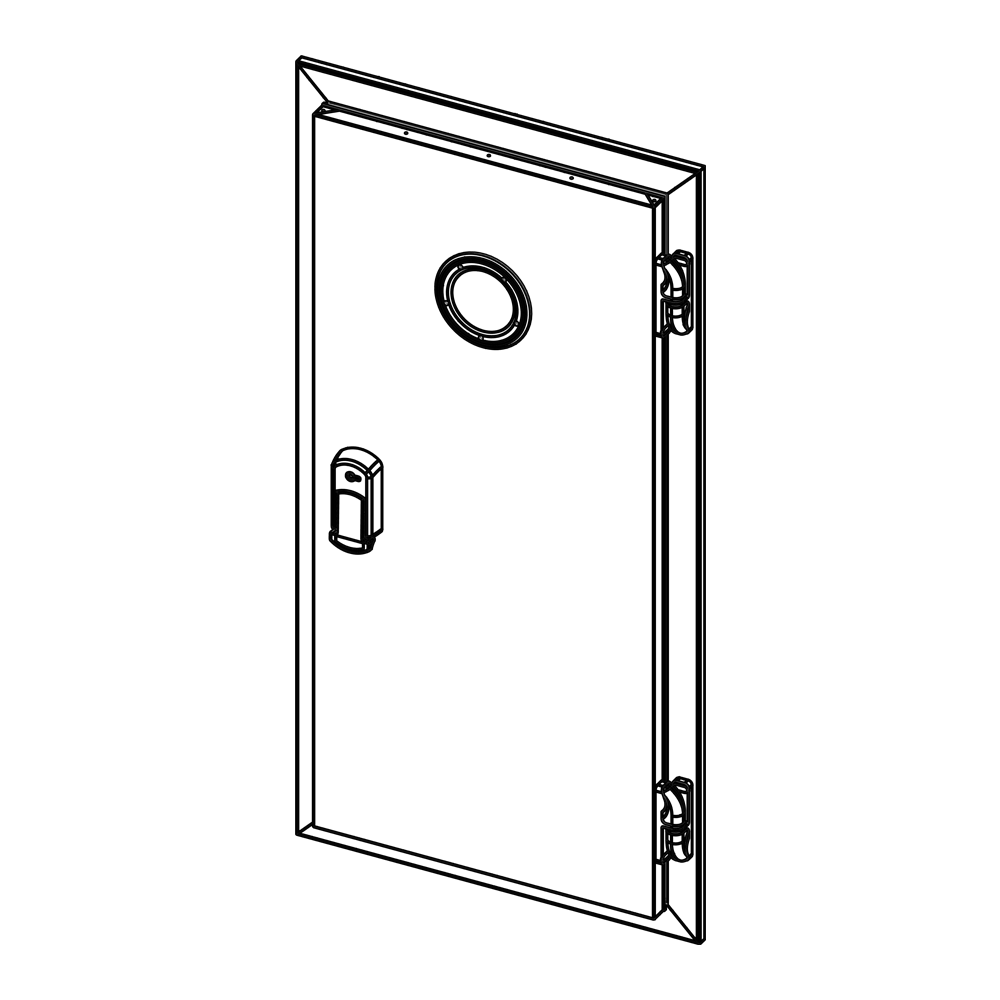
The most fundamental safety mechanism is a reliable internal release system, often a glow-in-the-dark handle or push-bar, which allows anyone trapped inside to exit easily. This feature is non-negotiable for worker safety and is a standard integrated into quality cold room parts for industrial kitchens. Complementing this are windows made from robust, shatter-resistant materials, providing visibility to prevent collisions and allowing for visual checks without opening the door, which contributes to the overall energy efficiency of the unit.
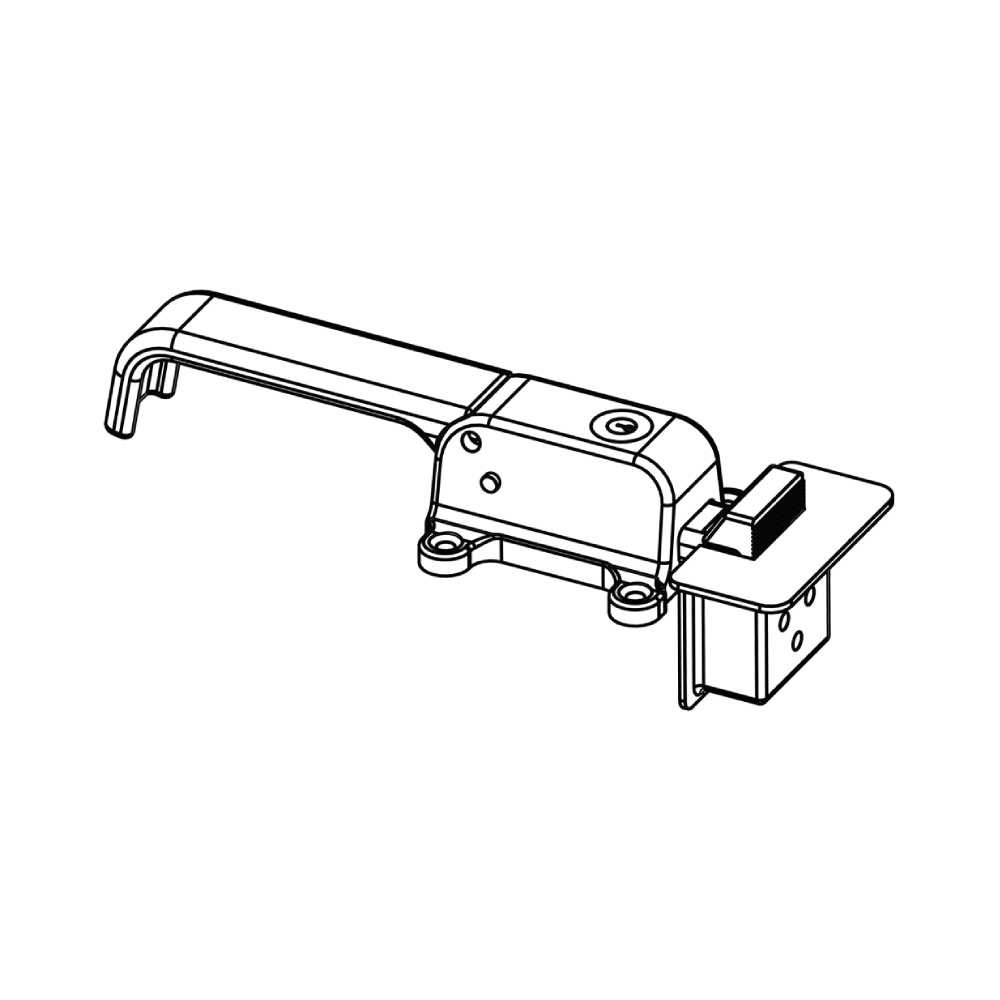
For the door's structural and operational safety, the integrity of the durable cold room aluminum profiles is paramount. These frames must be engineered to support heavy-duty hardware, including hinges and locks that withstand constant use without failure. Advanced R&D supported cold room components often include features like self-closing mechanisms with adjustable closing force, ensuring the door seals properly every time to maintain temperature and prevent energy waste, making them truly energy efficient doors.
When evaluating industrial cooling spare parts, it is critical to source from manufacturers who embed safety into their design philosophy. İmamoğlu, for instance, designs its doors with safety as a core principle, ensuring that every component from the latch to the window meets stringent standards. This results in reliable cold room doors that protect both people and products while ensuring uninterrupted cooling performance.
A comprehensive understanding of how to choose reliable cold room doors includes a rigorous assessment of their safety systems. Investing in doors with robust internal releases, impact-resistant windows, and fail-safe closing mechanisms from a trusted manufacturer like İmamoğlu minimizes workplace hazards, reduces liability, and ensures the long-term, secure operation of your cold storage facility, safeguarding your most valuable assets.
How To Choose A Door For Low Temperature Cold Rooms
Selecting a door for low temperature cold rooms presents unique challenges that demand a specialized approach to material science and thermal engineering. Standard doors are insufficient for environments reaching deep-freeze or blast freezing levels, where even minor thermal leaks can cause ice buildup, compressor strain, and significant energy waste. A precise industrial cold room door selection for these applications is critical for maintaining temperature integrity and operational efficiency.
The primary differentiator is the insulation core's thickness and density. Doors for sub-zero applications require significantly thicker panels filled with high-performance polyurethane foam to achieve a very low U-factor. This robust insulation is housed within durable cold room aluminum profiles engineered to withstand extreme thermal contraction and expansion without cracking or warping. This combination is essential for creating a stable, long-lasting barrier against intense cold, forming the foundation of truly energy efficient doors.
Sealing systems must also be upgraded for low-temperature duty. Standard gaskets can become brittle and fail; therefore, specialist doors use cold-rated magnetic gaskets and heated thresholds to prevent ice formation that can jam the door. These R&D supported cold room components are vital for ensuring the door remains operational and airtight, even in the harshest conditions. For facilities storing high-value frozen goods, this reliability is non-negotiable to prevent costly spoilage and system failure.
When specifying industrial cooling spare parts for deep-freeze applications, partnering with a manufacturer that specializes in extreme environments is essential. İmamoğlu's doors are tested to perform reliably at temperatures well below freezing, ensuring that cold room parts for industrial kitchens and freezing tunnels maintain their integrity. This results in reliable cold room doors that protect sensitive temperature-controlled processes.
Mastering how to choose reliable cold room doors for sub-zero environments hinges on selecting components specifically engineered for extreme thermal performance. By choosing doors with superior insulation, cold-rated seals, and robust construction from a proven manufacturer like İmamoğlu, businesses can achieve optimal energy savings, extend the lifespan of their refrigeration systems, and ensure unwavering reliability for their most demanding cold storage needs.
What Is The Ideal Cold Room Door Insulation Value
Determining the ideal cold room door insulation value is fundamental to achieving thermal efficiency and operational cost control. This value, typically measured as a U-factor or R-value, quantifies the door's resistance to heat flow, directly impacting the refrigeration system's workload and energy consumption. A strategic industrial cold room door selection prioritizes this metric to ensure the door acts as an effective thermal barrier, not a weak point.
There is no single "ideal" value, as it is dictated by the application's specific temperature differential. For standard refrigerated spaces around +2°C to +4°C, a U-factor of 0.5 W/m⊃2;K or an R-value of approximately 2.0 m⊃2;K/W may suffice. However, for low temperature cold rooms operating at sub-zero levels, the requirement escalates significantly, demanding U-factors as low as 0.2 W/m⊃2;K (R-value ~5.0) to prevent excessive energy loss and ice formation. Achieving these high-performance values requires advanced R&D supported cold room components.
The insulation performance is achieved through a combination of thick, high-density polyurethane foam cores and thermally broken durable cold room aluminum profiles. The aluminum frame must be engineered to minimize direct metal contact between the interior and exterior, a critical design feature that prevents thermal bridging. This meticulous engineering is what separates standard doors from truly energy efficient doors capable of delivering long-term savings.
When evaluating industrial cooling spare parts, it is essential to partner with a manufacturer that provides transparent insulation data. İmamoğlu designs its doors with clearly defined U-factors suited for various applications, ensuring that cold room parts for industrial kitchens and freezing facilities meet their thermal performance requirements. This commitment to specification clarity results in reliable cold room doors that perform as expected.
Understanding how to choose reliable cold room doors involves a technical assessment of insulation values relative to operational needs. By selecting a door with an appropriately high R-value or low U-factor from a certified manufacturer like İmamoğlu, businesses can significantly reduce energy costs, lessen the mechanical strain on their refrigeration systems, and ensure consistent temperature control for their valuable inventory.
How To Select A Cold Room Door For Easy Maintenance
Selecting a cold room door for easy maintenance is a strategic decision that directly impacts operational uptime and long-term ownership costs. A door designed with serviceability in mind minimizes disruption, reduces labor expenses, and ensures the cold chain remains unbroken. An informed industrial cold room door selection prioritizes features that facilitate quick repairs and part replacements, translating to higher system reliability and lower total cost of ownership.
The foundation of easy maintenance lies in modular design and accessible components. Doors constructed with standardized durable cold room aluminum profiles allow for straightforward replacement of individual sections, such as a damaged panel, without requiring a full door replacement. Similarly, hinges, handles, and gaskets should be designed as field-replaceable units. This modularity, a key outcome of R&D supported cold room components, ensures that cold room parts for industrial kitchens can be serviced rapidly, keeping downtime to an absolute minimum.
Material selection also plays a crucial role in reducing maintenance frequency. Corrosion-resistant aluminum frames and stainless steel hardware withstand harsh environments without degrading, while high-quality gasket materials resist cracking and hardening over time. These robust materials contribute to the longevity of energy efficient doors, as a well-maintained seal is essential for sustained thermal performance. Choosing such durable specifications means fewer service calls and more consistent energy savings.
For facility managers sourcing industrial cooling spare parts, the availability of a comprehensive support system is critical. Partnering with a manufacturer like İmamoğlu, which maintains a robust inventory of compatible components, guarantees that when maintenance is needed, the correct parts are readily available. This logistical support is integral to providing reliable cold room doors that support continuous operation.
A thorough understanding of how to choose reliable cold room doors includes evaluating the ease and cost of future maintenance. By selecting doors with modular designs, corrosion-resistant materials, and strong manufacturer support from a partner like İmamoğlu, businesses can significantly reduce lifecycle costs, maximize operational uptime, and ensure their refrigeration systems deliver consistent, trouble-free performance for years to come.
What Makes A Cold Room Door Export Quality
An export quality cold room door is defined by its adherence to rigorous international standards, superior material selection, and uncompromising manufacturing precision. Such a product is engineered not just for local conditions but to perform reliably in diverse global climates and under stringent regulatory frameworks. This level of quality, integral to a superior industrial cold room door selection, ensures long-term performance and protects the brand reputation of both the manufacturer and the end-user on an international scale.
The foundation of export quality is built upon advanced R&D supported cold room components that undergo extensive testing for thermal efficiency, structural integrity, and durability. These doors feature durable cold room aluminum profiles extruded to precise tolerances, ensuring consistent fit and finish across production batches. The insulation core must meet or exceed global energy standards, making them truly energy efficient doors that deliver measurable savings regardless of geographic location.
Compliance with international certifications for food safety, electrical safety, and environmental impact is non-negotiable for export-ready products. This requires a meticulous quality control process that scrutinizes every component, from the grade of stainless steel hardware to the fire-retardant properties of the insulation. For global suppliers and industrial kitchen manufacturers, this ensures seamless integration into projects worldwide without compliance-related delays or rejections.
Durability for international logistics is another key differentiator. Export quality cold room parts for industrial kitchens are packaged and built to withstand long-distance shipping, humidity variations, and handling stresses without damage. Manufacturers like İmamoğlu design their products with this in mind, ensuring that reliable cold room doors arrive in perfect condition, ready for immediate installation and years of trouble-free operation.
Understanding how to choose reliable cold room doors for international projects means prioritizing manufacturers with proven export capabilities. By selecting doors that meet global standards for performance, safety, and durability from an export-oriented partner like İmamoğlu, businesses can ensure their industrial cooling spare parts investments yield maximum return through unparalleled reliability, reduced lifecycle costs, and acceptance in markets around the world.