




Fast Delivery for Spare Parts
Table of Contents
- Why Fast Spare Parts Delivery Matters
- Downtime Cost and Its Real Impact
- Stock Strategy: What to Hold and How Much
- Supplier Selection and Evaluation
- Part Coding and Accurate Identification
- Emergency Plan and Responsibilities
- Logistics and Shipping Processes
- Common Mistakes
- Conclusion
Why Fast Spare Parts Delivery Matters
In a cold room system, the failure of a part is often not just a question of replacing that part. Until it arrives, the system stays down, the room temperature rises and products are put at risk. The time it takes to get a spare part is therefore as decisive as the repair itself.
Fast delivery shortens the time lost at the moment of failure. If a critical item such as a compressor, fan motor or control board is delayed by several days, the temporary measures used during that period carry costs in both energy and product. A shorter delivery time directly reduces that cost.
Fast delivery, however, is not only about speed. The right part, with the right specification, from a reliable source is also essential. Quickly sourcing the wrong part often leads to a new fault rather than solving the original one.
Achieving fast delivery depends on supply chain, stock management and information flow working well together. If any one of these three is weak, delivery times can run well beyond the target.
Downtime Cost and Its Real Impact
The cost of downtime is not limited to the repair bill. Product loss, staff waiting idle, delayed orders and customer dissatisfaction are all part of it. These hidden costs can often be far larger than the repair invoice.
The impact of downtime depends on the type of product. For frozen products, even a brief rise in temperature can cause loss of quality. For ready meals or meat products, the safety risk comes to the fore. Acceptable downtime should therefore be set in advance for critical products.
A simple approach can be used to calculate the cost of downtime. Adding together the hourly product value, energy and temporary measure costs, and the loss of labour, gives the cost of one hour of stoppage. This figure can be used to show how justified a stock investment is.
Being aware of the cost of downtime makes spare parts decisions more informed. Which parts should be held in stock becomes a natural outcome of this calculation.
Stock Strategy: What to Hold and How Much
It is not economical to keep every part in stock. Spare parts inventory ties up capital and requires storage space. Which parts to hold should therefore be determined through careful analysis.
The basis of the analysis is the failure frequency of a part and its effect on downtime. Parts that fail often and stop the system are the highest priority for stocking. Parts that rarely fail but take a very long time to replace should also be included in the stock decision.
Stock quantities should be set according to consumption history and lead time. A part with a long lead time may need more stock. For parts that are easy and quick to obtain, a lower stock level may be enough.
The stock list should be reviewed regularly. The age of the system, the intensity of use and changing conditions can alter which parts are needed over time. An outdated stock list creates both unnecessary cost and the risk of missing parts.
Supplier Selection and Evaluation
The key to fast delivery is a reliable supplier relationship. The supplier's stock position, dispatch speed and technical support capacity should be among the first selection criteria. Choices based on price alone can lead to unexpected problems at the moment of failure.
The supplier's delivery performance should be recorded. Indicators such as the promised time against the actual time, order accuracy and the rate of undamaged deliveries show how reliable the supplier is. This data can be used when selecting a new supplier and when reviewing an existing relationship.
Working with more than one supplier spreads risk. However, this approach requires careful management of part compatibility and quality standards. It should be verified that parts from different suppliers meet the same quality level.
An emergency protocol should be agreed with the supplier in advance. It should be clear how an urgent order is placed out of hours, through which channel the supplier can be reached and how quickly delivery will be made.
Part Coding and Accurate Identification
Ordering the wrong part is one of the most common causes of longer delivery times. Correct identification, coding and recording of parts prevent this problem. The part number, manufacturer, model information and technical specifications should all be kept on record.
A separate parts record can be created for each cold room item. This record should also include the installation date, serial number and past fault history. This way, when a fault occurs, the part needed can be identified quickly.
Part photographs and technical drawings also make identification easier. Especially on older equipment, where the part number may be unreadable, visual records are a great help. Keeping these records up to date is important.
Having a standard structure for part codes reduces the risk of staff ordering the wrong part. When everyone uses the same coding system, information loss and confusion are avoided.
Emergency Plan and Responsibilities
Knowing in advance what to do in an emergency is the basis of using time effectively. A written emergency plan should clearly define how a fault is reported, who does what and which part is ordered.
Responsibilities should be clearly distributed. The person who detects the fault, the person who contacts the supplier, the person who approves the order and the person who receives and fits the part should all be identified. This division of roles reduces confusion and delay.
The emergency contact list should be kept up to date. Telephone numbers, email addresses and alternative contacts for the supplier, the service team and management should all be on the list. The list should be considered together with the on-call system.
The emergency plan should be tested regularly. A drill carried out without a real fault reveals gaps in the plan and helps the team become familiar with the procedure.
Logistics and Shipping Processes
Delivery time does not depend only on the supplier's production and stock time. The shipping method, distance, customs procedures and delivery hours also affect it. These factors must be considered together to produce a realistic delivery plan.
It should be decided in advance which shipping option will be used for urgent orders. The cost and speed of options such as express courier, dedicated dispatch or special delivery should be compared. A budget for these options should be set aside for emergencies.
Checks should be carried out when the part is received. The packaging should be undamaged, the part number should match the order and the part should be in working condition. Spotting a faulty part early avoids lost time.
Packaging and sensitivity to heat should also be considered when shipping cold room parts. Some electronic parts can be affected by extreme temperature and humidity. Suitable protective packaging should therefore be requested.
Common Mistakes
The most frequent mistake is never evaluating the spare parts stock. Not having a part available at the moment of failure directly extends the delivery time. Regular stock analysis greatly reduces this risk.
Another mistake is choosing a supplier on price alone. A low-priced supplier may have poor delivery performance, and this can make the cost of downtime far higher than the price difference.
Errors in part identification are also common. Ordering with the wrong model or part number wastes both time and money. Keeping part records accurate prevents this problem.
Finally, failing to prepare and test an emergency plan leads to confusion at the moment of failure. A plan prepared in advance ensures an orderly response even at the worst moments.
Conclusion
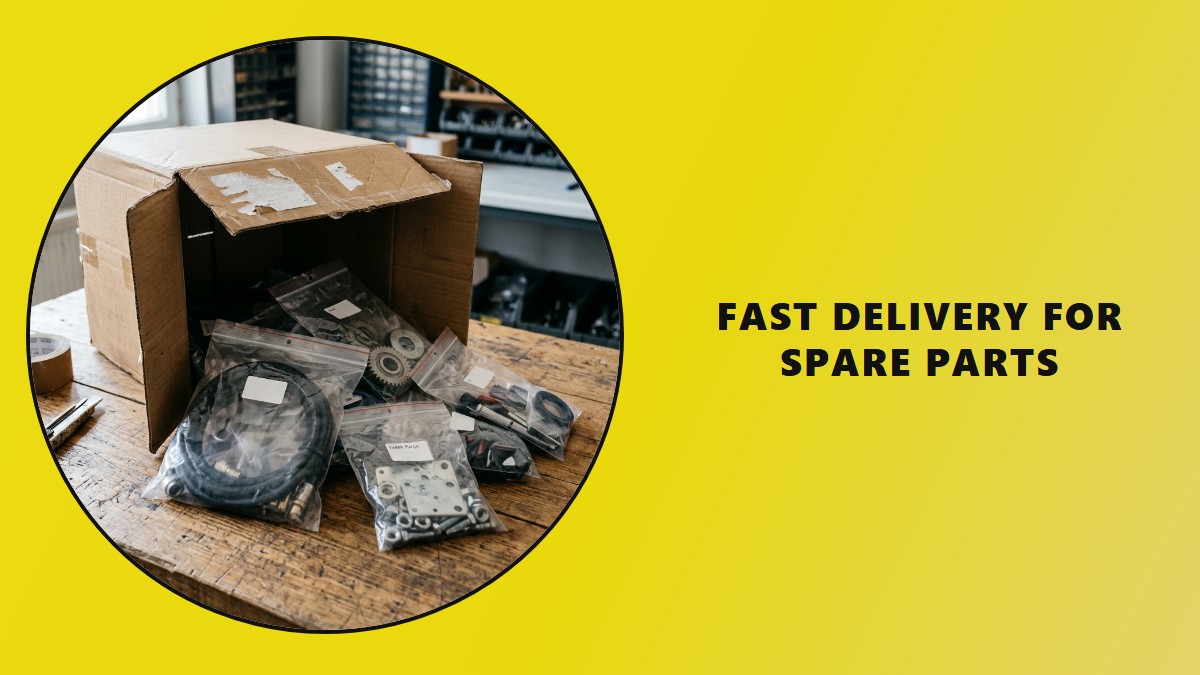
Fast spare parts delivery is a critical part of maintaining the continuity of a cold room system and protecting product safety. When an accurate calculation of downtime cost, an intelligent stock strategy, reliable supplier relationships, correct part identification and a written emergency plan are considered together, delivery times are shortened significantly.
Once these processes are in place, they should be reviewed and updated regularly. The age of the equipment, its conditions of use and changes in the supply chain all require the plan to change as well.
İmamoğlu Soğutma and Yedek Parça Ekipmanları provides spare parts supply and fast dispatch support for cold room and refrigeration systems. You can share your equipment model and the parts you need to get information on delivery times and a quotation.