


Evaporator Maintenance and Cleaning
Table of Contents
- What Is an Evaporator and Why Does It Matter?
- Causes of Evaporator Fouling
- Frost Build-Up and Loss of Efficiency
- Cleaning Frequency and Planning
- Cleaning Steps
- Food Safety and Disinfection
- Checking Fans and the Drain Pan
- Common Maintenance Mistakes
- Conclusion
What Is an Evaporator and Why Does It Matter?
The evaporator is the heat exchanger placed inside the cold room in a refrigeration system. It draws heat from the room and allows the refrigerant to evaporate. As room air passes over the finned and tubed surface of the evaporator, it gives up its heat, which the refrigerant carries to the condenser in the external unit. The evaporator's efficiency therefore directly affects the cooling capacity of the whole system.
When the evaporator surface is clean and open to heat transfer, the system can run at a lower operating temperature with shorter cycles. When the surface is dirty, airflow falls, heat transfer weakens and the compressor has to run for longer. This increases both energy consumption and wear on the equipment.
Evaporator maintenance is often seen as the most neglected part of a refrigeration system. Yet it is a component that directly affects the temperature of the cold room, is linked to product safety and determines the energy bill. Regular cleaning extends its life and improves the reliability of the system.
Evaporator maintenance is more than cleaning. Fan checks, the clearance of the drain line, the operation of the defrost system and the condition of the temperature sensors are all part of it. This holistic approach allows problems to be noticed early.
The evaporator is the component that absorbs heat in the cold room and cools the air, and it is considered the heart of the system. Clean fin surfaces allow air to circulate freely and heat transfer to take place efficiently. When the evaporator's performance drops, the compressor has to run longer to maintain room temperature.
Regular evaporator cleaning not only improves energy efficiency but also improves air quality in the cold room. A clean evaporator also helps prevent unwanted odor and taste changes in products.
Efficient evaporator operation also directly affects the humidity balance in the room. A dirty, iced evaporator draws moisture from the air unevenly, which can cause excessive water loss, weight loss and quality decline, especially in products such as fresh fruit and vegetables. Regular cleaning helps preserve product shelf life.
Causes of Evaporator Fouling
The most common cause of evaporator fouling is dust, paper and product particles in the air of the room. Unpacked or spillable products make up much of this material. Over time these particles settle between the fins and restrict airflow.
Oil and grease vapour is another significant source of contamination. In cold rooms close to kitchens or food processing areas especially, airborne oil particles stick to the evaporator surface and combine with dust to form a thick layer. This layer seriously reduces heat transfer.
Moisture entering through door openings also contributes to fouling. Moisture combined with dust and organic matter can create biological build-up on the surface. This leads to odour and hygiene problems.
Contamination from the product itself should also be considered. Leaking packaging, broken items or inadequately wrapped food can collect near the evaporator and cause problems.
Dust in the room, packaging residues, food particles and microorganisms that accumulate with moisture all play a role in evaporator contamination. Contamination happens faster especially in rooms storing unpackaged products or with heavy forklift traffic.
Regularly inspecting the evaporator visually helps detect contamination early. Discoloration of the fins, dust buildup or a bad smell are signs that cleaning is due. Recording these checks in maintenance logs helps set cleaning intervals more accurately.
Planning air circulation in the room correctly can also reduce contamination. Stacking products so that they do not block the evaporator's air inlet and outlet prevents dust and particles from accumulating at certain points. Keeping unpackaged products covered also reduces the amount of dirt reaching the evaporator.
Frost Build-Up and Loss of Efficiency
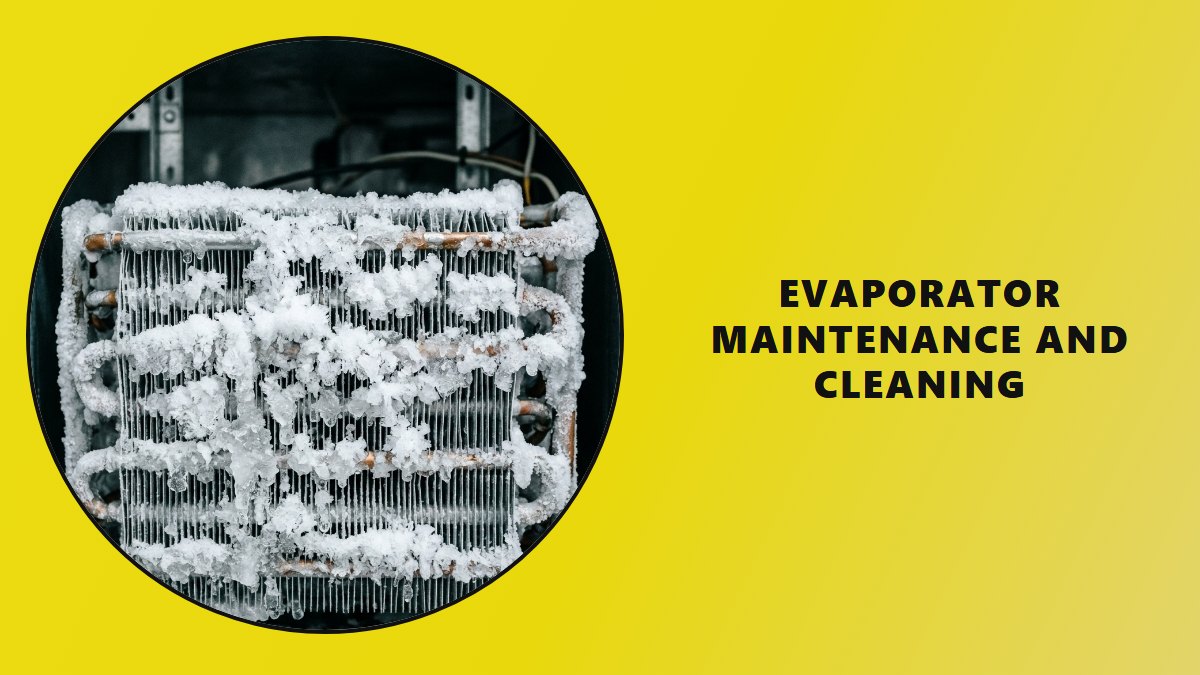
Frost on the evaporator is the most obvious result of contamination and inadequate defrosting. A layer of ice blocks heat transfer, narrows the airflow and reduces the cooling capacity of the system. A thick layer of ice can also rub against the fan blades and cause noise and vibration.
The effect of frost on the system develops in stages. At first the room temperature slowly drifts towards the target value. Later the compressor runs for longer and pressure values may move to abnormal levels. Finally the system may enter protection mode and shut down, placing the products at serious risk.
The settings of the defrost cycle are decisive in preventing frost. Defrost frequency and duration should be matched to how intensively the room is used and to its humidity level. Defrosting too rarely leads to frost, while defrosting too often wastes energy.
Regular checks of the ice on the evaporator help keep this balance. The area where frost starts also gives a clue to the source of the problem. For example, heavy frost in one area may indicate that the airflow there is blocked.
A layer of ice building up between the fins restricts airflow and significantly reduces the evaporator's cooling capacity. Dirty surfaces speed up icing and require more frequent defrosting. This both increases energy consumption and causes fluctuations in room temperature.
Cleaning Frequency and Planning
Cleaning frequency should be set according to how intensively the room is used, the type of product and the environmental conditions. Rooms that are opened and closed constantly, have high dust levels or handle oily products need more frequent cleaning. Rooms used less often and storing sealed products can have longer intervals.
Every room should have its own cleaning schedule. This schedule should be written down and shared with the person responsible. When the schedule is not followed, contamination builds up unnoticed and later requires a major intervention.
Using a checklist before cleaning helps the work be carried out consistently. The list should cover steps such as shutting down the system, safety precautions, cleaning materials and record keeping. Records help adjust the cleaning frequency over time.
It is also important to schedule cleaning around product loading periods. Having the evaporator clean before busy loading periods ensures the system is ready for high demand.
Cleaning frequency should be determined by how intensively the room is used and the type of product stored. Scheduling cleaning during periods of low room load reduces operational difficulties such as having to move products temporarily to another area.
Cleaning Steps
Before cleaning begins, the system must be shut down safely and the electrical supply disconnected. The fans must be stopped and the defrost cycle switched off. Products should be moved to another cold room or temporarily to a safe place.
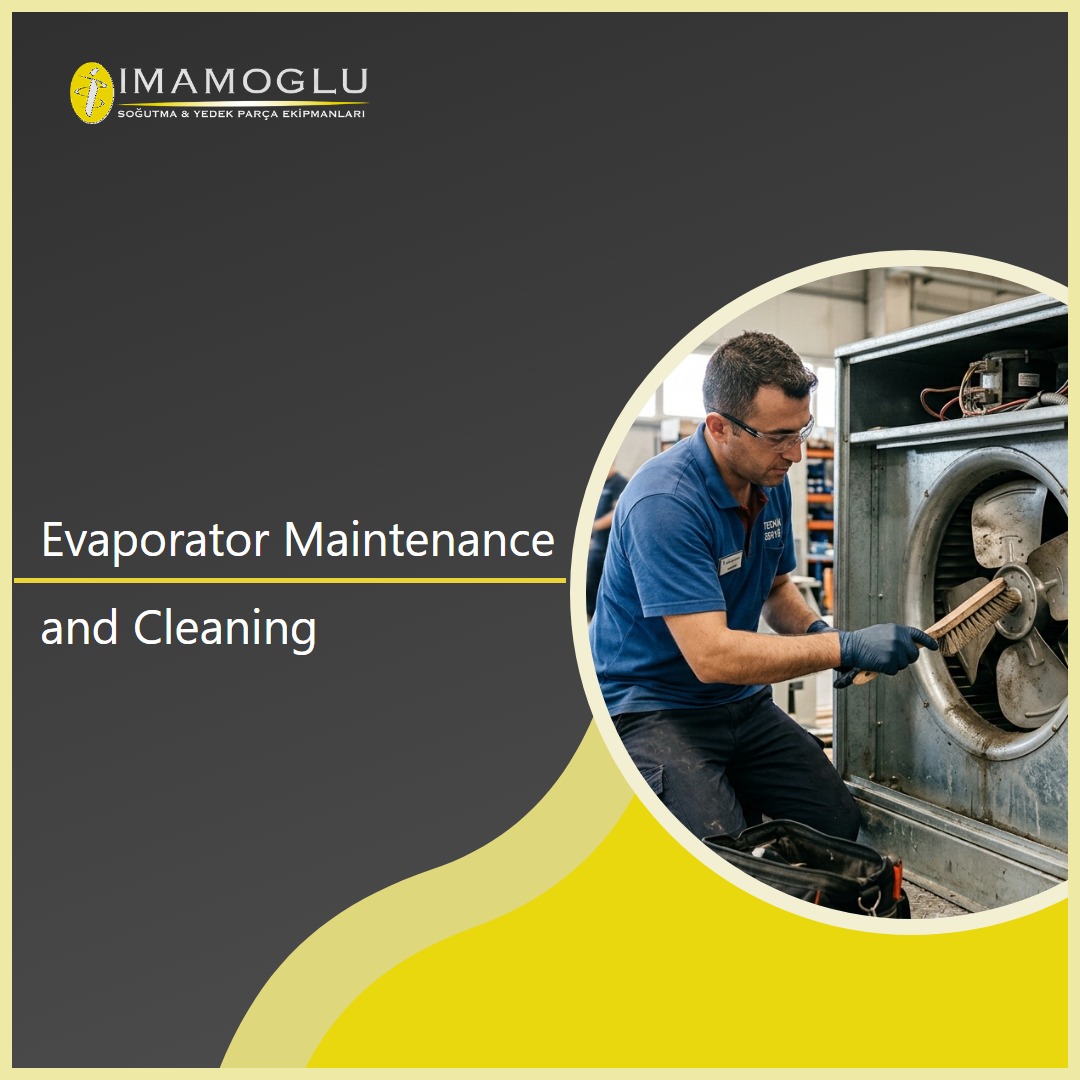
The first step is to remove loose dust and dirt from the surface. A low-pressure air line or a soft brush can be used at this stage. Hard tools should not be used so that the fins are not damaged, because bent fins restrict airflow further.
In the second step, a suitable cleaning solution recommended by the manufacturer is used. The solution must suit the evaporator material and the type of dirt on the surface. Oily dirt may require a special solvent. Acidic or abrasive chemicals can damage aluminium fins and copper tubes.
In the final step the surface must be rinsed thoroughly to make sure all residues are removed. After rinsing, the evaporator must dry completely before the system is restarted. A damp evaporator increases the risk of frost and contamination returning.
Before cleaning begins, the system must be switched off and the evaporator fully defrosted. To avoid damaging the fins, low-pressure water or suitable brushes should be used, and washing should be done against the direction of airflow. Bent fins can be straightened with special fin combs.
Food Safety and Disinfection
An evaporator located near areas where food is handled also needs attention for hygiene. Microbiological build-up threatens food safety and can be carried by air onto products. A disinfection step should therefore be added to cleaning.
The disinfectant should be selected for compatibility with food and with the materials used. It is important that the disinfectant leaves no food residue and can be rinsed off properly after use. Instructions for use must be followed carefully.
Residue checks should be carried out after disinfection. Bacteria and mould can grow on surfaces where residue is left. Special attention should therefore be paid to the final rinse.
Recording cleaning and disinfection work provides important evidence in food safety inspections. The date, method and person responsible should be documented.
In cold rooms storing food, the evaporator creates a moist environment where microorganisms can grow. It is therefore important to use food-safe disinfectants after cleaning. Care should also be taken that the chemicals used do not damage metal surfaces.
Checking Fans and the Drain Pan
Evaporator fans are the most important parts for maintaining airflow. Dust building up on the fan blades causes imbalance and vibration. An unbalanced fan shortens bearing life and increases noise. Fans should be cleaned periodically and their balance checked.
Fan motor bearings and connection points should also be checked regularly. Abnormal noise, vibration or overheating can be a sign of a developing fault. Early action prevents a larger repair cost.
The drain pan and drain line allow melted water to flow safely away. A blocked drain line can cause water to pool in the pan and leak into the room. This creates both hygiene and structural problems.
The clearance of the drain line should be checked regularly and it should be cleaned if necessary. The slope of the line is also important for water to drain correctly. Lines at risk of freezing in winter can be protected with heating cable.
Cleaning fan motors and blades is necessary for balanced airflow. Keeping the drain pan and drain line clear ensures defrost water is discharged properly. A blocked drain line can cause ice to build up in the pan and water to leak into the room.
Common Maintenance Mistakes
The most frequent mistake is limiting cleaning to the visible surface. Neglecting the dirt behind the fins and around the fan causes the problem to come back.
Another mistake is cleaning with high-pressure water. High pressure bends the fins and disturbs airflow, and it can damage electrical components. Low-pressure, controlled application should be used instead of pressure washing.
Never checking the defrost settings is also a common error. If the settings remain unchanged for years, they may no longer suit the room's changed operating conditions.
Finally, restarting the system before it has fully dried after cleaning quickly brings back moisture and frost problems. Enough attention must be given to drying time.
A common mistake is washing the fins with high-pressure washers. This method easily bends the thin aluminum fins and worsens airflow even further. Using harsh chemicals can also cause corrosion and shorten the evaporator's life.
Conclusion
Evaporator maintenance and cleaning is work that directly affects the efficiency of a cold room system, product safety and energy cost. When regular cleaning, correct defrost settings and fan and drain checks are carried out together, the system lasts longer and the risk of failure falls.
The maintenance plan should be written down, responsibilities should be assigned and every task should be recorded. This discipline provides a valuable advantage in food safety inspections and in long-term cost control.
İmamoğlu Soğutma and Yedek Parça Ekipmanları provides technical support on evaporator cleaning, maintenance planning and spare parts. You can share your current system to request a maintenance recommendation and a quotation.