




Affordable Cold Room Solutions
Table of Contents
- What Does an Economical Cold Room Solution Mean?
- Upfront Investment and Total Cost of Ownership
- Getting the Needs Analysis Right
- Balancing Insulation Choices
- An Economical Approach to Equipment Selection
- Energy Saving Strategies
- How Maintenance Affects Cost
- Mistakes That Look Cheap but Cost More
- Conclusion
What Does an Economical Cold Room Solution Mean?
An economical cold room solution does not simply mean the lowest purchase price. The term refers to a solution that is suited to the need, reliable and has the lowest total cost over its life. A system with a low initial price can become more expensive in the long run because of high energy use, frequent faults and early replacement.
An economical solution is designed around the room's real purpose. Every business has different needs. Installing a system far larger than needed for a small store wastes resources, while an undersized system for a large volume leads to product loss. The right scale is the first condition of economy.
Economy must also be considered together with reliability. If a cheap solution cannot hold the temperature or breaks down often, the savings disappear quickly. An economical solution is therefore one that does not compromise on performance.
An economical approach can also allow phased growth. A system covering part of the requirement can be installed first and expanded as the business grows. This method makes better use of capital.
An economical cold room is not the one with the lowest purchase price; it is the one that meets the business's needs, runs trouble-free for many years and keeps operating costs under control. This perspective requires the investment decision to be based not only on today's budget but on the costs the room will generate over its entire service life.
Modular panel systems are an important part of economical cold room solutions. They allow quick installation and make it possible to expand the room or move it to another location as the business grows. In this way, the initial investment can also adapt to future needs.
Upfront Investment and Total Cost of Ownership
The upfront investment covers purchase, installation and commissioning costs. This item is visible and paid immediately, so it has a strong influence on decision makers. Used alone as the decision criterion, however, it can be misleading.
Total cost of ownership adds energy consumption, maintenance, repairs, spare parts and possible product loss to the upfront investment. When two offers are compared this way, a system with a higher initial price can turn out to be more economical over time.
The calculation should cover the system's expected life. Variables such as operating life, running hours and maintenance schedule directly affect the result. Entering realistic estimates for these variables makes the comparison reliable.
In evaluating offers, warranty coverage and spare parts availability are also part of the cost. In a system whose spare parts are hard to obtain quickly, downtime can disrupt production and stock management.
Total cost of ownership includes energy costs, maintenance and repair expenses, spare parts and possible product losses due to breakdowns, in addition to the initial investment. An efficient system that requires a slightly higher initial investment can recover this difference through energy savings within a few years.
Correctly calculating installation costs is also part of the total cost assessment. Items such as electrical infrastructure, drainage lines, floor preparation and, if needed, cranes or special transport should be clearly included in quotations. These items emerging later negatively affects budget planning.
Getting the Needs Analysis Right
An economical solution starts with a sound needs analysis. The room volume, temperature target, the type and quantity of product to be stored, door opening frequency and operating hours should all be clarified. Without this information, estimates lead to a system that is either oversized or undersized.
Future growth should also be considered in the needs analysis. However, building a very large system today for tomorrow's needs reduces efficiency today. A smarter approach is to install a core system matched to current needs, with a design that can be extended later.
Operating hours are another important variable. A room used only during shift hours needs a different capacity from one used continuously. This difference directly affects both the upfront investment and the running cost.
Writing the analysis down creates a shared reference for the team. This reference keeps offer evaluation and later changes consistent.
When carrying out a needs analysis, information such as the type of product to be stored, daily intake, required temperature range and door-opening frequency should be clarified. A room designed larger than necessary wastes energy and investment, while one designed too small causes capacity problems and overloads the equipment.
Future growth plans should also be considered in the needs analysis. If capacity is expected to increase soon, planning the refrigeration system and electrical infrastructure for this increase prevents costly changes later.
Balancing Insulation Choices
The thickness and quality of insulation affect both the upfront investment and energy consumption. Thicker, better-insulated panels cost more at the start but reduce heat gain and lower running costs. Insulation choice therefore requires balancing short-term budget against long-term savings.
The climate of the location should also be considered when choosing insulation. In a hot region the heat load from outside is higher and the effect of insulation quality is more pronounced. In a cooler environment, thinner insulation may be sufficient.
Written technical data should be requested from the panel manufacturer. A material with unclear technical data invalidates calculations, however economical it looks. A reliable source ensures that the calculation is reliable too.
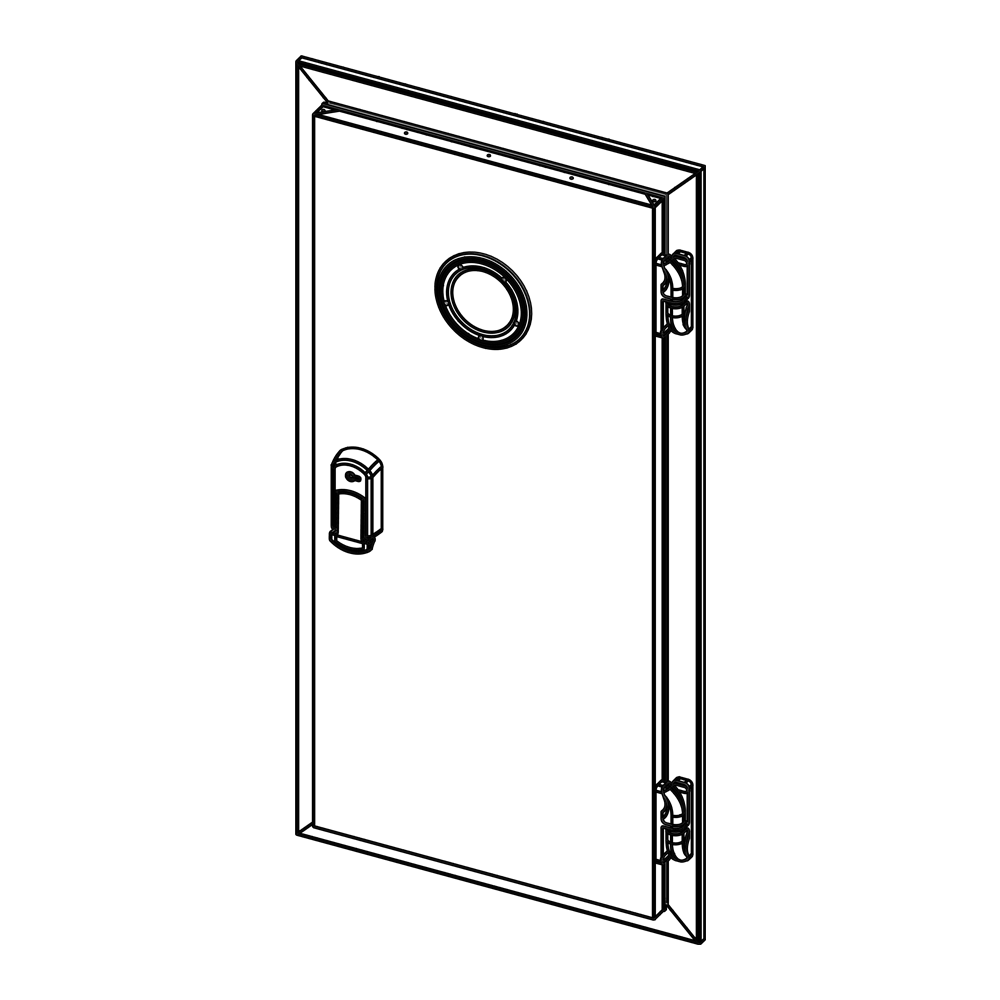
Weak points such as door frames, corners and joints must be considered as well. Even when the panel itself is good, poorly made joints create thermal bridges that reduce the savings.
When choosing insulation thickness, the difference between room temperature and ambient temperature should be decisive. Using thin panels in freezer rooms may seem like a saving at first, but it increases energy consumption and can cause condensation on panel surfaces. Correct insulation also allows a smaller and more efficient refrigeration system to be selected.
Correctly insulating panel joints and corners is as important as using quality panels. Small gaps and thermal bridges at these points cause energy loss and icing over time. Installation by experienced teams ensures the insulation performs at full capacity.
An Economical Approach to Equipment Selection
An economical approach to equipment selection means finding the most suitable capacity that meets the requirement. An oversized compressor cycles on and off frequently, losing energy and life. An undersized compressor runs continuously and is overloaded.
Choosing standard, widely used products also saves money. Custom-designed products are often more expensive and their spare parts can be hard to find. A common platform gives an advantage at both purchase and maintenance stages.
Equipment with a higher energy efficiency class may cost more at the start but saves energy over its life. Calculating the payback period of this saving makes the decision easier.
Ease of maintenance should also be considered. A design where filters, the evaporator and the condenser are easy to reach reduces maintenance time and cost.
In equipment selection, it is very important that the compressor, evaporator and condenser have matching capacities. Mismatched equipment causes the system to run inefficiently and break down frequently. Choosing brands with easily available spare parts and a strong service network also reduces costs in the long run.
Energy Saving Strategies
The most effective way to save energy is to prevent heat leaks. A sound door gasket, shorter door-open times and not leaving the door open unnecessarily all significantly reduce energy loss. These measures are low-cost and deliver results quickly.
Control settings also save energy. A suitable temperature target, a balanced tolerance band and scheduled operating programmes prevent the compressor from running unnecessarily. Once these settings are made correctly, they provide a continuing benefit.
Keeping the evaporator and condenser clean directly affects efficiency. A dirty condenser rejects heat less effectively, which raises energy consumption. Regular cleaning is the cheapest way to prevent this loss.
Consumption records should be kept to measure the effect of savings measures. Comparing consumption before and after a measure shows which one really works.
For energy savings, simple measures such as reducing door-open time, using strip curtains or air curtains, placing the condenser in a well-ventilated location and choosing efficient LED lighting make a big difference. Smart control systems also save energy by adjusting defrost and fan operation according to need.
How Maintenance Affects Cost
Regular maintenance is the most important safeguard for an economical system. Preventive maintenance spots small problems before they grow, reducing repair costs. Neglecting maintenance may look like a saving at first, but it ends in major faults and high repair bills.
The maintenance plan should follow the manufacturer's recommendations and the operating conditions. Filter replacement, condenser cleaning, door gasket inspection and checks of electrical connections should be carried out at regular intervals.
When maintenance records are kept, it becomes clear over time how often each part needs replacing. This information is valuable for spare parts stock and budget planning.
If the in-house team is not sufficient, bringing in outside support can also be economical. A specialist service can prevent expensive damage that a wrong procedure would cause.
In cold rooms that are not maintained regularly, problems such as dirty condenser surfaces, worn gaskets and refrigerant leaks increase energy consumption over time. Periodic maintenance detects these issues early, reducing both energy costs and the cost of unexpected breakdowns.
Mistakes That Look Cheap but Cost More
The most common mistake is deciding on the purchase price alone. This ignores energy and maintenance costs and leads to unexpected expenses later.
Another mistake is choosing a system that is much larger or smaller than needed. In both cases efficiency falls, equipment life shortens and running costs rise.
Economising on insulation is also a common error. A low-quality panel saves money at the start, but its rising energy bills soon cancel out that saving.
Finally, buying without reviewing warranty terms and spare parts availability can lead to costly surprises later.
Chief among mistakes that look economical but prove expensive is unsuitable floor insulation. Especially in freezer rooms, neglecting floor insulation can lead to serious and costly problems such as ice formation and floor heave. The floor solution must therefore be planned at the design stage.
Conclusion
An economical cold room solution is an investment with a low total cost over its life and beyond the initial price. When an accurate needs analysis, balanced insulation, right-sized equipment, energy saving and regular maintenance are considered together, this goal is achieved.
When making a decision, it is necessary to look at the whole life cycle of the system, not only the purchase price. This approach protects both the budget and product safety.
İmamoğlu Soğutma and Yedek Parça Ekipmanları provides technical assessment and quotation support for economical cold room solutions suited to your business. You can share your room dimensions and operating conditions to receive a suitable recommendation.