



Industrial Kitchen Resistances
Contents
- What Is an Industrial Kitchen Heating Element and How Does It Work?
- Which Industrial Kitchen Appliances Use Heating Elements?
- What Are the Types of Industrial Kitchen Heating Elements?
- What Information Should You Check When Choosing a Heating Element?
- How Does Wattage Affect Heat-Up Speed and Consumption?
- What Determines the Price of a Heating Element?
- How Do You Recognize Heating Element Faults and What Should You Do?
- How Should You Maintain and Use a Heating Element to Extend Its Life?
- Where Can You Source a Heating Element and What Does the Brand Support?
- Frequently Asked Questions About Industrial Kitchen Heating Elements
What Is an Industrial Kitchen Heating Element and How Does It Work?
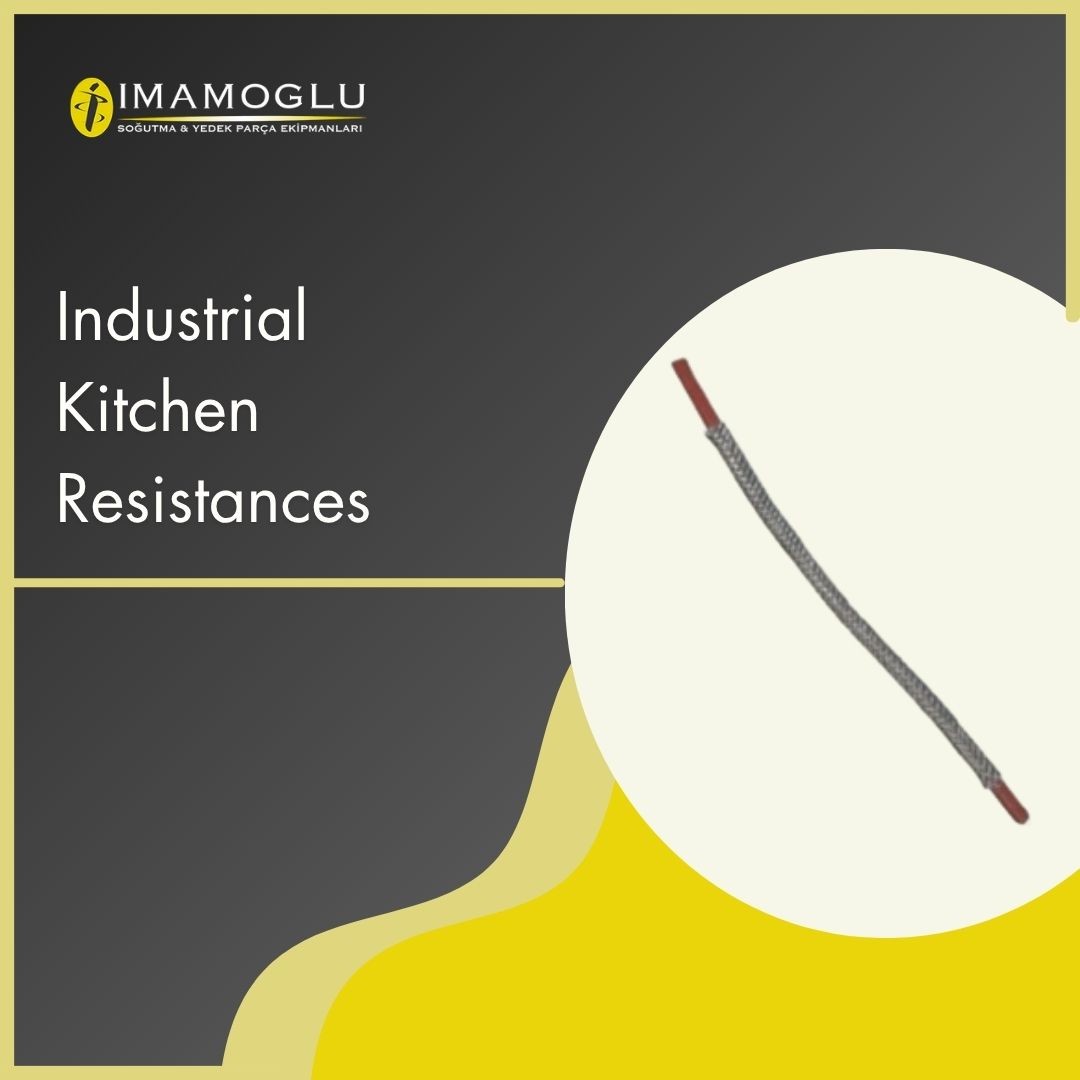
An industrial kitchen heating element is a component that converts electrical energy into heat. When current passes through it, the resistive metal wire or strip warms up, and that heat is transferred to the air, water, oil or cooking surface inside the appliance. It is the main heat source in many appliances used in restaurants, hotels, bakeries and facilities that produce meals in bulk.
In Turkish the part is called "rezistans", and in some languages the word is confused with the electronic resistor. In kitchen appliances, the part in question is not a small component on a circuit board but a powerful element that produces heat directly. Another common misunderstanding concerns gas appliances. Gas-fired ranges, ovens and grills are heated by burners and do not contain a heating element. The information in this article applies only to electric heating elements.
The element's job is to produce heat; how high the temperature rises is set by parts such as the thermostat, sensor and control board. So when an appliance has a heating problem, the cause is not always the element. The element, thermostat and connections should be assessed together.
Which Industrial Kitchen Appliances Use Heating Elements?
Almost every professional kitchen appliance that needs electric heating contains a heating element. The most common examples are:
- Ovens: Convection, static and pizza ovens may use upper and lower heating elements, plus separate elements for air circulation.
- Grills and toasters: They contain elements that heat the plates or the grill surface.
- Fryers: Elements immersed in the oil or placed around the oil tank bring the oil to working temperature.
- Bain-maries and hot-holding units: They provide low, continuous heat to keep water or food at a set temperature.
- Water heaters and tea-coffee machines: Immersion-type elements heat the water quickly.
- Dishwashers: They contain elements that heat the wash and rinse water.
Because each appliance has a different heating need, the element from one appliance cannot be used directly in another. Shape, length, power and connection type must be specific to the appliance.
What Are the Types of Industrial Kitchen Heating Elements?
Heating elements are grouped by their construction and the medium to which they transfer heat. All are electric heating elements; they differ in shape and place of use:
- Tubular heating element: It consists of a heating wire and insulating fill inside a metal tube. It is common in ovens, grills and fryers. It can be made straight, bent or in special shapes.
- Immersion heating element: It is designed to work inside water or oil. It is used in water heaters, bain-maries and fryers.
- Band and plate-type heating element: It heats cylindrical or flat surfaces from the outside.
- Ceramic heaters: The heating wire sits inside or on a ceramic body. In certain appliances this design can make use and installation easier, but it does not mean it is superior to other elements at converting electricity into heat.
Electric elements already turn almost all the energy they consume into heat. The real difference between types is where the heat goes and how fast it is delivered. So choosing a type only because it "uses less energy" is not correct. The type should suit the appliance's design.
What Information Should You Check When Choosing a Heating Element?
The most reliable way to find the right element is to read the information on the part being replaced and on the appliance's rating plate. The following points should be checked:
- Power (watts): It must match the value specified by the appliance manufacturer.
- Voltage and phase: Single-phase and three-phase appliances need different element connections. An element running at the wrong voltage is both inefficient and a fault risk.
- Size and shape: Length, diameter, number of bends and mounting points must match the old part.
- Connection type: The cable outlet, screw, flange or terminal type must fit the appliance's connection.
- Material: Materials such as stainless steel are used against high temperatures and humid environments; which material suits which environment should be confirmed with the appliance manufacturer.
- Temperature limit: The highest temperature the element can withstand must cover the appliance's working temperature.
If the plate is unreadable, the best route is to contact the manufacturer or an authorized service with the appliance's brand and model. Buying a part by guessing the size often means an incompatible part and extra cost.

How Does Wattage Affect Heat-Up Speed and Consumption?
Wattage shows how much power the element draws per unit of time. In the same appliance, a higher-power element can reach the target temperature sooner. However, it draws more electricity while it runs. So the statement "higher wattage means more heat, lower wattage means less consumption" tells only part of the story. Total consumption depends not only on power but also on how long the element runs.
When the appliance reaches its target temperature, the thermostat switches the element off, and when the temperature drops, it switches it back on. In other words, the element does not run at full power all the time. In an appliance with high heat loss, for example an oven with a worn door gasket, the element switches on more often and consumption rises. Insulation, gaskets and door closing, which keep the heat inside, are therefore at least as important as the element itself.
Fitting an element with a wattage different from the one specified for the appliance is not correct. A more powerful element can overload the cables and circuit components; a weaker one cannot bring the appliance to the required temperature. This article does not promise any savings rate. Actual consumption varies with the appliance, how heavily it is used and how the kitchen operates, and it can only be determined by measurement.
What Determines the Price of a Heating Element?
The price of a heating element does not come from a single item. The main factors that affect it are:
- The power and size of the element
- The material used and the workmanship
- Whether it is a special shape or made specifically for the appliance
- Whether it is an original spare part or a compatible equivalent
- Order quantity and lead time
Looking only at the list price can be misleading. A part that is incompatible or short-lived may look cheaper but end up costing more through repurchasing, service calls and downtime. For an exact price, you need to share the appliance model and element details and get a written quote. No price range is given in this article.
How Do You Recognize Heating Element Faults and What Should You Do?
Heating element faults usually show up with the following signs:
- The appliance does not heat: The element may be burnt out, a connection may be broken or the supply voltage may not be arriving.
- Slow heating: Part of the element may be out of circuit, or heat loss in the appliance may have increased.
- Overheating: It is mostly caused by the thermostat, sensor or control board; the element may stay on continuously in this case.
- Uneven heat distribution: If one zone of an oven cooks differently from the others, it may point to an element or air circulation problem.
- Tripping fuse or leakage current: The element's insulation may be damaged. The appliance should not be used in this case.
Work on electric heating elements carries a risk of electric shock and fire. No connection should be touched before the appliance is unplugged or its power is cut. Measuring, replacing and checking the connections of the element should be done by an authorized service or a technician with sufficient technical knowledge. If the same fault repeats within a short time, the thermostat, connections and ambient humidity should be examined instead of just replacing the element.
How Should You Maintain and Use a Heating Element to Extend Its Life?
The life of a heating element depends largely on how it is used. The following habits help limit early wear:
- Following the user manual: Cleaning frequency and safety measures are given in the appliance's manual; this information should be the basis.
- Cleaning after cooling: No cleaning agent or water should touch a hot element. Grease, food residue and water stains can build up over time and disturb the element's operation.
- Suitable cleaning agent: Abrasive products that do not suit the element's material should be avoided. Which product is suitable should be asked of the appliance manufacturer.
- Avoiding overload: Filling the appliance beyond its capacity or running it above its temperature limit wears the element.
- Connection checks: Signs such as looseness, corrosion or discoloration should be caught early.
- Dry and clean environment: Humidity can damage the element's insulation.
Keeping maintenance records in a notebook or digitally lets you see which fault repeats on which appliance. That way, part replacement can be planned before a failure occurs.
Where Can You Source a Heating Element and What Does the Brand Support?
Heating elements are usually sourced from the appliance manufacturer, authorized services or companies that sell professional kitchen equipment spare parts. When ordering a part, sharing the appliance brand and model, the serial number and the old part's label information reduces the risk of incompatibility. For very low-priced products, material quality and appliance compatibility should be asked about separately.
İmamoğlu Soğutma works in cold room doors, panels, profiles and accessories such as hinges, locks, handles and gaskets. Heating elements are not part of this product group; so the right route for element compatibility is to contact the appliance manufacturer or an authorized service. If your kitchen has a cold room, you can read the articles on cold room door locks and cold room door hinges for door accessories.
Frequently Asked Questions About Industrial Kitchen Heating Elements
What is a heating element?
It is a heating component that converts electrical energy into heat. It is used in appliances such as ovens, grills, fryers and water heaters.
Do gas appliances have heating elements?
Gas-fired appliances are heated by burners and do not contain a heating element. However, some gas appliances may have electrical parts for control and additional functions.
Does a ceramic heating element use less energy?
No. Electric elements already convert the energy they consume into heat. A ceramic design may make a difference in use and installation in certain appliances, but it cannot be said to lower consumption on its own.
Is a higher-wattage heating element better?
It may heat faster, but it draws more power. The right value is the wattage specified by the appliance manufacturer.
Can I replace a heating element myself?
Because of the risk of electric shock and fire, it is recommended that an authorized service or a technician with sufficient knowledge does it.
What does the price of a heating element depend on?
It varies with factors such as power, size, material, appliance-specific manufacture and order quantity. A written quote is needed for an exact price.
Does İmamoğlu Soğutma supply heating elements?
No. The brand works in cold room doors, panels, profiles and door accessories. For heating elements, contact the appliance manufacturer or an authorized service.